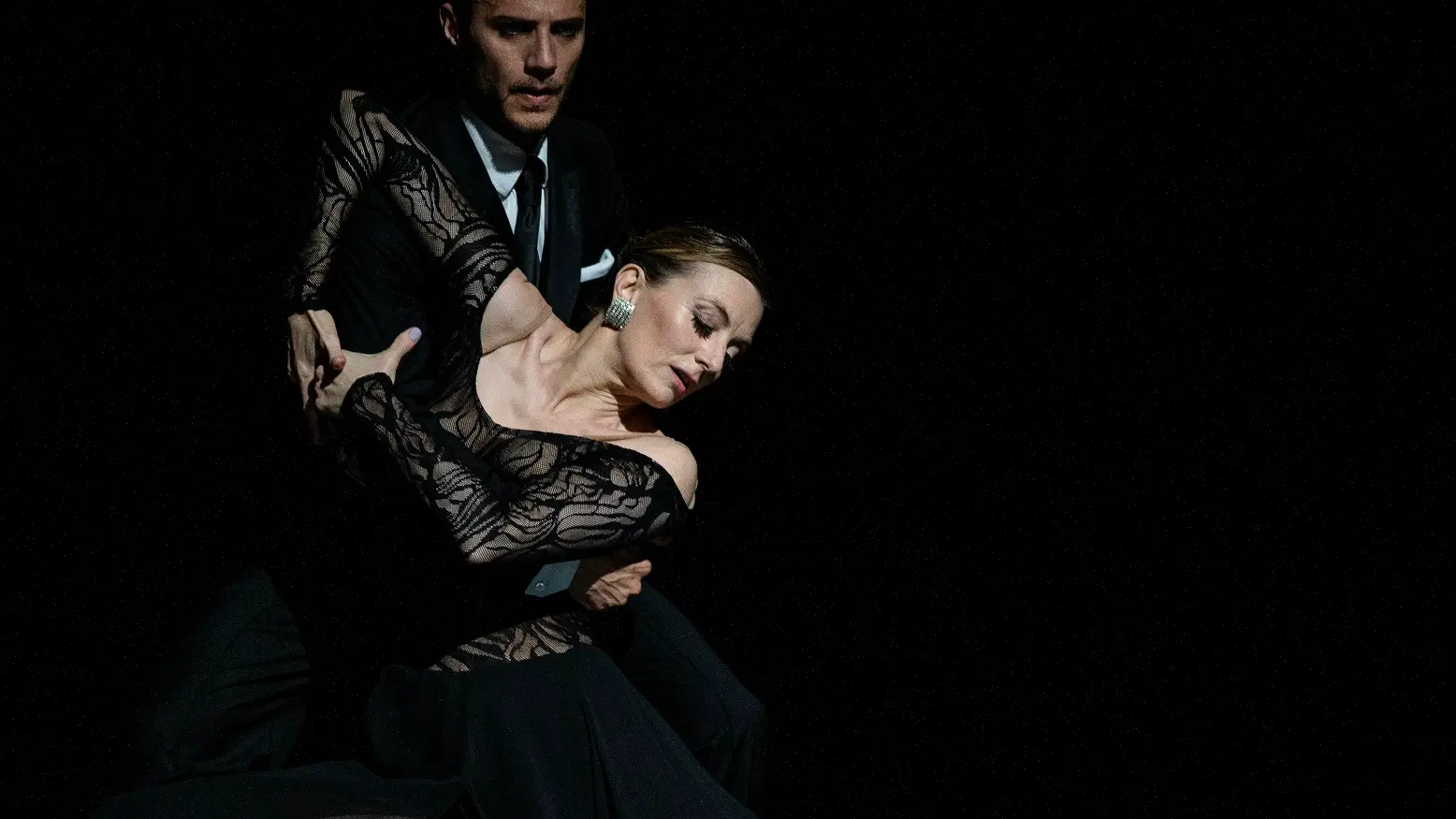


The ballet " Tango Fuego " by the " Naturalis Labor " company arrives on tour on the island, with concept, choreography and direction by Luciano Padovani , on the bill tonight, Thursday 9 February, at 9 pm at the Multidisciplinary Auditorium in Arzachena , tomorrow at the Civic Theater of Alghero , Saturday at the Tamuli Pavilion of the former Mura di Macomer barracks , Sunday at the "Tonio Dei" Theater in Lanusei and finally Monday 13 February at the "Akinu Congia" Municipal Theater in Sanluri , again at 9 pm, for the 2022-2023 Season of " La Grande Danza” organized by CeDAC, Multidisciplinary Circuit of Live Performance chaired by Antonio Cabiddu.
In the spotlight are three pairs of appreciated tangueros, Celeste Rey and Sebastian Nieva, Loredana De Brasi and Samuele Fragiacomo, Ayelen Sanchez and Walter Suquia , for a captivating story in paintings on the notes of the Trio Tango Spleen which lines up Mariano Speranza on piano and voice, Francesco Bruno on bandoneon and Fatma Muhlim on violin.
A succession of virtuosic figures, between crossing gazes and complicated geometries of steps, in a grammar of moving bodies that expresses desire and tenderness, passion and a poignant melancholy.
“Tango Fuego”, the second title of the program signed by the artistic director Valeria Ciabattoni, is the new chapter of an interesting and original path of study and research on the popular Argentine dance , which has characterized the work of Luciano Padovani in recent decades: the choreographer repeatedly confronted with the language and styles, codified over time, of a dance born in the streets of Buenos Aires, a happy synthesis of the atmospheres of the South American city, a crossroads of peoples and cultures.
An intense and compelling show, with a precise dramaturgy, in which the different sequences merge into a single narration, between games of seduction, meetings and farewells, fiery love stories that are consumed in the time of a song: a , built with the collaboration of the performers, on a soundtrack that ranges from the masterpieces of the Guardia Vieja and especially of the Guardia Nueva, up to the "revolution" of the Tango Nuevo.