

There is more sand than earth in Limburg. Infinite expanses, smoothed every day by the Meuse, that river that becomes a ford and border for the eternal Maastricht, the capital of this Euroregion par excellence, straddling Holland, Belgium and Germany. This is where the European treaties were born, those that gave birth to the European Union and the euro, at least theoretically. This strip of Europe contends with Sardinia, the Sos Enattos mine in Lula, the primacy of universal silence, the one necessary to build the Einstein Telescope, the largest cosmic "ear" on earth intended to intercept gravitational waves, the mystery of the cosmos. If there is a crevice where it can be said that the modern Union of European states was born, this is it.
Rebalancing & gaps
Rebalancing treaties, cohesion parameters, one-size-fits-all rules, stability pacts and the single currency. All here, in the think tank of Europe. In this old duchy, however, not only the ambition of European unity at all costs is consumed, but also the most evident of the contradictions of the old continent. This is not sanctioned by the ancient dogma of protest or perennial lamentation, as some would like to enigmatically translate the feeble call to "cohesion" and "rebalancing" between states and regions of Europe. If there were a European constitution, proclaimed far and wide, article one would have had no escape from a mission as announced as it was violated: to catch up with the weak regions, rebalance infrastructures, disadvantages and gaps. Where Europe was born, however, it is also in fact buried.
The data speaks
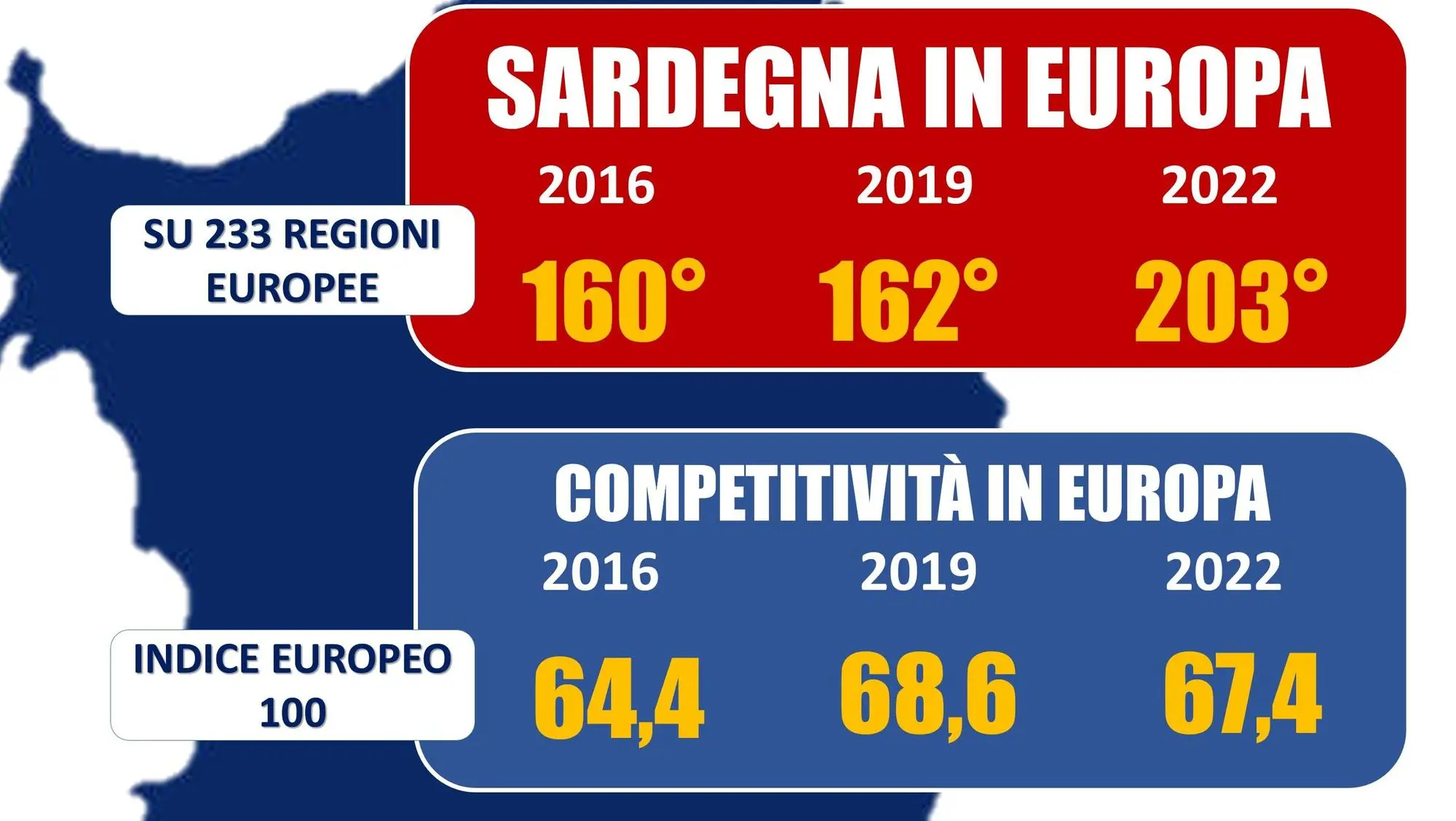
The data, the objective analyses, the comparisons between the different areas of Europe, between strong and weak regions, say so. The gap between rich and poor is not a cheap lament. Just open the interactive map just launched by the European Commission on the regional competitiveness index, the one called two point zero, theoretically of the future, to understand that there is no challenge: the rich will always be richer and the poor always poorer. The range of gaps does not narrow, but widens, more and more. Limburg, with one million one hundred and twenty thousand inhabitants, is in 13th place in the ranking of the 233 regions of Europe. Its competitiveness index, a mix of infrastructures, territorial services, businesses and individuals, just recorded by the Directorate-General for Regional Policy, is well above the European average. If the European base index is 100, Limburg has an index of 131.6, which places it in the top of Europe, a stone's throw from the number one region, Utrecht, also coincidentally in the heart of the Netherlands , with an index of 150.9. There is no history with Sardinia. To find the Isola dei Nuraghi you have to scroll through the rankings to sink beyond the 200 regions, out of the 233 of the European analysis. To meet the parameters of the largest and most genuine insular and outermost region of Europe, Sardinia, you have to reach the abyss, at step number 203. An emblematic position, above all because it is the latest official elaboration of the European Commission, a datum certified with the stamp of Brussels. There can be no superfluous reflections on the reliability of the data, it is simply the official one.