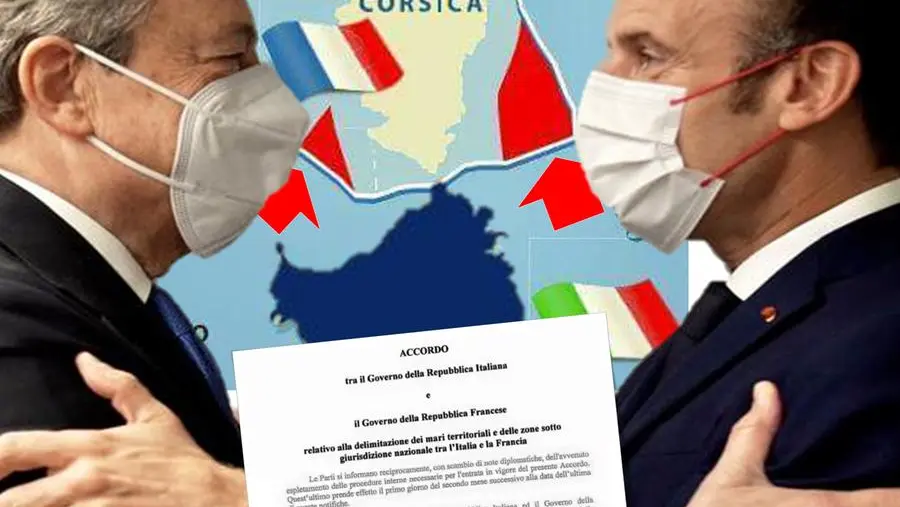


From Caen, in the heart of ancient French Normandy, to the highest hill in Rome, the pass is six years long. History, from the most famous landing beaches to the Roman San Pietrini, is a pavement marked by wars and peace, agreements and treaties, business and borders. A lot of water has passed along the Channel since, on 21 March 2015 in Caen, an Italian foreign minister, Paolo Gentiloni, who later became prime minister and European commissioner, signed a treaty as secret as it was repudiated in absolute silence. In the French town, 200 km from Paris, chosen for discretion, the two foreign ministers, Italian and French, signed the one that has gone down in history as the Treaty of Caen. The recent key to the problem in the relations between Napoleon's heirs and those of the House of Savoy is all here.
The Caen coup
The signatories of Caen were, however, certainly aware that those autographs at the bottom of those two pages, after years of frost and tension, should have opened a new front in relations between the Elysée and the Quirinale. However, Paolo Gentiloni had done well to sign that agreement away from the spotlight of Paris and Rome. He, the nobleman of Italian politics, had tried in every way to re-establish relations beyond the Alps, considering that the Italo-French thread is fundamental to oppose the Franco-German axis. It didn't suit him. No one, once they returned to Italy, much less Gentiloni, Renzi's successor at Palazzo Chigi shortly thereafter, had the courage to propose that agreement to the Chambers, to be ratified with an obligatory passage, except for its total ineffectiveness. Nobody felt upset, not even the general secretary of the Farnesina who should have sent that text to Montecitorio and Palazzo Madama so that they could transform it into ratification. In reality, that text was so impractical that it remained forever in the archives of the Italian foreign office. It was known of its existence only when a fishing boat from Golfo Aranci, captained by commander Pietro Langiu, was not badly intercepted by the French gendarmes on duty along the sea border. In reality, those peremptory tones with which the military broke into international waters were so clumsy as to provoke a real revolt of Sardinian fishermen who blocked the Strait of Bonifacio in protest.