







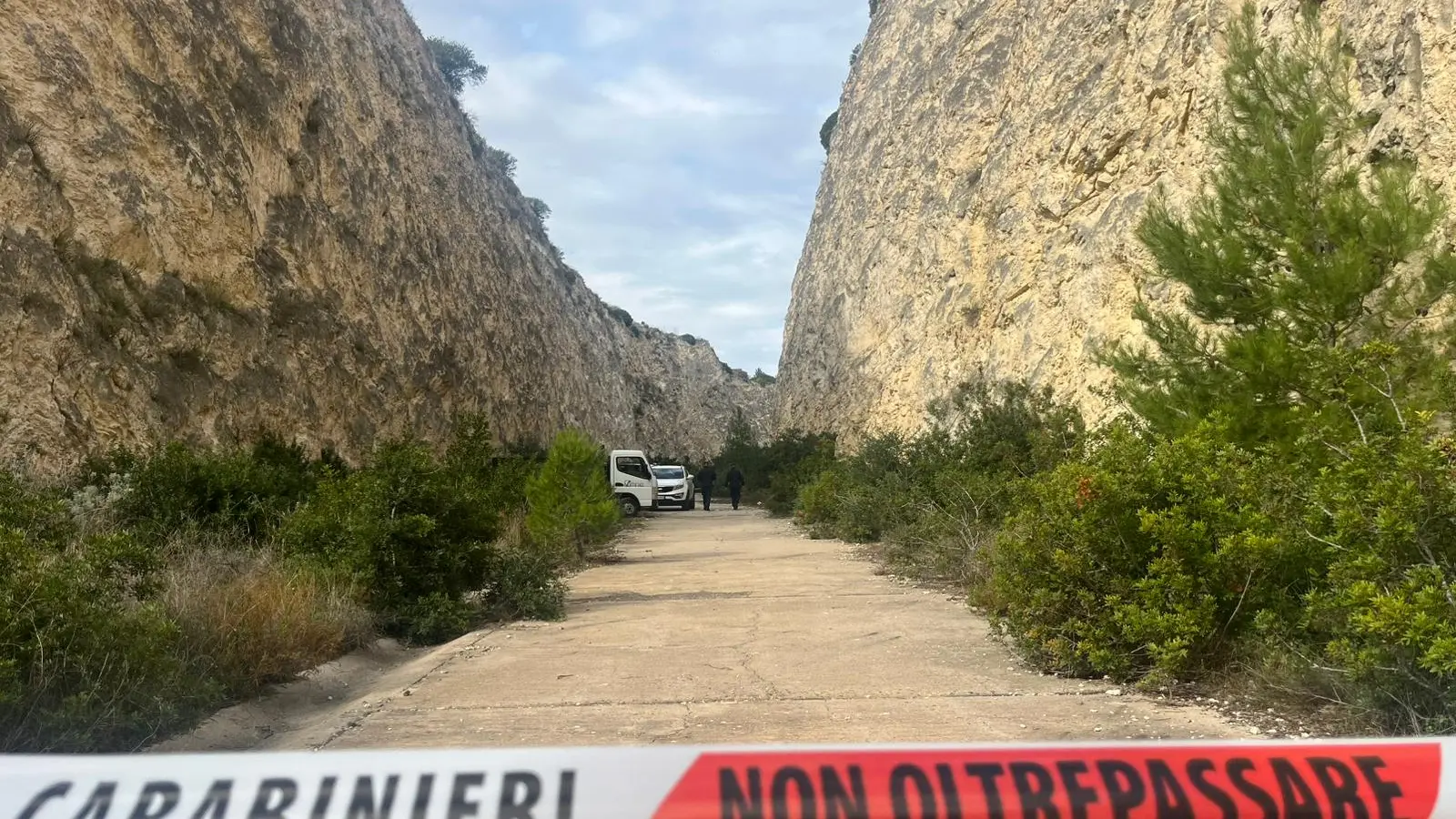


"Regarding the news that has appeared in the press in recent days regarding the new request for dismissal made by the Cagliari Public Prosecutor's Office against Enrico Astero in the proceedings regarding the disappearance of the young Emanuela Murgia , this defense believes it is necessary to intervene to re-establish a correct and complete representation of the trial facts ." This was stated in a statement by lawyers Marco Fausto Piras and Massimo Atzeni , who are representing Enrico Astero, the ex-boyfriend of the young woman found dead in 1995 in Cagliari, in the Tuvixeddu canyon.
"During this year and a half of new investigations," the lawyers write, "the defendant's defense has maintained an extremely restrained stance in media exposure, limiting its participation in television broadcasts and granting interviews to a few limited occasions, out of respect for the family's grief and the delicate work of the investigators. However, the recent release of statements quoting a single passage from the Public Prosecutor's order—regarding an alleged meeting between Mr. Astero and the young woman on February 4, 1995, the day of her disappearance—risks giving the public a biased and misleading interpretation of the investigative findings, suggesting that the Prosecutor's Office requested the case be closed despite alleged evidence of guilt."
The lawyers refer to some statements made by the young woman's family or their lawyers (for example, "He always said he hadn't seen her for two weeks, a wiretap contradicts this" ).
On this point, Astero's lawyers clarify that "following access to the documents, authorized by the Judicial Authority also to protect the client's integrity, it clearly emerges that the request for archiving is much broader, more rigorous, and more detailed than the data from that wiretap alone."
"It seems appropriate to clarify first of all," Piras and Atzeni continue, "that the intercepted conversation referred to in no way features Mr. Astero among the interlocutors, as it was a conversation between third parties (who, when questioned on the matter by the Public Prosecutor, denied the circumstance). Above all, this element was carefully examined by the Public Prosecutor, who expressly deemed it inappropriate to alter the circumstantial evidence or to influence the causes and manner of the girl's death."
The lawyers then list all "the objective elements that emerged from the investigation, which led the Prosecutor's Office to request, for the third time in thirty years, the archiving of the proceedings" , namely:
The results of the forensic investigations conducted during the preliminary investigation: the discovery of the clothing worn by the young woman at the time of her death resulted in a biological, fingerprint, and product analysis conducted by the Carabinieri Special Investigative Unit (RIS) of Cagliari, in full consultation with the technical consultants of all parties, including those of the injured parties. The RIS's meticulous investigation revealed no trace, biological or otherwise, attributable to Enrico Astero.
And then: "The exclusion of alternative hypotheses regarding the cause of death: the technical and product analyses on the girl's clothes, shoes, and belt have ruled out both the presence of signs attributable to a road accident and the hypothesis that the body was grabbed, dragged, or carried after death."
Again: "Confirmation of the original forensic findings: in light of all the new investigations, the Prosecutor's Office reiterated that the original forensic reconstruction—which attributed the death to a fall and which had already ruled out, through direct examinations of the body, signs of sexual assault— remains today the most solid, well-documented, and scientifically sound . In any case, if this wiretap is deemed to have real evidentiary value, the proper forum to assert it is through a possible appeal before the Preliminary Investigations Judge: it is, in fact, solely up to the Judicial Authority (which will have access to the entire body of evidence), and not to the public (which is only partially informed), to make the appropriate assessments on the weight of the evidence gathered."
"For over thirty years, Enrico Astero—a citizen with no criminal record, the recipient of two dismissal orders in 1997 and 2013, and now the subject of a third dismissal request—has been burdened by media suspicion that has never been addressed in the judicial and scientific arenas," the lawyers conclude. For this reason, "a firm but respectful appeal is made to all parties involved to ensure that the discussion remains within the bounds of restraint, respect for the work of the investigating magistrates, and protection of the dignity of a person who, for the third time, has seen investigators acknowledge the lack of evidence to support his responsibility."
(Unioneonline)