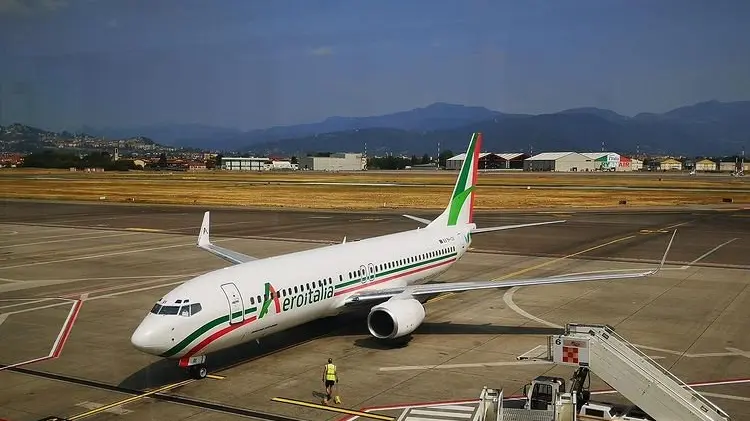


News recently surfaced of the unilateral rescheduling of Aeroitalia's evening flight between Fiumicino and Alghero, apparently due to the impact of jet fuel costs on the airline's accounts, despite the full compliance with the Ministerial Decree.
Sardinian businesses are suffering from rising freight and energy costs. Territorial continuity is (or at least should be) the authentic expression of the principles of equality and cohesion. It represents the true unity of the country in its regional geographic context, as well as the unity of Italy as a country, both insular and peninsular, within the European Union.
Continuity, therefore, as the concrete ability to guarantee citizens living in geographically isolated or disadvantaged areas, specifically islands, the same mobility as those living on the mainland or, in any case, in major infrastructure hubs. This is a genuine guarantee of constitutional importance for the protection and safeguarding of social and economic cohesion.
Living on an island, especially Sardinia in Italy, means daily confronting natural barriers that inevitably impact the economy and society, resulting in disadvantage. It is true that insularity has been recognized in the Italian Constitution (Article 119), with the aim, among other things, of committing the state to promote the measures necessary to eliminate the disadvantages resulting from this condition. The current economic situation, the impact of ongoing conflicts, with all their tangible consequences on daily life and shopping carts, have highlighted another fact that can no longer be ignored: that even the imposition of public service obligations, useful for compensating for the shortcomings of free market laws, which, by themselves, cannot guarantee affordable, regularly scheduled flights or ferries to less profitable routes, is insufficient.
While European Union rules on free competition and state aid limit national governments' freedom to freely finance routes, they also ensure fair and transparent conditions for businesses. Ultimately, they often lead to bureaucratic deadlock, to the detriment of citizens. Arguably (or so it seems) the very fact that tenders are awarded to airlines offering the most attractive prices should never translate, in accordance with the principle of equality and cohesion, into a reduction in flight frequency, schedules, and reliability.