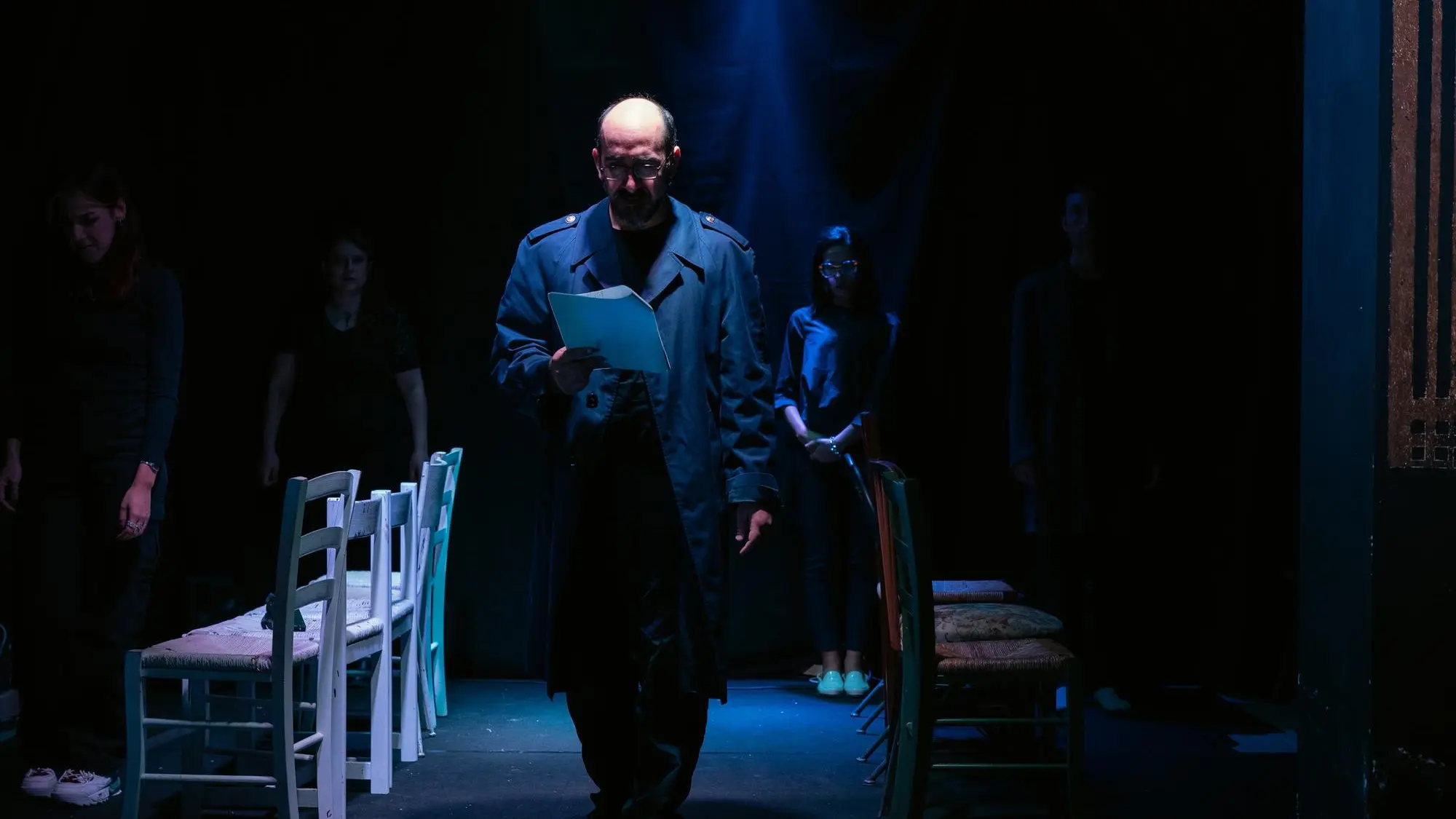


From Sophocles to the drama of solitude and isolation of the contemporary individual. " Antigone," the latest production by the Sardinian association La luna del pomeriggio, debuts on Friday, November 20th at 8:30 pm on the stage of the Teatro Astra in Sassari. Directed by Simone Gelsomino, it is directed by Simone Gelsomino . In addition to the repeat performance on Saturday the 21st, a matinee performance for schools is scheduled for November 20th.
The show is part of the 36th edition of Ethnicity and Theatricality. Between Tradition and Classics 2026-2027, organized by Compagnia Teatro Sassari.
Giving the performers a text drawn from the original, Gelsomino explores the concept of solitude and isolation that pervades the individual: "Contemporary society has learned to call many forms of its solitude freedom," explains Gelsomino. "We are alone, and we are told that being alone means being free. We are constantly invited to euphoria, to party, to consume, to distraction, and this too is called freedom. Yet, behind the euphoria, there can be a fear of stopping, of looking at what is happening, of acknowledging one's own responsibilities."
To make the performance even more impactful, in addition to the ten performers ( Claudio Dionisi, Eliana Carboni, Fabio Masala, Stefano Dionisi, Antonella Putzulu, Miriam Pinna, Egle Bandiera, Lello Oliveri, Antonio Medas, Manuel Casati ), there will also be twenty-five members of the University of Sassari Choir on stage, directed by Maestro Irene Dore , who will offer the audience interesting musical suggestions.
The show uses a spare staging, updating the timeless tragedy and bringing it closer to younger audiences. "I believe it's extremely important to introduce students to classical theater," Gelsomino concludes, "but the drama is no longer just about Antigone and Creon, or the clash between the individual and the tyrant: it's about how a community reacts when someone chooses to expose themselves, to disobey, to shoulder the weight of responsibility. The world continues to celebrate while someone dies, and perhaps the question Sophocles asks us, even today, isn't just which side to take, but whether we're still capable of taking a stand at all. Because tragedy doesn't just happen to those who suffer it. It also happens to those who watch it, and choose not to see."