
















Sardinian history is centered on the great towers, the symbol of our island. The small huts, sometimes overlooked in the tales of the intrepid Bronze Age Sardinians resisting invaders from the sea, today tell much more. Their study is essential for reconstructing the evolution of ancient Sardinian civilizations, the formation of the communities that erected free and self-sufficient towers across the island, and the transition to later eras that saw the emergence and growth of ruling elites.
The turning point
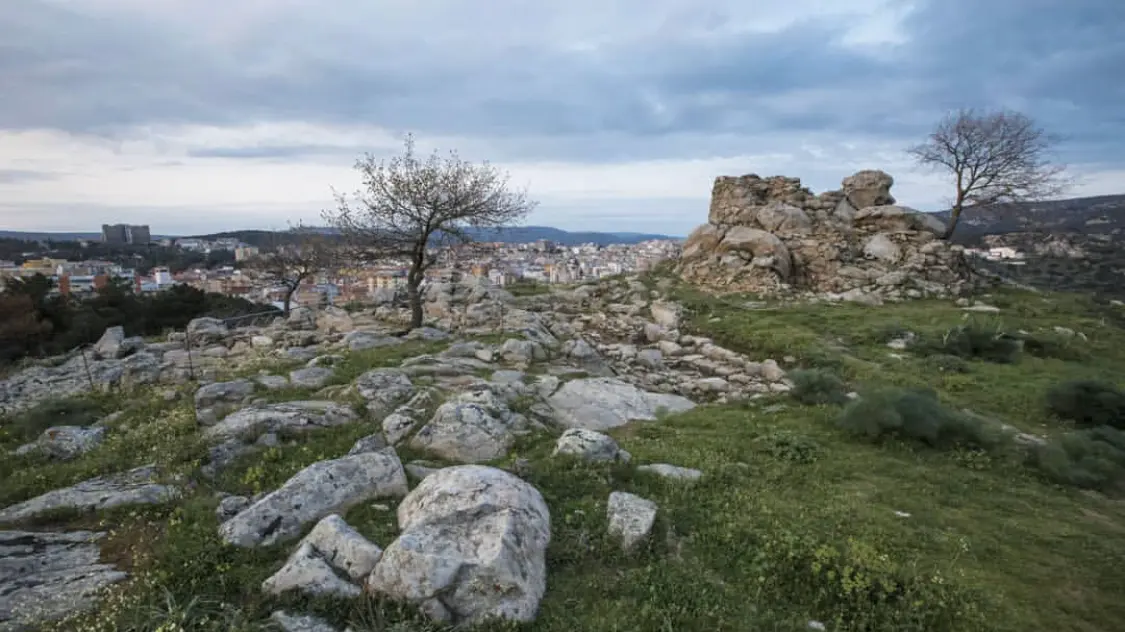
The minimal history revealed through the study of Nuragic architecture reveals new scenarios. Before the circular huts, there were rectangular houses. They had stone bases, roofs likely made of wood and branches, and rooms organized for cooking, working, and living together. In Nuoro, among the ruins of the village of Tanca Manna, "these dwellings help reconstruct a decisive phase in Sardinian history: the world in which the Nuragic civilization took shape. A transformation that can be traced through the walls of the houses, the overlapping structures, and the objects left on the floors." This is also the meaning of the words of archaeologist Demis Murgia, who recommends studying the villages carefully: alongside the great monuments, the dwellings preserve traces of the communities that built them. "They allow us to observe how daily activities, relationships between people, and the way space was organized changed."
The theme was the focus of the fifteenth Annual Meeting, organized on October 23 in Bologna by the Italian Institute of Prehistory and Protohistory with the University. The discussion spanned the period from the Copper Age to the Late Bronze Age, with Sardinia as the primary focus. Among the program's topics were the evolution of dwellings, the use of earth, wood, and cork, and the relationship between villages and sanctuaries. A presentation on Tanca Manna was given by Florencia Ines Debandi and Maurizio Cattani of the University of Bologna, Rossana Conti of the University of Sassari, and Demis Murgia, an archaeologist from Nuoro who conducted excavations at Tanca Manna and in many areas of Nuoro and Central Sardinia.
Construction typologies
To understand the first Nuragic communities, we need to look even further back. Rectangular dwellings, sometimes closed on one side by an apse, belong to an earlier tradition. "Similar structures are documented at Biriai, in the Oliena area, in the Late Copper Age. This construction method, with still limited evidence, continued throughout the Early Bronze Age and can be found in the early stages of the Middle Bronze Age, when the Nuragic landscape began to establish itself. The emergence of the nuraghes therefore fits into a history of already consolidated knowledge and experience," explains Demis Murgia.
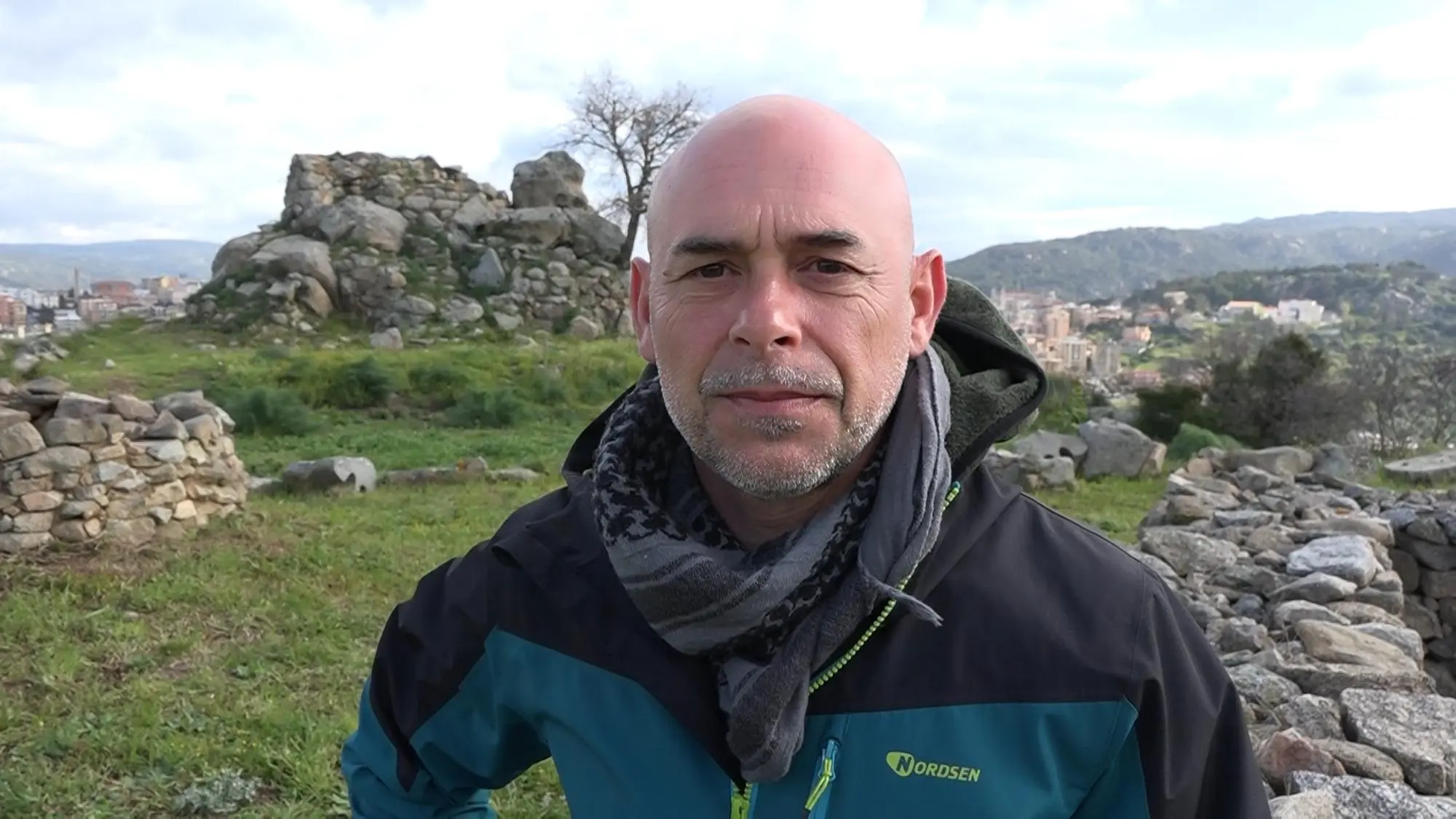
At Tanca Manna, the houses demonstrate the importance of adapting to the site. Large granite boulders could become part of the walls; natural differences in level were incorporated into the buildings. Inside, dividing walls, slab benches, and cooking plates give the impression of complex spaces. Ceramics allow us to date these structures to the early stages of the Middle Bronze Age. It is the association between finds and architecture that gives consistency to the chronological reconstruction. The stone preserved from the excavations represents only a portion of the original dwellings. Wood, much more perishable, has almost disappeared. However, the holes that housed the posts remain: important clues for reconstructing the support for the roofs and wooden walls. The houses must therefore have had a different appearance than the mere perimeter walls visible today.
The towers
The tower also exploited the terrain's characteristics. The Tanca Manna nuraghe stands on a terraced base incorporating natural boulders and is built with blocks of local granite, without mortar, stabilized by small stones inserted into the gaps. Surrounding the nuraghe, the dwellings and the materials discovered—ceramics, millstones, querns, and obsidian shards—provide insight into community life.
Research suggests a succession between an older monumental structure, similar to the protonuraghe, and the single-tower nuraghe. In the village, circular huts overlap with rectangular ones. Tanca Manna thus offers a useful sequence for understanding the evolution of housing and monumental forms. This sequence, documented at one site, however, should not be transformed into an identical calendar for the entire island.
The changes
In the later phases of the Bronze Age, the picture becomes more complex. Numerous villages grow, some nuraghes are transformed into multi-tower complexes, and independent settlements, far from a single tower, are also documented. Places of worship, with wells, fountains, and temples, gain importance, while Mediterranean contacts intensify. The size of settlements and the relationships between communities and the territory change. Between the Late Bronze Age and the Iron Age, in some villages, dwellings also take on a more complex form: multiple rooms are grouped into nuclei, often around a courtyard. Single-room houses are flanked by solutions that more clearly distinguish between spaces and domestic functions.
Murgia's interpretation emphasizes this long transformation: "The definition of 'Nuragic' encompasses culturally diverse generations and communities. The first builders of the towers and the societies that later invested in the sanctuaries cannot be considered a static entity." In his interpretation, "the control of trade and communication routes contributed to shifting the balance of power. The nuraghe were able to retain a symbolic value linked to the ancestors even when society had changed."
To reconstruct these transitions, the village becomes an essential document. A wall incorporated into a later house, a relocated hearth, a rectangular hut replaced by a circular one, all reveal the choices of those who inhabited those places. In Tanca Manna, Murgia observes, "it is precisely this history of the dwellings that makes the evolution of Sardinian communities more legible."