












"I'm not afraid of death, I just wish I wasn't there when it happens"... this joke contains a lot of Woody Allen, one of the great protagonists of American cinema and culture (and beyond) for over half a century.
A protagonist to whom Mario Mucciarelli—author, screenwriter, and film scholar—has dedicated a biography that reads like a novel: Woody Allen. Film, Loves and Neuroses (Sagoma Editore, 2025, €28.00, 464 pages). In this volume, Mucciarelli combines the rigor of the historian with the lightness of the writer to bring readers back to the life, passions, and shadows of one of the most prolific and complex directors of American cinema.
Step by step, we follow the far-from-simple path of an ordinary Brooklyn boy who preferred cinema to reality, comics to school, and girls to everything else. A journey that will lead him to become first a comedian, then an actor, playwright, director, and finally the object of a true cult.
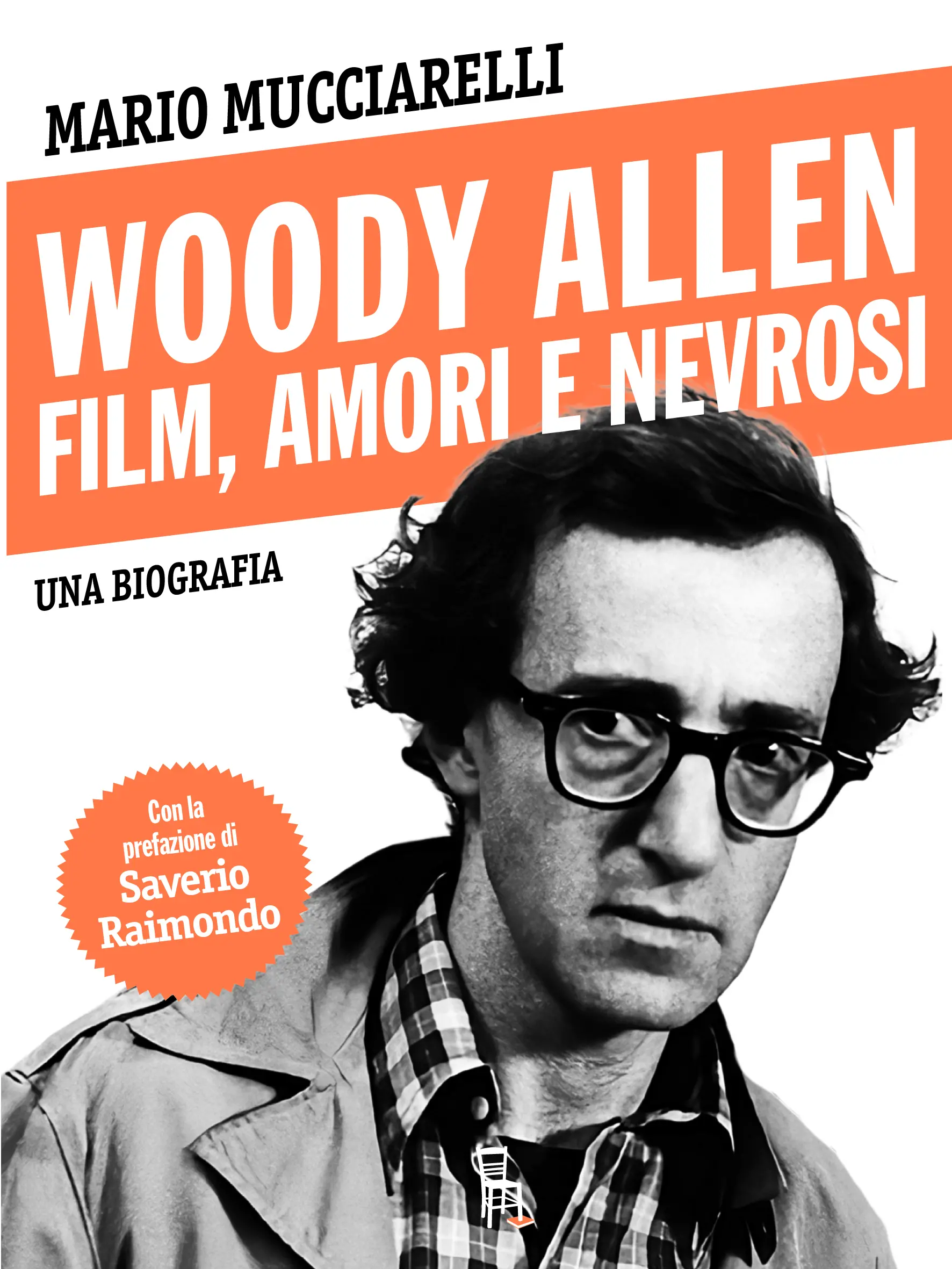
But what are the elements that make Allen a unique author? We asked Mario Mucciarelli directly:
Woody Allen began working in show business in the 1950s, and today there's talk of his return to directing, with a new European film. But the point is that Allen has been creative, interesting, and influential, in different ways, throughout the decades he spanned. It's difficult to make comparisons.
What innovations did he bring to comedy?
Woody was never a groundbreaking comedian. He identified with previous models, from Bob Hope to the Marx Brothers. When he was a comedian in clubs in the 1950s and 1960s, he certainly had a style that was considered, if not innovative, at least very modern at the time. However, his very persona—clumsy, neurotic, obsessed with women, unlucky, but also brilliant and quick—was probably the element that was perceived and received most as innovative.