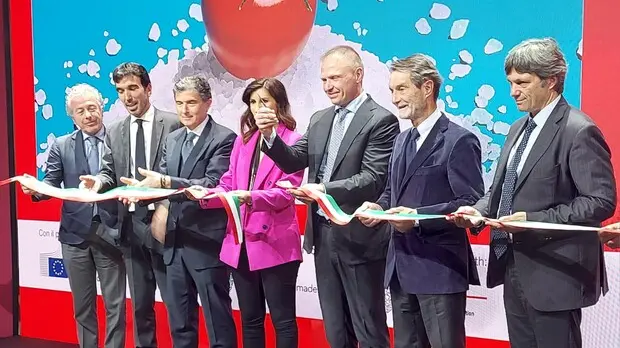


The Italian agri-food sector flies high and fairs become meeting points, exchanges and, above all, exports. TuttoFood, in Milan Rho, is confirmed as one of the most important national and international events. Four days, from 8 to 11 May, to present and narrate Italian tradition and excellence.
Approximately 2500 exhibitors present in the pavilions of the fair, who welcomed over 800 buyers from all over the world. Among the many producers at TuttoFood there are also about twenty Sardinian companies, which have brought the name of the island into an international environment.
Compared to two years ago, in fact , the attraction exercised by Italian products on all that external market that looks to the Bel Paese as a target to be equaled and also, often, imitated, has been strong. Sardinia is no different.
«The Italian one is a brand that works - says Pietro Masini of Tipico - Even Sardinian companies need to go overseas». Same thought for many. Pasquale Manca di San Giuliano admits: «90% of us have had foreign visits and the prospects seem better than two years ago».
«There are many foreign operators - also says Alessandra Argiolas of the homonymous dairy - There were also visitors from Africa and Arab countries, a market that interests us very much, given that we have obtained the Halal certification for our cheeses».
Export but also the importance of social sustainability in Sardinia. In fact, there are also consortia at the fair, those that join forces and qualities for the creation of products that identify the island. Among these is the Pecorino Romano consortium: «It is a favorable moment, a breath of fresh air for a sector that has gone through a difficult moment», explains Gianni Maoddi, president of the Consortium.
Positive thoughts also for the rest of the milk sector. «We are creating a decisive industrial plan, based on our historical values. Like cooperation above all. This means great responsibility towards the members, to whom we have proposed a cost of 0.55 euro per litre, restoring confidence in the sector and in the farmers», explains Maria Cristina Manca di Arborea.