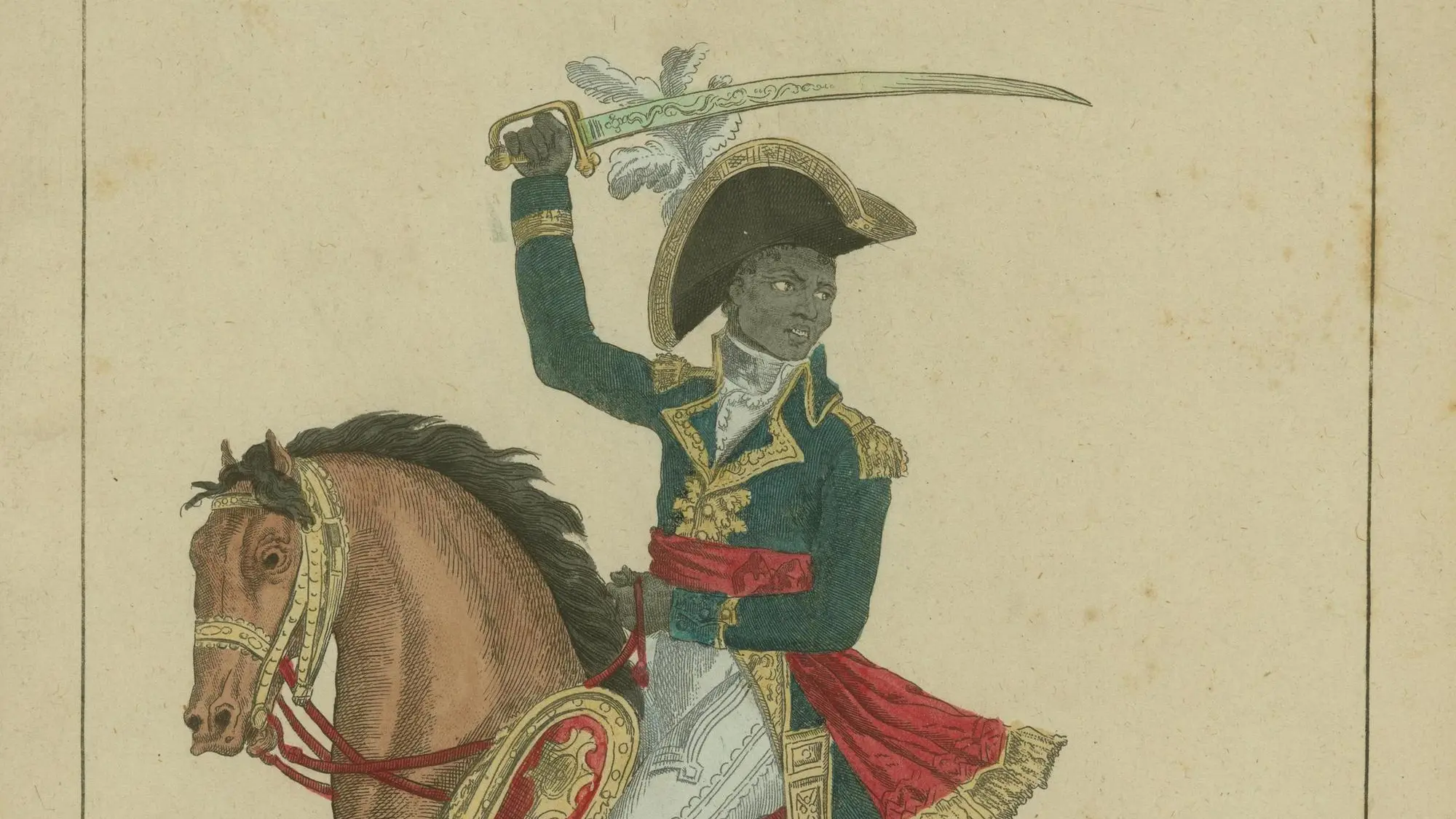


One of the lesser known episodes of the age of the French Revolution and the Napoleonic era concerns the colony of Santo Domingo in the Caribbean .
Santo Domingo was in the eighteenth century the most profitable slave colony in the world. In fact, 500,000 black slaves worked on his plantations, which produced three quarters of the world's sugar production. In the colony, power was totally in the hands of white landowners, about 30 thousand people, who enjoyed all the privileges. In 1791, however, Toussaint Louverture (1746-1803), a freed slave who had been able to study and who knew the principles of equality of the French Revolution, led a slave revolt, determined to put an end to the domination of the colonizers over the 'island.
Leader of the people, leader, but also a despotic and ambiguous man (he did not renounce, despite everything, to own slaves in his turn), Louverture is the protagonist of the highly accurate biography " Black Spartacus " (Rizzoli, 2023, pp. 600, also e- book) written by Sudhir Hazareesingh, professor of French cultural history at Oxford.
Thanks to great interpretative acumen and in-depth research conducted on unpublished archives, Sudhir Hazareesingh reconstructs a gripping historical story full of events. In the years that saw the emergence of the figure of Louverture, Santo Domingo became the scene of a cruel war , in which there was no shortage of massacres on both sides. Toussaint Louverture, however, strengthened his position because he could count on many more men than the white owners and was also able to organize the slaves into a real army. The rebels were inspired by the principles of the French Revolution but soon found themselves fighting against the soldiers sent from France. For the French, in fact, it was one thing to make the Revolution and recognize the rights of the citizens of the Motherland, quite another thing was to lose a colony as profitable as Santo Domingo.