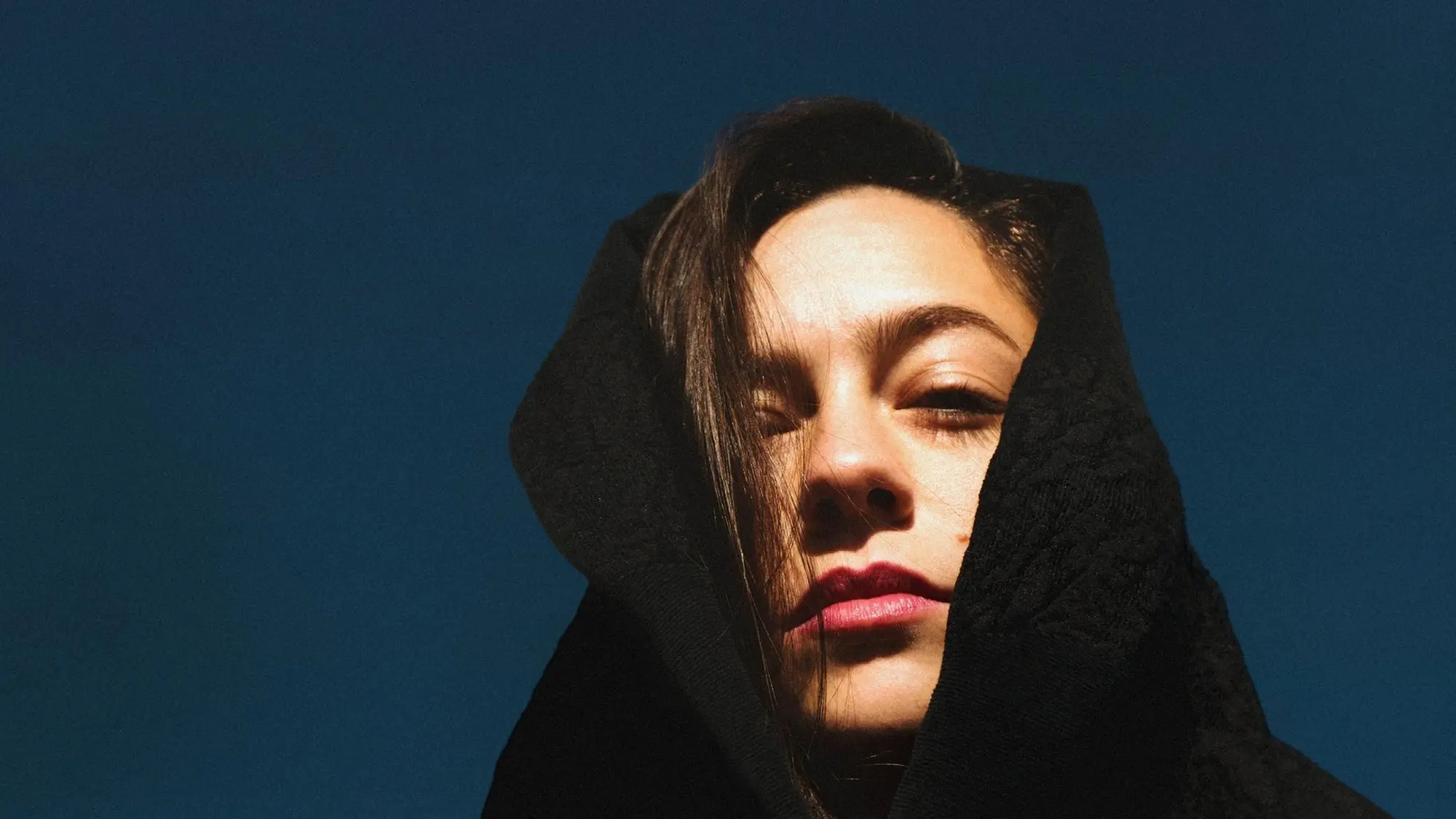


Enviable vocal skills and a world of suggestions communicated through a music suspended between tradition and modernity, which escapes any classification or predetermined container, are the distinctive elements of Daniela Pes. The Tempio Pausania singer-songwriter returned to Sardinia on the occasion of the second edition of the Sa*Rock festival at Villa Siotto in Sarroch, which saw her as the protagonist on Thursday 20th. Between Sardinian tradition, electronics, jazz and folk Pes debuted on April 14 with his album "Spira" , also winning the Tenco 2023 award for best first work . Despite her young age she has ventured into almost unexplored terrain, creating an enigmatic world, made up of evocative vocal performances, sung in a non-existent language, with electronic patterns and acoustic guitar lines. Tradition, avant-garde and research distinguish this first work by creating a very defined sound world, however mysterious and visionary.
Where does your passion for music come from? I would say that it comes from my family nucleus. I come from a family of musicians: my father plays all the instruments and has always passed on to us this great passion very naturally. We have always seen him playing, surrounded by instruments. I speak in the plural because I also have two brothers, an older one who is a composer and a younger one who is a drummer.
How did you take the victory at the 2023 Tenco award? I didn't expect a world like Tenco to welcome a universe like mine with open arms. I didn't take it for granted at all and I'm very happy about it, it's a wonderful response to a job I've dedicated myself to with all my heart in the last 3 years.
Her voice and her music seem to escape any kind of classification, but if you could choose one which genre would you feel closest to? My music is a hybrid between improvisation, research, experimental and songwriting. I followed a Jazz training and I love improvisation of this genre, the instrumental and lively approach. Spira is my first solo work and the first to have a structure and nature other than a jazz record. Indeed, there is very little jazz musically if not some legacy, some harmony and openings. But I don't call it a jazz record. It is a research album but at the same time accessible, very communicating and capable of reaching many different groups of listeners. This amazed us because I was honestly afraid it might not come. With this work, which is nothing more than a personal and identity research, I exposed myself in a particular and unconventional way.