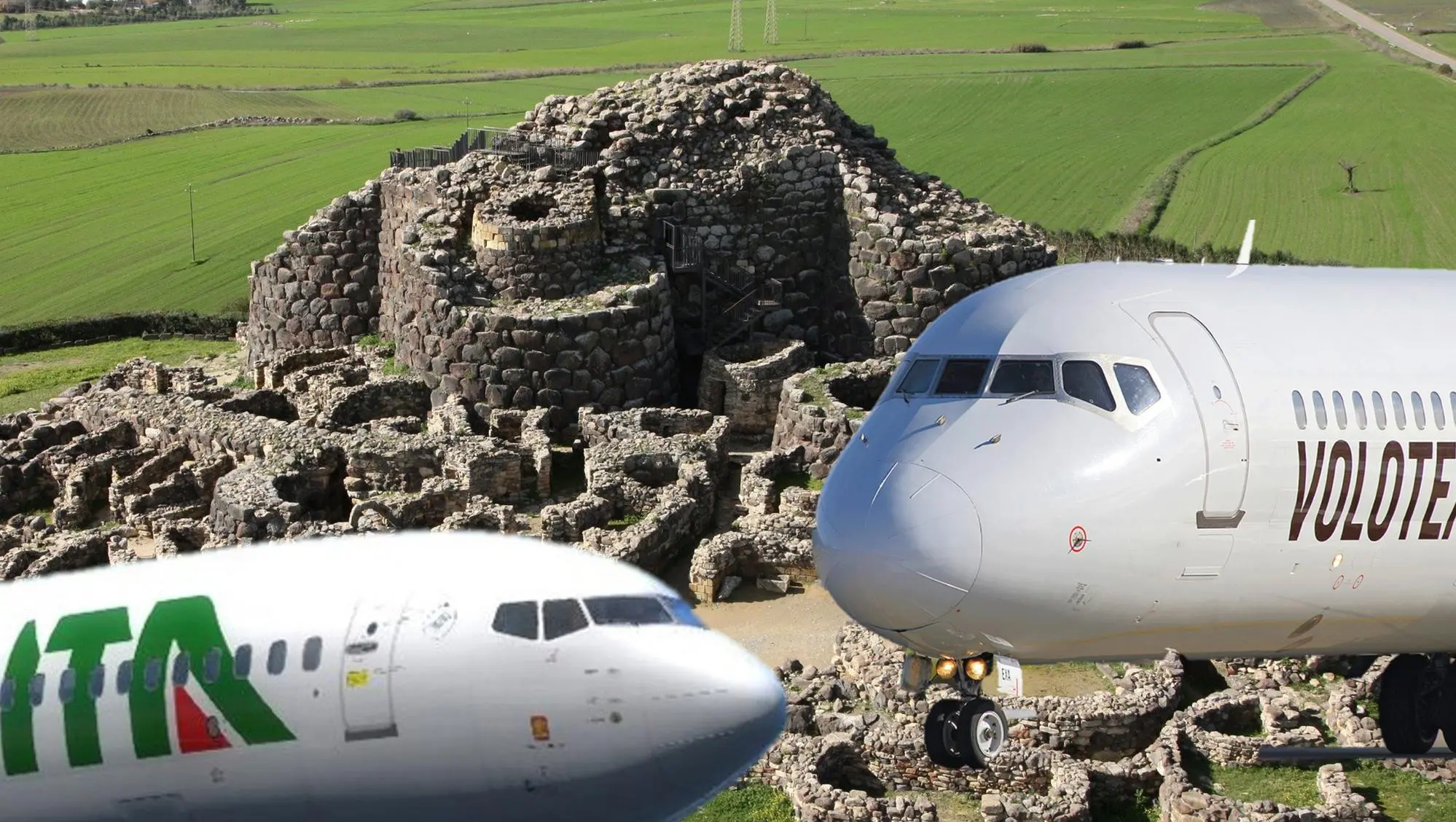


The question is burning. The documents, for now, are prohibited. Certainly, if the newly formed AeroItalia company will bring territorial continuity to the courts, those two letters, one from Ita and the other from Volotea, with which they unilaterally "rescinded" the contract with the Region, will be much more than proof Queen. Until now, the regional transport department has kept those two letters secret. The temporal scan is barely known: last September, the first to give up should have been the state company, Ita, and immediately after Volotea.
Suspicious waiver
It is a renouncement-termination of a public service, anticipated with respect to the expiry of the contract scheduled for May 12th. A "synchronized" move, which certainly cannot have been induced by the lunar or astral calendar. It is more probable that both companies have considered it more convenient to compete in a public tender to share the 50 million euro regional pie, rather than carry out the service without any public compensation and with a renunciation of the exclusivity of the routes. The fact is that the move has cornered the Region, which in reality has not shown much displeasure. The behavior of viale Trento, in fact, was to willingly accept the renunciation of the two companies, with the risk of making the time necessary to completely redefine what had turned out to be a demented and bankruptcy territorial continuity, stretched out only to do damage to the island's economy and to the sacrosanct rights of an island region.
Judicial attack
Now, however, that lack of regional uprising will once again become topical if, as has been announced, the AeroItalia company will challenge the tender of the Region and its outcome. The newborn company, managed by Gaetano Intrieri, an experienced home manager at the Ministry of Infrastructure, wants to question the behavior of Volotea, the low cost Spanish company that snatched away the victory of the routes from Olbia to the Continent, by agreeing to carry out the service without compensation and without exclusivity. It is not excluded that the company with a few months of life, born with expansionist ambitions, wants to put Volotea's renunciation under judicial attack, but even before Ita, to carry out the service of territorial continuity until 12 May next, terminating in advance the contract with the Region. The dilemma is twofold: has the Region forgotten to impose a penalty for any interruption of the public service or has Volotea acted contrary to the relevant laws? It is a crucial step in the whole story. If the Region had omitted a clause to protect the continuity of service, not only would it have failed to fulfill a sacred obligation, both for state and community regulations, but it would in fact have "favored" this situation. In that case the responsibilities would be very serious and incurable. If, on the other hand, Ita and Volotea had interrupted the service by making implausible and unjustifiable justifications, a front would open up with very significant consequences.