

Who says that electricity costs a lot? If anything, it is the bill that bleeds us, not the electricity itself, and it is also true now that - for the next quarter - the Minister of Ecological Transition Roberto Cingolani has announced increases of up to 40% due to the increase in raw material costs, that is, energy. However, it must be said that, in the invoice that the electricity service operators send us home, for each euro we pay a maximum of 37 cents (but depending on the contracts it could be only 28) they are used to pay for energy. Everything else goes into the thousand streams of management costs and taxes that we have to pay for our consumption.
Of course, it is important to try to save on the energy we use, also for ecological reasons, as long as we resign ourselves to not seeing truly appreciable differences when, in the letter box or on the e-mail, we find the invoice. On the other hand, if most of the money goes away for other reasons, using fewer kilowatts can nibble a few euros out of the account, in the case of higher consumption very few tens of euros. And the desire passes. And those management costs that devour our money are those of energy transport, meter management and system charges, which are added to VAT and other taxes.
This is what emerges from a study by the Sostariffe.it website: its Observatory examined the cases of three types of electricity service customers, namely singles, couples and families of parents and two children. And yes, thanks to the free market, by signing the contract of the right type and with the right manager, it turned out that in the last year the bill has "lost weight" up to 27.7%. In the free market, it is worth repeating, because without competition it would not have happened.
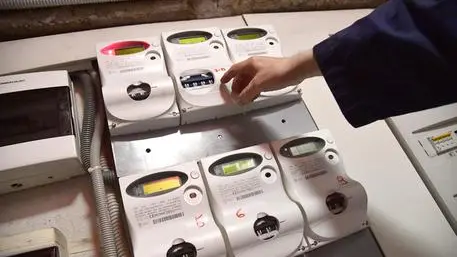
The parameter, for all three types of customers, is that of the most "spartan" user: a meter with a power of 3 kilowatts, and Sostariffe.it considered a user in Milan. The single consumes on average 1,400 kWh per year, the childless couple 2,400, and if you add two more people to the family unit, it rises to 3,400. This is how it was established - excluding the Rai fee included in the bill, not counted for this survey - that the cost of electricity only affects between 28% and 37% of what we pay.