

The Teatro Lirico of Cagliari is preparing for the inauguration of the new 2024 opera and ballet season , with a rare pearl of the operatic panorama . Friday 9 February at 8.30pm (round A) the curtain rises with Nero by Arrigo Boito (Padua, 1842 - Milan, 1918) at its first performance in Sardinia. Tragedy in four acts , with his own libretto, is the second and last opera composed by the musician, who left it unfinished. It was completed by Antonio Smareglia and Vincenzo Tommasini and its debut dates back to May 1, 1924, at the Teatro alla Scala in Milan (conductor Arturo Toscanini). For its time it achieved extraordinary success – "the greatest artistic event of the year", they wrote – although it later fell out of the theater repertoire and is rarely performed today.
Nerone a Cagliari is proposed in a new production of the Teatro Lirico of Cagliari directed by Fabio Ceresa (Rivolta d'Adda, 1981), an appreciated librettist and artist making his debut in Cagliari, who, among other things, curated, in 2015, the libretto for La Ciociara by Marco Tutino, performed at the Teatro Lirico of Cagliari in 2017; for the sets by Tiziano Santi , for the costumes by Claudia Pernigotti , for the lights by Daniele Naldi and for the choreography by Mattia Agatiello .
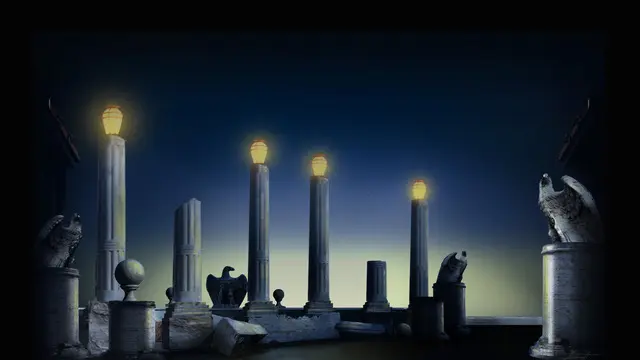
A didactic reading and full respect for the libretto are the basis of this visual proposal of the opera which presents linear, clean scenes, to leave ample space for the acting of the artists who wear colorful and finely crafted costumes. The director thought of an ideal bridge between the Roman Empire of the 1st century AD. C. (the era, in fact, of Nero) and the Italian colonial empire of the years around the premiere of the work. The recognizable architecture of the EUR and the dome of the Basilica of Santi Giovanni e Paolo (the only Roman basilica to be finished in the twentieth century), blend with columns, memorial stones, ruins, eagles and Roman labari in a homogeneous and certainly fascinating atmosphere. The curtain and the last painting of the work are of enormous importance, where the portrait of Nero stands out, a faithful reproduction of the marble original which can be admired at the National Archaeological Museum of Cagliari.