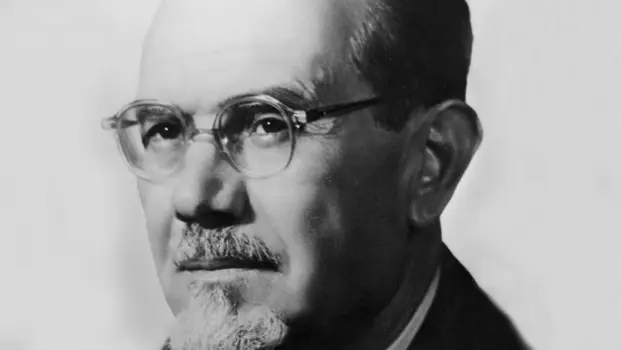


His is one of the three signatures at the bottom of the Italian Constitution. Together with that of the President of the Republic, Enrico De Nicola, of the President of the Council, Alcide De Gasperi, that of Umberto Terracini, President of the Constituent Assembly, also appears in the Charter of Laws. It was he who presided over the Montecitorio assembly on 29 January 1948 when the island of Sardinia was transformed into an autonomous and special region. It was up to Terracini, shortly before fourteen, to give the floor to Luigi Einaudi, Minister of the Budget, the "black beast" of Sardinia. The one under discussion is the last paragraph of the statutory ordeal of the Region. It was Einaudi himself, the future President of the Republic, who formulated the key amendment of the entire structure of the constitutional "pact" between the State and Sardinia.
The final blow
A real final blow to be dealt without delay to the already feeble Sardinian Autonomy. Article 56 of the Statute is in the vote. In practice, the device which provided for the modification of the third Title of the Statute, to be clear the chapter of money and economic transfers to the newly created Region, with ordinary law "on a proposal from the Government or the Region". There are two additional amendments to be settled by a vote of the Constituent Assembly. The first was presented by the Minister himself. He asks that the ordinary laws, those that modify the resources destined for Sardinia, can be approved with a simple and harmless "after hearing the Region". The other amendment, on the other hand, is signed by Gaspare Ambrosini, from Favara, in Sicily, a Christian Democrat, constitutionalist, father of the division between Regions, Provinces and Municipalities. He is the speaker of the Sardinian Statute. The amendment proposal he presents is diametrically opposed to that of the Minister: the ordinary laws on financial resources - it is written in the amendment - can only be approved "in agreement with the Region".
«After hearing» the Region
Needless to say, as if Einaudi had placed a vote of confidence on that key passage, the Assembly approves the ministerial formulation of "after consulting the Region", practically nothing. Thus ends the "constituent" ordeal of the Sardinian Region. Emilio Lussu, the Captain of the "Sassari", knows that he has fully opposed the centralist and anti-autonomist thrusts of the state elite. His return to Sardinia, however, is bitter. He is aware that the newly approved Statute is an impressive constitutional recognition, but he perceives that the delays accrued, especially on the island, have deprived the Region of powers and resources to break "that spell of isolation of which the Sardinians are prisoners". An almost pro forma recognition that does not address, however, the indisputable reasons for the Autonomistic Specialty. It is no coincidence, in fact, that the first two Regions for which it was decided, right after the end of the Second World War, to recognize a specific and broad autonomy, powers and resources, had been Sicily and above all Sardinia. «Special regions because they are islands», argues Lussu, in that historic peroration for the invoked approval, joint and univocal, of the two statutes, the Sardinian and the Sicilian one.