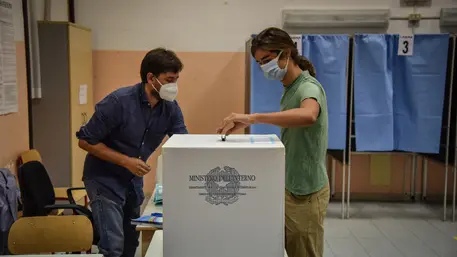


I will not be explaining in detail the consequences of the potential referendum vote on Sunday 12 June aware of the fact that, with good verisimilitude, the silent and subtle ideological contrast on the issue between alleged "guarantors" and approximate "executioners" could represent the distortion of the system capable of compromising its success even in percentage terms.
Let us be clear: “nulla quaestio” on the use of the “referendum” as the highest expression of “direct democracy”, of the participation of the people in the decision on fundamental issues, including those of a purely legal nature. But when that mechanism seems to have become, in the context of common feeling, a mere expression of a precise political direction, far from the everyday life of ordinary people, by virtue of what valid and effective inspiring motto can the population actually feel involved in the results of the vote itself?
Are those referendum questions really suitable for contributing to the improvement of the management of the penal system "latu sensu" considered?
Let's face it all: that on Sunday seems to represent, indeed, a vote to the ritual opposition between the highest ruling classes of the country, functionally merged by the Government of the (alleged) Best (probably fished from the party "reserves" to offer a semblance of novelty) which a vivid and sincerely very unconvinced and equally unconvincing expression of the most bitter contrast between those who live and interpret the role of the judiciary in its "docimological-moralizing" function and those who, on the other hand, are led to consider only its "inquisitorial" profile. All this, in the context of a very stringent and pathological motivational result, in which the polarizing extremization of the two opposing dysfunctional ideologies by definition, the "moralizing" and the "inquisitorial" one, inevitably ends up frustrating and wearing down not only the terms of the debate , now pervaded by itself sterile para-juridical technicality, but also the level of tolerance of the subjects called to express their "yes" or their "no" just when, flattened and disheartened due to historical contingencies as pandemic as war, would like to discuss something else to improve their personal management of daily life and its eventualities.