

It is not easy to tell a war through the eyes of someone who does not brandish a weapon, but a musical instrument. Yet it is precisely from this gaze - full of respect, awareness and grace - that Paolo Fresu, a world-famous trumpeter born in Berchidda, manages to trace a different narrative of his experience in Kiev. A narrative made of sounds, silences, gestures and glances, which insinuate themselves between the sirens of air raids and improvised shelters, in the cafes that resist and in the hands that tremble but do not stop.
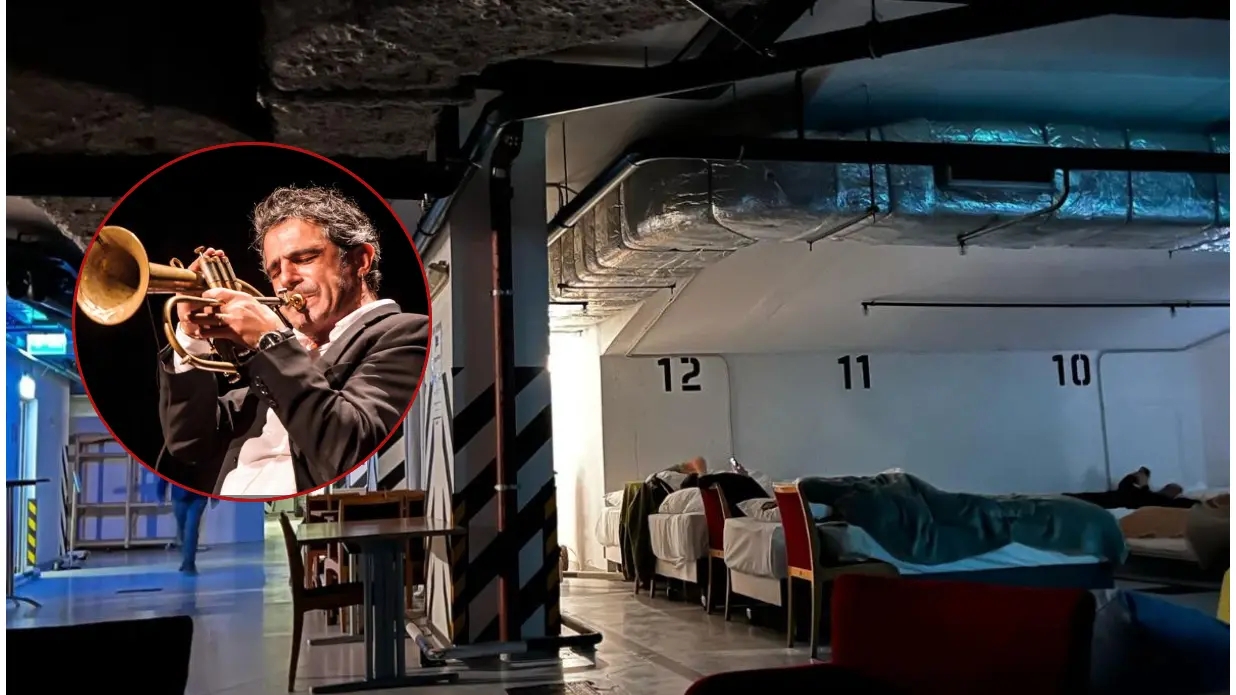
"We spent part of the night in the hotel shelter, which is nothing more than an underground car park," Fresu says during a break before the concert he will hold this evening in a 350-seat hall that is already packed, where representatives of the Ukrainian government, the international community and, above all, many ordinary citizens will be present. "There were makeshift beds, sofas, a corner for water and coffee. Many people slept there, used to this. We only came back up after an hour, when the alarm stopped."
It is not the first time that war is told through music, but in this case it is music that tells the story of war. Or, better yet, that tries to say what words cannot. Kiev is a city crossed by a strange normality, where life seems to continue as usual, but beneath the surface you can sense something suspended, something cracked. There is a curfew that starts at midnight, alarms that sound via app, maps that change color hour after hour. "You observe people while they eat at a restaurant during an alarm: they don't move. They live this condition with a resilience that is intertwined with a profound resignation. The Italian ambassador Carlo Formosa also told us: there is a resignation among the people, but it is not passivity, it is a way of staying standing".
Fresu’s journey began overland, passing through Moldova, crossing the border above Odessa, skirting villages marked by poverty, where the trenches can still be seen . “At one point we stopped to let a funeral pass. It was clear that it was a young boy, returning from the front. At another point I saw a newly built house, and men – not young, because young people are all at the front – who were working there. It was as if there was a symbol in that gesture: building means hoping. A simple act, but very powerful.”