

A few years ago, Donne Chiesa Mondo, a supplement of the Osservatore Romano dedicated to women in Catholicism, caused a stir with an investigation into the abuse and violence to which nuns and religious women were subjected by members of the clergy. The investigation, commissioned by the insert's then-director Lucetta Scaraffia, stirred some debate about the status of consecrated women in the Catholic Church, but was quickly swept into oblivion by the Vatican hierarchy. Scaraffia was removed, and Donne Chiesa Mondo passed into other hands, perhaps more faithful to the line (though we don't know), certainly more cautious. And a veil was drawn over the discrimination and abuse suffered by so many women, we don't know how merciful. The veil that covers whitewashed tombs, probably.
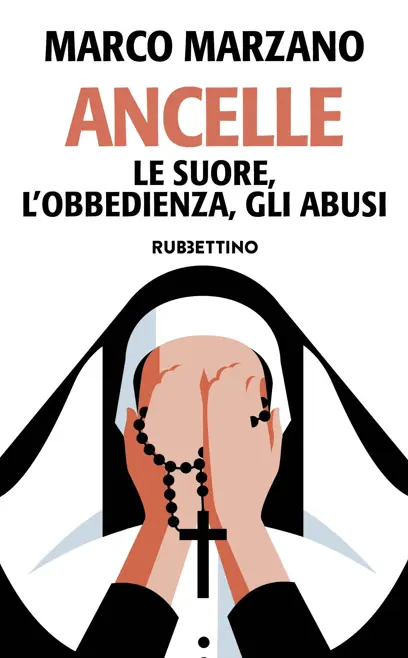
Little has been said about nuns, their lives, and their role within a Church still almost exclusively dominated by men, and even less has been known. For this reason, a book like Ancelle. Le sorelle, l'obbedienza, gli abusi (Rubbettino, 2026, €18.00, pp. 220), written by Marco Marzano , a sociologist and one of the leading scholars of contemporary religious phenomena, seems even more important and necessary.
Marzano has a starting point: he chose to address a topic too often ignored in Catholicism, namely the condition of consecrated women, which then reflects the condition and consideration of women in the ecclesiastical sphere.
Priests, in fact, are widely spoken of, both good and bad. Nuns and nuns are rarely spoken of, and almost always in the tone of a devotional fairytale, as if the nuns were always busy making jam or embroidering, if not praying.