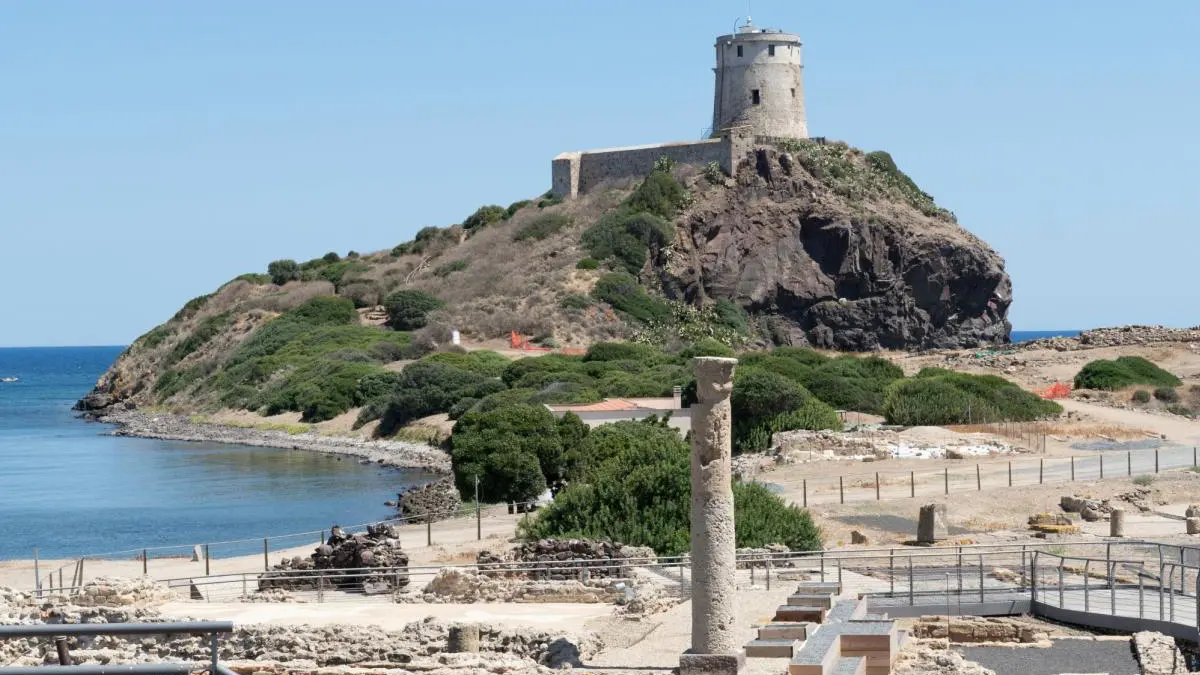


Archeology and technology meet in Nora in a partnership that will allow everyone - from today - to be able to admire the beauty of one of the most evocative and famous sites, not only on the island but on a national and international level. In the name of an increasingly inclusive policy, which aims to make culture and beauty usable and accessible and break down barriers, the new project for the archaeological area was presented . On the occasion of the reopening of the route that leads to the temple of Aesculapius, after 5 years, the new information panels were also inaugurated, with the scientific contents of the Nora area . These are real "talking panels equipped with video technology", which make visiting the site accessible even to blind and deaf people.
The Pula Cultura Diffusa Foundation and the Municipality of Pula immediately demonstrated great sensitivity and gave great importance to the issue of accessibility and usability of the site. After a great deal of research and collaboration between the most accredited experts in the field, today the information panels are equipped with highly advanced technology: a QR code will also allow the blind and deaf to use the information. Thanks to the support of the National Institute of the Deaf of Turin, a system has been added to the 36 panels that connects them to a video in sign language (Lis), where the interpreter "marks" everything that is written in the explanation . There will also be a voice accompanying the video to allow blind people to learn information relating to the various areas of the excavations. The videos comply with the Universal design concept by being multi-modal: sign language, vocal and written.
«The new signage designed to allow everyone to discover the beauties of the Nora archaeological park is in line with all the actions undertaken in recent years by the municipal administration to make our town increasingly inclusive», said the mayor of Pula, Walter Cabasino. The archaeological area of Nora stands out once again in Sardinia, being the first to equip itself with this type of communication system which makes the use of cultural heritage totally inclusive. In Italy it has been adopted by the Egyptian Museum of Turin, the Museum of Oriental Art of Turin, the Civic Museums of Monza, the Castello Sforzesco, the Museo del Mare of Palermo, Castel del Monte, the Muse of Trento, the Galleria Borghese.