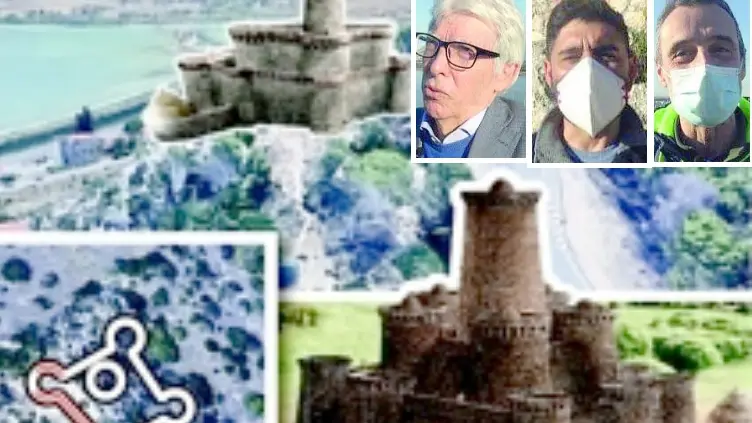


Majestic and imposing. A giant of white stone in front of a boundless horizon: the sea, the ponds, the expanse of the Campidano, the mountain spurs of the interior. It is the nuraghe of Cagliari that is brought to light in the Monte Urpinu Park. An exceptional discovery. The merit goes to the archaeologists Giovanni Ugas and Nicola Dessì, the teacher and the pupil united in this exciting discovery facilitated by Corrado Mascia, from Cagliari, passionate about archeology and promoter of the Facebook page "The guardians of memory" which he indicated to the two scholars the best way to recover the memory of the monument. «I had been looking for it for some time - says Mascia - but I thought it was in another point of the hill. A friend, Giuseppe Cocco, sent me a detailed photo of the area. In that image I noticed the signs that referred to that nuraghe. The uncertainties have cleared. I identified the area and immediately called Giovanni Ugas and Nicola Dessì. Official recognition has come from them ».
The monument
"The nuraghe of Monte Urpinu - explains Ugas while walking along the narrow path that leads to the site above viale Europa - shows the same planimetric drawing of the nuragic palace of Su Nuraxi di Barumini, but it was larger to judge by the length of the residual curtain wall". The sequence of limestone boulders of the outer wall, other large stones, which were probably part of one of the towers, and the remains of artifacts that continue to bear witness to a very distant past remain of the ancient glories. Brambles, scrub and waste are the cumbersome counterpoint of a fascinating story that greatly enriches the times of Cagliari's history. Unfortunately, the monument has suffered irreversible damage: an intense mining activity has taken place in the area for centuries. The limestone quarry, the fulcrum of a thriving economy, inevitably conditioned the fate of the mighty building and stole valuable information. Furthermore, during the Second World War, the nuraghe was "suffocated" by the military fortification built to house the anti-aircraft battery. In more recent years, the Municipality has also built a large concrete cistern in the immediate vicinity.