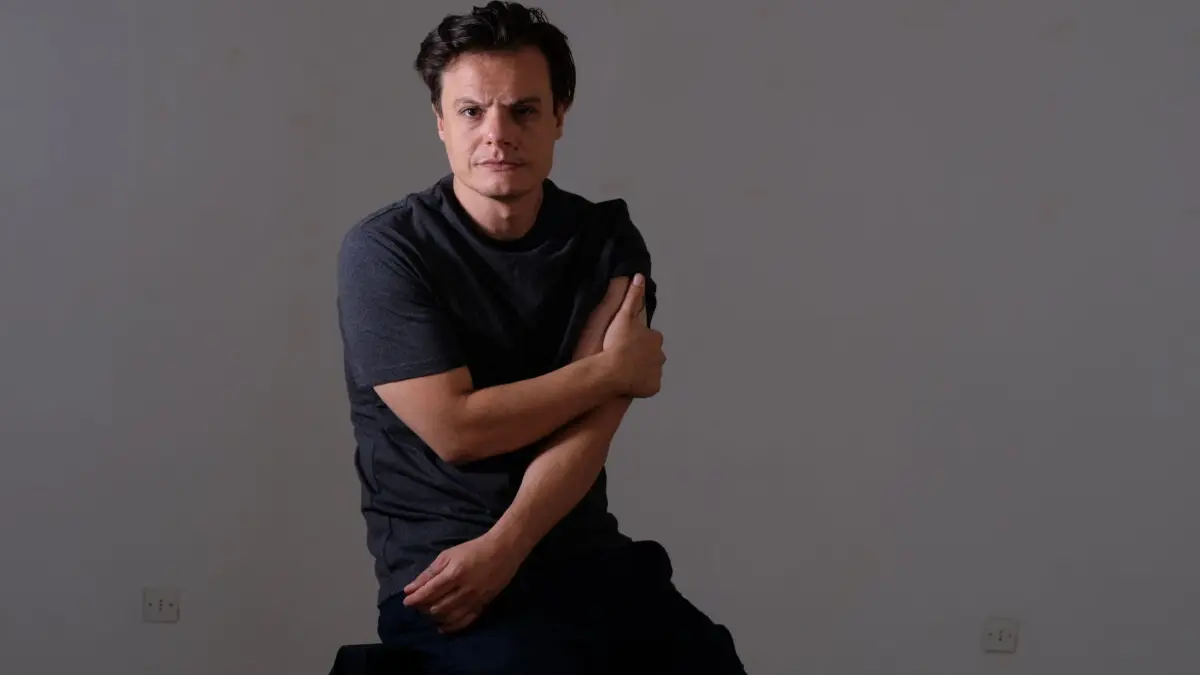


"Carmine 2026" is drawing to a close after transforming Cagliari's Piazza del Carmine into an open-air stage from June to September, bringing music, theater, literature, contemporary circus, and the performing arts. And poetry: fresh from a David di Donatello award for Best Supporting Actor for Valerio Mastandrea's "Nonostante," Lino Musella, a Neapolitan actor born in 1980 and one of the most intense and versatile figures in Italian cinema and theater, will read "State of Siege" by Mahmoud Darwish, the greatest contemporary Palestinian poet, tomorrow at 7:30 p.m.
Musella, how did this text come into your hands?
"In 2023, I came across it in a newspaper, and I was very struck by the title. I researched the author; there are people very close to me—aside from my partner—who are experts in Arabic literature, and they explained to me that Darwish was the most important contemporary Palestinian poet in Arabic. I found a way to obtain the text, and the translation was done by Wasim Dahmash, whom I also met because he co-founded the Gazzella Onlus association, to which the proceeds from this evening are often donated."
It is not the classic poetic anthology.
We can consider it a collection of poems, but already in the preface the author explains that he considers it a text, as if it were a single composition made up of fragments. And indeed, reading it leads us to experience this very pattern: we can't pick out or extrapolate every single fragment; it's as if it had a beginning and an end, and all these fragments intertwine at a certain point.
Dar wi s h was a civil poet, a man forced into a long exile. What did he discover of this civil streak , and what did he bring to the stage?
"In other words, both a little and a lot: I bring a body and a voice. There's nothing simpler, but there's no more daring challenge than trying to recite poetry in public; so I also bring a request to be heard. Poetry craves an ear to listen to it, says Gualtieri, and in this case, I believe poetry suggests a method to the performer. It's not you who bends the author; you have to sense how to convey the breath of that text."