

Sardinia produces. Sardinia exports. Sardinia demands justice.
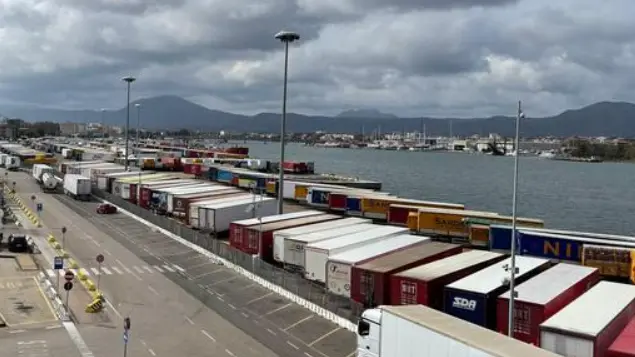
Sardinian businesses, cooperatives, trade associations and institutional representatives underline this in a letter addressed to the Minister of Infrastructure and Transport Matteo Salvini , to denounce «the unsustainable cost of maritime freight transport , a structural crisis that is suffocating the Sardinian economy and risks worsening further with the entry into force of the ETS system on 1 January 2026 ».
The list of signatories is very long (the complete list is at the bottom of the page), starting with Michele Cossa (Committee for Insularity) and Aldo Salaris (Vice President of the Regional Council of Sardinia), along with trade associations (Assospedizionieri/Federsped, Confindustria Sardegna, Coldiretti, Confartigianato Sardegna, CNA, Confapi, Confagricoltura, Confcommercio, Confesercenti, Confcooperative, Confartigianato Sassari, Confartigianato Sud Sardegna), transport and logistics operators, and manufacturing and distribution companies.
"The transport of goods to and from Sardinia," it is emphasized, "is currently experiencing a structural crisis. Costs have skyrocketed, uncertainty has become systemic, and the island's businesses are suffering from a decline in their competitiveness, production continuity, and employment. This is not a seasonal emergency: it is a permanent economic bottleneck, which risks worsening further."
Furthermore, the signatories continue, "During the summer months, the volume of cargo transported increases by up to 80%, but hold capacity does not follow suit: on the contrary, it is often reduced in favor of passenger traffic, which is more profitable for shipowners. The result is that reservations do not guarantee the trip, logistics planning becomes haphazard, and costs explode precisely when demand is highest."
"Article 119 of the Constitution is not a wish: it is a binding law," explains Michele Cossa. He adds: "The disadvantages resulting from insularity must be compensated for. We are not asking for privileges, we are asking that the law be respected. Corsica has a publicly funded and functioning compensation system. Greece does the same. Sardinia does not. And meanwhile The letter recalls that "Sardinia's problem is certainly not unique in Europe: it has already been addressed—and resolved—in other island contexts. France has obtained authorization from the European Union to support the maritime transport of people and goods to Corsica with approximately €120 million annually, qualifying it as an essential service subject to public service obligations. Greece invests between €70 and €150 million annually to offset the costs of insularity. "This is not an ideological issue, nor is it a partisan issue. It is a question," says , "of territorial equity that concerns every entrepreneur, every worker, every Sardinian citizen. Regional institutions stand alongside the productive sector in this battle. We ask Minister Salvini for a serious, rapid, and productive discussion."