

The exhibition "Nivola, Columbus, and the surrounding space" opens in Orani.
The exhibition – curated by Chiara Gatti and Anna Pirisi – will be hosted at the Museum until October 25th.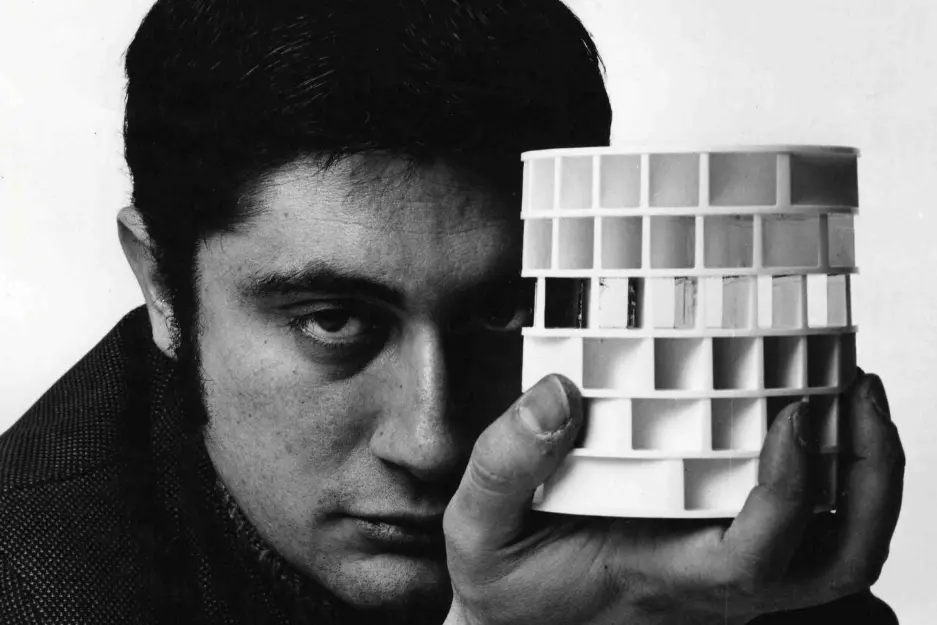
(Photo courtesy)
Per restare aggiornato entra nel nostro canale Whatsapp
Until October 25, the Nivola Museum in Orani hosts the exhibition “Nivola, Columbus and the surrounding space.”
An exhibition, curated by Chiara Gatti and Anna Pirisi , in collaboration with the Gianni Colombo Archive of Milan, which is part of the new programme “Nivola vis-à-vis” , designed to create a dialogue between the great Sardinian artist – who passed away in 1988 – and crucial figures in the artistic panorama of his time,
"The exhibition project," the organizers explain, "unfolds across three rooms, three environments, three places to be traversed and experienced. It investigates the theme of space and the experimental language of the environment , as a place of relationships between our body and the habitable dimension that welcomes it, its perspectives, volumes, emptiness, and light."
Thus, "here are Nivola's Room of Dreams, Gianni Colombo's Elastic Space, and the Room of Memory for the activation of collective memory. A narrative in three moments, in tripartite rooms, like the rhythmic units of ancient songs; starting from choral memory, a broader reflection on the way we inhabit and perceive space emerges. The audience's sensory experience is measured against the artists' research and, at the same time, against the space itself."
The scientific rationale for the project stems from a significant coincidence of dates. Costantino Nivola's first environmental study dates back to 1968: the Model for the Monument to Antonio Gramsci, executed the same year Gianni Colombo exhibited his Elastic Space at the Venice Biennale.
Thinking about space in terms of crossing is what Nivola did in the 1960s with his horizontal monuments, such as the project for Piazza Satta. Thus, connections between masters emerge, in the construction and trajectories of light that define the space. "A light that enters through the window," Nivola said, "to dissolve the persistent darkness/ From my temple and prison of intimacy/ And my daydreams."
In Nivola's aesthetic research, the room takes on the role of a primary measure of space: not simply an architectural environment, but a place constructed around our presence. Inhabited space thus becomes the essential nucleus of his speculation, a volume conceived to accommodate, define, and connect humans with their surroundings. This idea constantly permeates his work, where architecture, sculpture, and everyday life merge in a profoundly human vision of space, later reifying itself in the "little theaters," based on modular forms, mathematical relationships, and proportions. A subtle evocative tension also emerges, capable of conjuring an enigmatic and contemplative sphere. The "dream boxes," the little theaters, thus explore our immersion in an interior, in the perspective that engulfs us, like silent actors in a performance devoid of a script, suspended in a time that betrays becoming in the shifting light.
Colombo's reflection, in turn, opens to the theme of experience. "I thought about working more on the conditions of the spectator's state of equilibrium, sensation, and relationship with space," he said, "rather than creating a complex, scenographic visual spectacle [...]. I was looking for the possibility of incorporating these types of sensations into a work to be enjoyed as an emotional factor and an expressive fact." (Gianni Colombo, typescript, 1964/65) The habitable reconstruction of the Room of Dreams, in dialogue with Colombo's Elastic Space, produces a shift in perceptual experiences, amidst disorientation, shifting coordinates, and illusionistic escapes.
In relation to these, the third room is designed to accommodate collective memory, in an act of active citizenship that transforms the space from a neutral container into a think tank, a device for collecting memories, through different languages, voices, gazes, writing, images—a minimal yet crucial gesture for the creation of an archive that will, in effect, be preserved by the museum. The Washhouse becomes a place of encounter and exchange, where memory, art, and community intertwine in a new shared experience.
(Unioneonline)
