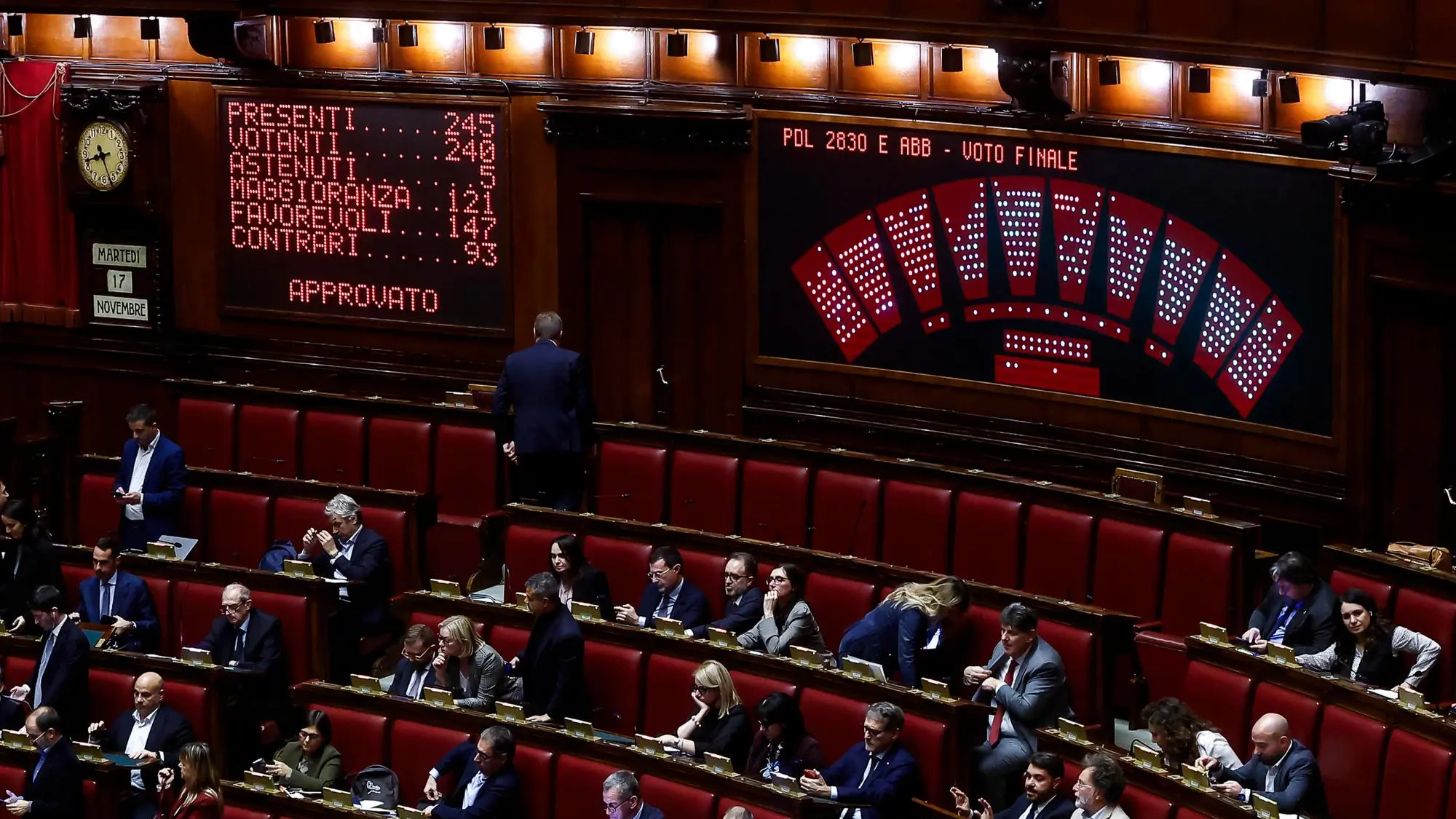


A long and tense oratory marathon, worthy of the debate that has accompanied the Anti-Semitism bill in recent months, culminated in its final approval by the Chamber of Deputies . The bill adopting the definition of anti-Semitism promoted by the IHRA received 147 yes votes from the center-right with the support of Italia Viva and concluded its parliamentary journey, becoming law, but leaving behind a trail of controversy and tension, both inside and outside the chamber.
The majority rejoices with the result. Campo Largo—with the exception of Italia Viva—says no, while the reformist wing of the Democratic Party (PD) does not vote, once again disregarding the party's recommendation and confirming the divisions that emerged in the Senate during the first reading. The new law provides for the official adoption of the working definition of antisemitism formulated by the IHRA (International Holocaust Remembrance Alliance) and a series of preventive and monitoring measures, without introducing new specific criminal offenses . It fully adopts the International Holocaust Remembrance Alliance's definition of antisemitism (with related explanatory examples, including those related to certain forms of criticism of the State of Israel).
It does not establish new criminal offenses, as the matter is already regulated in Italy by current legislation (such as the Mancino law). It establishes the position of National Coordinator for the Fight against Antisemitism at the Office of the Prime Minister . Furthermore, it provides for the adoption of a three-year national strategy and the creation of a database to monitor and collect data on antisemitic incidents and hate crimes .
The main focus in the Chamber was on the opposition's amendments to Article I of the bill, which defines the International Holocaust Remembrance Alliance. The Democratic Party, AVS, +Europa, and the Five Star Movement called for the text to be amended and for the adoption of the Jerusalem Declaration on Antisemitism, which explicitly refers to "discrimination, prejudice, hostility, or violence against Jews because they are Jews (or against Jewish institutions because they are Jewish)" without any reference to the State of Israel. Rapporteur Paolo Emilio Russo and the government rejected the bill resoundingly, rejecting all of the opposition's proposals before rejecting them at the vote. "No one in this Chamber has ever dreamed of limiting the right to political criticism," Russo explained.
There were many tense moments during the debate. The first involved FdI MP Mauro Malaguti and Liberal Democratic Party Secretary Luigi Marattin. The Fratelli d'Italia representative referenced the rising birth rate in Gaza to deny the idea of genocide. "Saying there was a genocide in Gaza makes you liars, not anti-Semites," Marattin commented. AVS leader Nicola Fratoianni reacted immediately: "The obscenity we witnessed is a dark page in the history of this Parliament. And you, colleague Malaguti, should be ashamed." A second tense moment occurred after the intervention of Futuro Nazionale MP Rossano Sasso, who in the Chamber celebrated the figure of the fascist philosopher and minister Giovanni Gentile as "the greatest minister in history," calling the GAP group that assassinated him "cowards and murderers." These words sparked outrage among Democratic Party MP Gianni Cuperlo: "We've heard words that are a disgrace to the Italian Parliament. Shut up, fascists," he responded.