

Staff unavailable in Sardinian restaurants: "But salaries are fair."
Between population decline and the exodus abroad, it can take up to five months to find a chef. The Italian Federation of Italian Professionals (FIPE)'s solution: "Team up businesses and workers with training, welfare, and new shifts."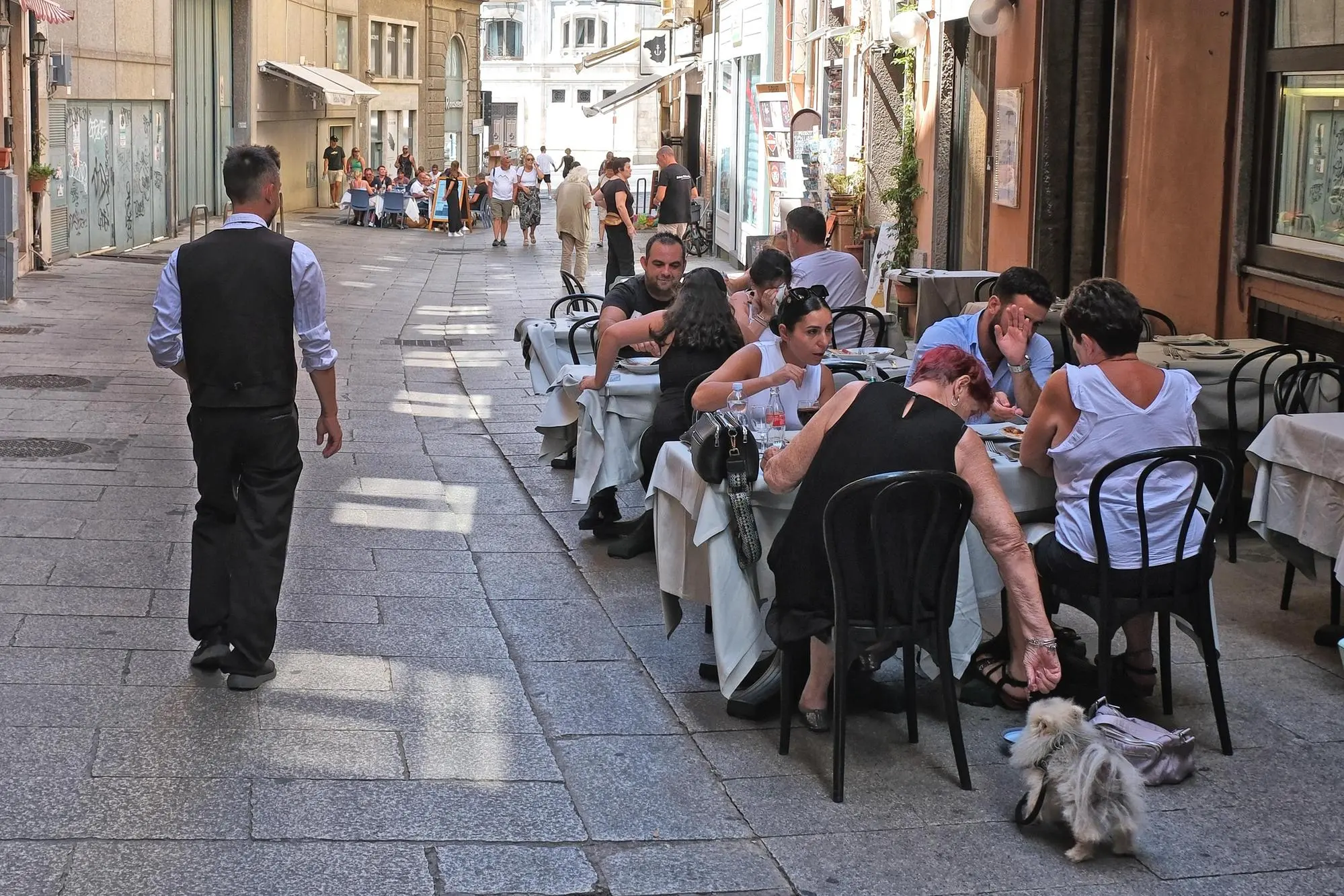
Per restare aggiornato entra nel nostro canale Whatsapp
Staff are hard to find in Sardinian restaurants: "There's a shortage of candidates, but the salaries are fair." Between the population decline and the exodus abroad, finding a chef is extremely difficult. The Italian Federation of Italian Workers (FIPE)'s solution: "Team up businesses and workers with training, welfare, and new shifts." Finding a chef can take nearly five months. And when a restaurant business can't fill a position, in two out of three cases the problem isn't the insufficient training of those applying: it's simply a shortage of candidates. According to FIPE Sardinia, this is the starting point for understanding what's happening in the labor market, without reducing a complex phenomenon to just salaries.
The latest data from the Excelsior Report by Unioncamere (Italian Chamber of Commerce) reveal a difficulty that extends well beyond the restaurant industry: in Sardinia, 47% of hiring plans by companies involve hard-to-find profiles , with critical issues affecting tourism, services, construction, and digital skills.
For Fipe, this is therefore a structural problem, intertwined with demographics, training, educational orientation, skills availability, and people's changing relationship with work.
A theme also emerged at the recent national roundtable organized by Fipe on the future of work in the restaurant industry: the demographic decline and the migration of some young people abroad are reducing the number of people available to enter the job market. Restaurants and bars are therefore seeking workers in a smaller pool, one that is also being competed for by other sectors. The difficulty in recruiting staff must also be interpreted in light of this change, along with the working conditions and career prospects offered by companies .
This doesn't mean ignoring the specificities of the restaurant industry. Evening shifts, weekend and holiday work, seasonality, and the difficulty of balancing work and family life are real problems that the association believes need to be addressed.
Our sector faces critical issues, and we have no interest in hiding them . But precisely for this reason, we must fully understand why so many companies looking for staff today are unable to find them. The labor market has changed, and new tools are needed to meet new needs.
Regarding wages, FIPE cites the National Collective Bargaining Agreement for Public Establishments, signed with Filcams, Fisascat, and Uiltucs. Starting June 1, 2026, the minimum contractual wage is €1,693 gross per month for the fourth level and €1,390 for the seventh level.
This figure, the association emphasizes, must be read in conjunction with the employment structure: 59% of employees in the sector work part-time, while 60.5% have a permanent contract . A monthly salary for a part-time contract cannot therefore be directly compared to the minimum wages for a full-time position.
The situation is different for those who don't follow the rules. Wages below the contractual minimum or hours worked without payment are violations that must be reported, investigated, and sanctioned. For FIPE, there can be no ambiguity on this point.
However, the numbers show how difficult it has become for businesses to find staff. In 2025, one in two job searches in the restaurant industry was problematic, and for some professions, selection times have stretched to several months.
In Sardinia, the sector has 4,801 companies with employees, with an average of 5.6 employees per company . This picture is made up primarily of small businesses, where labor costs, shift organization, and general cost increases directly impact the sustainability of the business.
For Fipe, it is therefore on this ground that the dialogue with workers' representatives must be built: professional training, orientation in schools, contractual welfare, work organization and reduction of the tax wedge .
" A company has every interest in retaining a skilled worker , developing them, and investing in their professionalism. When someone leaves, you don't just lose an employee: you lose experience, training, quality of service, and competitiveness."
Finally, Fipe draws attention to a part of the industry that often remains in the background. In Sardinian restaurants, characterized primarily by small businesses, owners frequently work alongside their employees, dealing with shifts, weekends, and holidays, along with the financial responsibilities associated with the business and the jobs it generates.
We don't believe workers and entrepreneurs should be pitted against each other. The thousands of businesses that respect their contracts, regularly pay salaries, contributions, taxes, and suppliers, and continue to create jobs deserve just as much attention as the people who work there. The restaurant industry only works if we work as a team . The challenge is to make work more attractive and sustainable while simultaneously enabling businesses to continue creating jobs. This is what we want to discuss with the trade unions.