

Seas are getting warmer, mussels and oysters are struggling, and alien fish are on the alert.
The Mediterranean is experiencing fever; animals, algae, and plants are suffering from the new temperatures. And harmful, often dangerous, species are reaching our waters.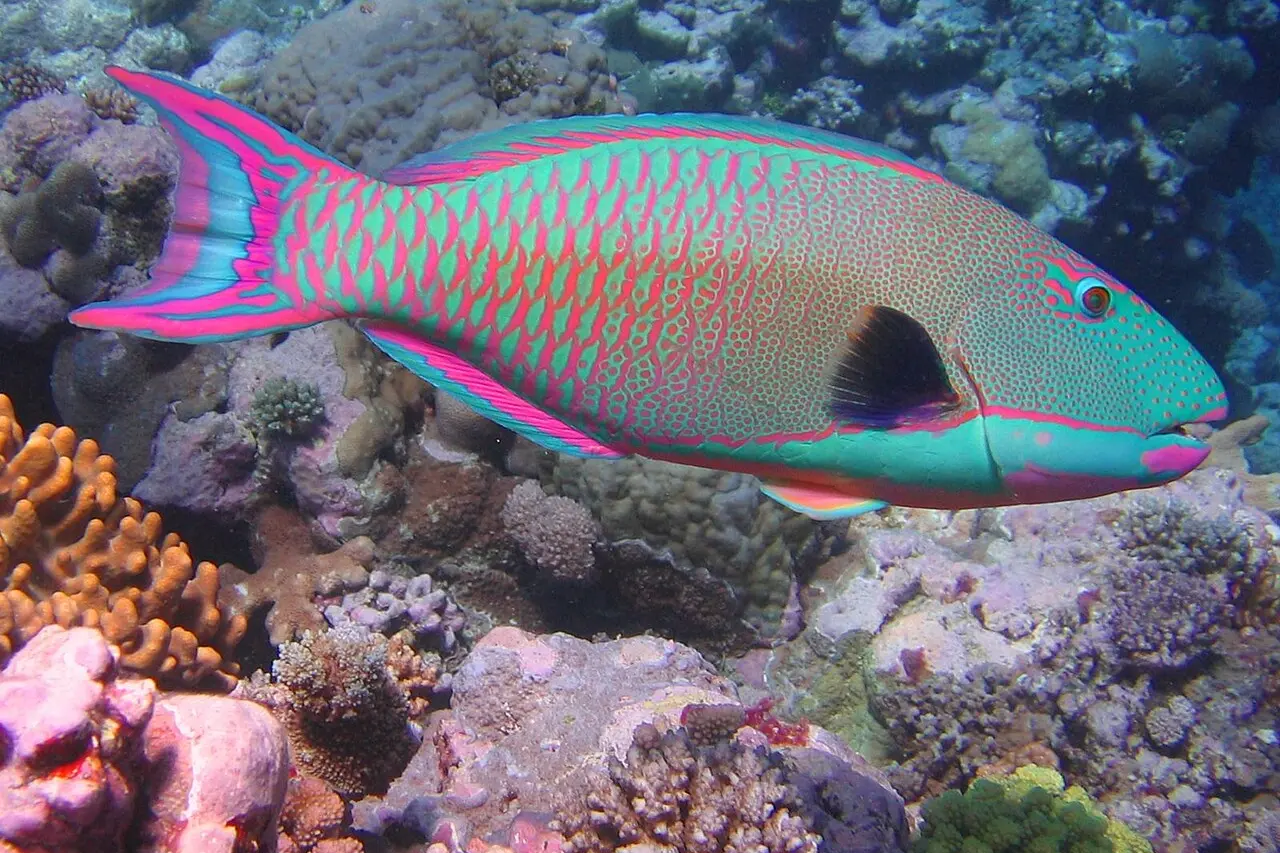
A parrotfish
Per restare aggiornato entra nel nostro canale Whatsapp
Hot on the surface, hot tens of meters below: the Mediterranean is on edge. And the risks aren't just extreme weather: typical animals, algae, and plants, accustomed to the ancient temperatures, are suffering, and "alien" species, often harmful, sometimes even dangerous, are spreading in the Sardinian seas.
The results of the "Mare Caldo" monitoring program released a few weeks ago by Greenpeace are alarming: last summer, the three monitoring stations in Sardinia (in the Marine Protected Areas of Asinara, Tavolara-Punta Coda Cavallo, and Capo Carbonara) recorded surface temperature anomalies of up to 3.5 degrees above reference values, and the heat had spread to depths of up to 30-40 meters, threatening benthic organisms such as yellow gorgonian fans and Mediterranean coral. Marine communities are reorganizing, and those most sensitive to high temperatures are the ones who suffer the most.
Molluscs in distress
But the scorching summer we're experiencing has seen temperatures exceed 30 degrees Celsius in the waters of Villasimius, and it looks set to worsen the situation recorded in 2025, warns Antonio Pusceddu, a marine biologist at the University of Cagliari. "This poses major problems, for biodiversity and beyond. Bivalve mollusks are suffering: in Santa Gilla, where a research project led by the CNR is underway, mussels and oysters have been lost, and dozens of families are desperate."
Alien fish
The fish are no better off. Marco Casu, a marine and inland waters zoologist at the University of Sassari, explains that there are two phenomena to watch: "There's the meridionalization, with the spread of species moving north from the southernmost areas of the basin, such as the dogworm (from North Africa: stinging, it damages nets and sheds the small spines it's covered in), the parrotfish (from Crete, fond of gorgonians), and the bluefish (from the Aegean: a great predator, it competes with the sea bass). And then there's tropicalization, with the arrival of species through the Suez Canal or the Strait of Gibraltar: from the rabbitfish (prolific and fond of the same food as the white sea bream) to the spotted pufferfish (which contains a very dangerous tetrodotoxin: woe betide anyone who eats it) to the blue swimming crab, similar to the now common blue crab (and very harmful to fisheries) and recently spotted alive for the first time in Sardinia, in the Tortolì lagoon.
Not to mention the Portuguese man-of-war (an “extremely stinging” jellyfish) or the triggerfish (“territorial”: two tourists were bitten a month ago in the waters of Cilento).
Marco Noce
All the details on L'Unione Sarda on newsstands and on Unione Digital