

Schools in the Nuoro area are not being merged, but the truce is fragile: "Many students travel more than two hours."
The Provincial Conference has confirmed the 27 autonomies and 153 service points, but the issue is not closed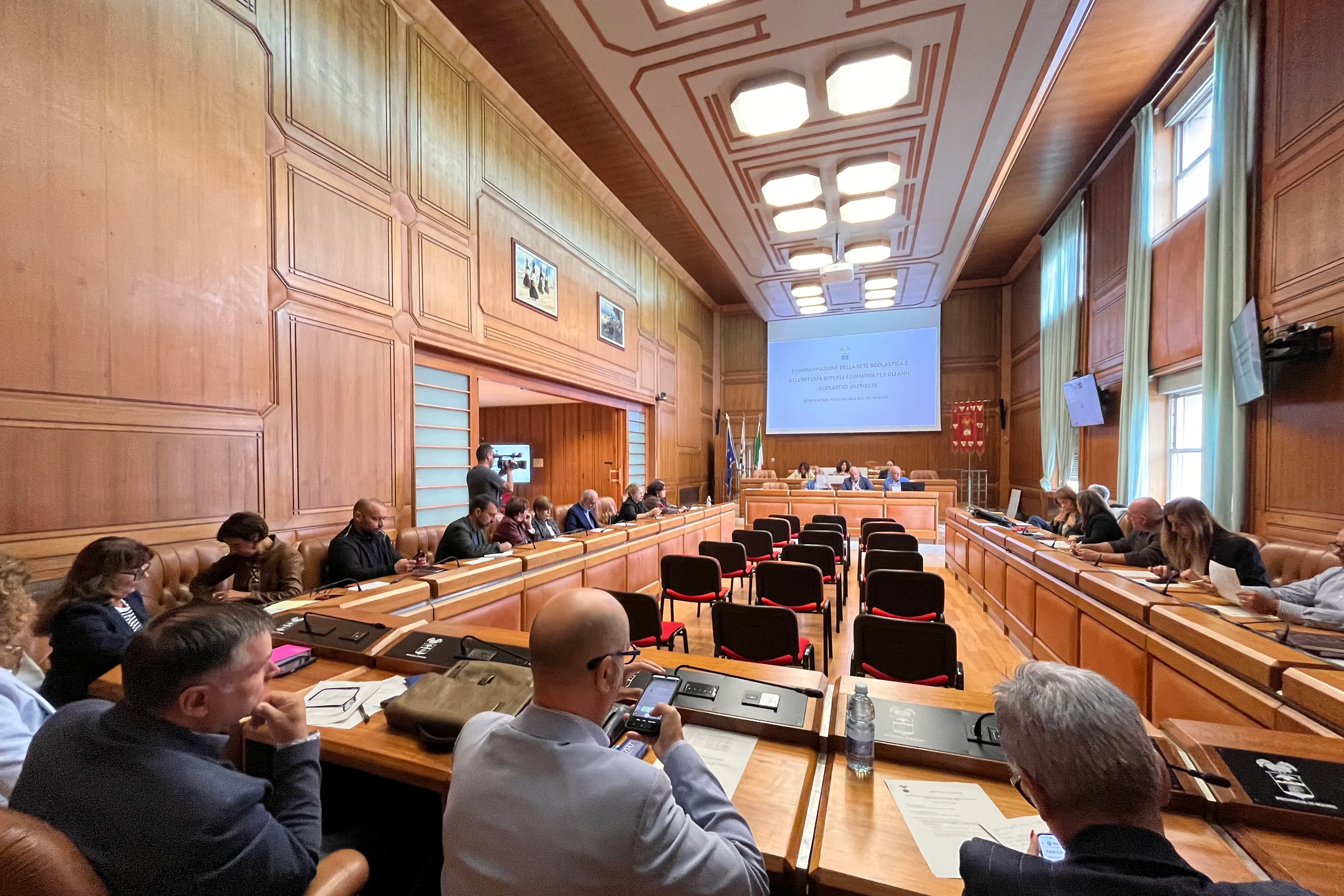
Per restare aggiornato entra nel nostro canale Whatsapp
No new mergers, but the game over the future of Nuoro's schools is far from over. The Provincial Conference unanimously approved the School Network and Curriculum Plan for the next three years, confirming the 27 autonomous districts and 153 service centers. This respite comes as the numbers reveal an increasingly evident demographic decline. In the first cycle, students dropped from 10,335 in 2024/25 to 9,510 in 2026/27. In the second cycle, they dropped from 6,709 to 6,317. And the most immediate figure concerns primary school: 756 children enrolled in the first year this year, with 611 expected next year.
"There will be no new mergers," reiterated Provincial President Giuseppe Ciccolini, emphasizing the need to address the size of schools without automatic decisions and taking into account the specific characteristics of each region. Provincial Education Councilor Lisetta Bidoni also noted the decline in school populations: "Such dramatic numbers should make all administrators reflect." Travel distances are also a problem. Because in inland areas, the issue isn't just how many students there are, but how long they take to get to school. The most striking case is that of Cala Gonone. Dorgali Mayor Angela Testone reported that students leave at 6:20 a.m. and arrive at school at 8:40 a.m. It takes two hours and twenty minutes to travel approximately 65 kilometers to the high schools in Siniscola.
"It's intolerable," he said, reiterating the call for urgent transportation intervention. Similar problems have been reported for students in Fonni, Desulo, Mamoiada, and Ovodda, and Oliena, with overloaded buses and Mayor Bastiano Congiu writing to ARST. Meanwhile, in Aritzo, Alessandro Corona reported students forced to leave at 5:30 a.m. "We arrive in Cagliari sooner than in Siniscola," observed Michele Carta, director of the Oggiano Technical High School in Siniscola, summarizing a situation that risks also impacting their choice of major. "This year, a respite before the storm." Testone's definition is again: "This year, a respite before the storm." Because the population decline is destined to increasingly impact the network. In Nuoro, during the conference, a significant statistic was highlighted: 184 students are currently in first grade, while 110 are leaving. Next year, a loss of approximately 70 students is expected. Provincial director Giuseppe Zucca noted that the number of autonomous bodies depends on the number of directors established at the national level, while each year the Region and its territories must plan their educational network and offerings. And the lack of a regional education law that takes into account the specificities of inland areas remains in the background.
The mayor of Fonni, Daniela Falconi, has called for Sardinia to adopt specific legislation, warning of the risk of serious consequences for the Nuoro and Ogliastra areas if national standards are applied without considering distances and local characteristics. She has raised the alarm over the new legislation for mountain municipalities, which will also have a devastating impact on schools. Meanwhile, the Plan calls for expanding the offerings with the opening of the "M. Pira" Linguistic High School in Siniscola, at its Siniscola and Dorgali locations. This decision is supported by the two municipalities, but concerns have also been expressed about the potential weakening of existing curricula during a period of sharp decline in student numbers. This was raised by the principal of the Oggiano High School in Siniscola.
Regarding Mandrolisai, Ciccolini highlighted the situation of the four schools in the same area. Transportation is now the issue. The Province will bring the issues to the attention of the regional transport department at a meeting scheduled for Tuesday and has announced a steering committee meeting with operators and ARST. For Domenico Cabula, Nuoro's municipal councilor, the primary problem is the lack of transportation to and from the capital. For the CISL union, led by Giovanna Fadda, the demographic decline requires planning now for the impact on staffing and classes. The conference thus concludes with one certainty: there will be no new mergers this year. But the numbers indicate that the truce cannot last forever: 825 fewer students in the first year of primary school in two years, 392 fewer in the second year, 145 fewer children expected in the first year of primary school, and, in some cases, travel times of more than two hours to get to school. In short, the problem of Nuoro's schools has not been postponed. It's just postponed.