

Over €23 million for regional parks: the Region releases environmental funding.
The funds will finance the protected areas of Sardinia (Gutturu Mannu, Molentargius, Porto Conte and Tepilora), the climate resilience of the municipalities and the defense of the coastlines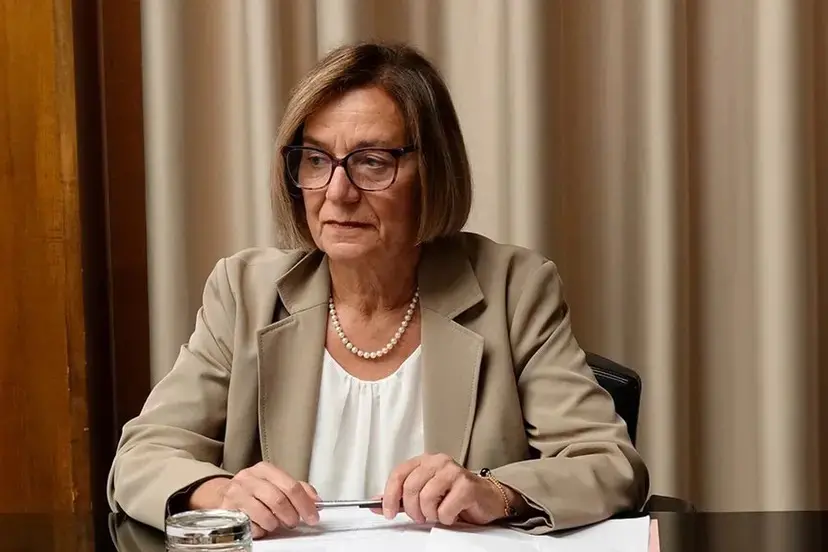
Per restare aggiornato entra nel nostro canale Whatsapp
Over €56.8 million of the regional budget variation is earmarked for the system of protected areas, municipal green and blue infrastructure, and coastal management. The first major project concerns the regional natural parks of Gutturu Mannu, Molentargius-Saline, Porto Conte, and Tepilora , which have been allocated a total of €23,295,061 to implement the interventions envisaged in the related planning.
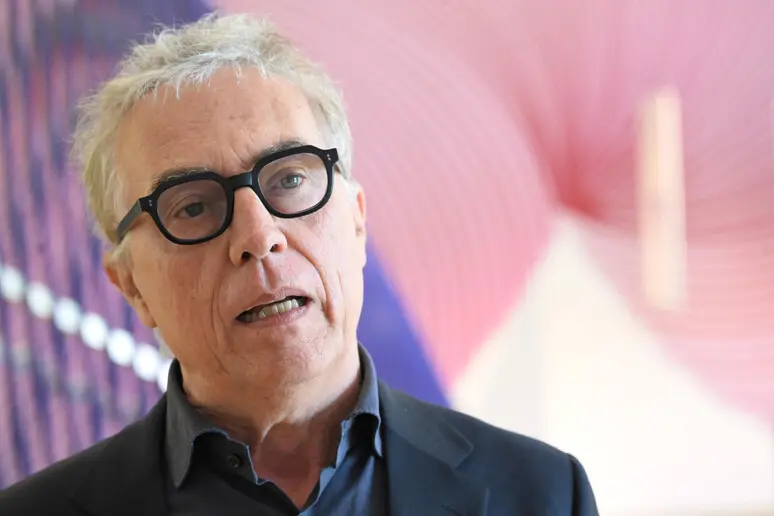
"After the planning phase, we need to give the parks the tools to translate it into interventions," says Environment Councilor Rosanna Laconi . "Protection doesn't mean closing off an area, but managing it well, restoring what exists, protecting habitats, and making use compatible with nature conservation. Interventions may involve, according to the provisions of the respective planning instruments, the restoration and safety of access points and paths, the redevelopment of existing buildings serving the parks, the restoration of habitats, and lightweight structures for sustainable use. The distribution of resources among the four parks will be defined in a subsequent provision of the Regional Council."
Additionally, €3.5 million is earmarked for the management of the Natura 2000 network , €300,000 for permanent wildlife protection oases, and €100,000 for UNESCO's Man and Biosphere program. In addition to these resources, €4.5 million is earmarked for 2026 for the Tepilora Regional Natural Park, for the completion of infrastructure for non-formal and outdoor education for young people, environmental education, scientific dissemination, lifelong learning, and the promotion of sustainable tourism, centered on outdoor living and community life. This allocation is complemented by €100,000 each for 2026, 2027, and 2028 for related management expenses.
A second €8 million initiative concerns green and blue infrastructure . The new resources allow for further advancement of the ERDF Action 3.7.2 ranking for eligible municipalities. These initiatives involve urban parks, woodlands, tree-lined avenues, waterways, wetlands, and ecological connections, which can produce environmental benefits and increase the resilience of urban centers to heatwaves and intense weather events.
On the coastal front, €7.456 million is also earmarked for the Coastal Conservation Agency over the three-year period, intended to strengthen its operational and multi-year planning capacity, and €1.3 million for the management of Posidonia oceanica deposited on the shorelines, with interventions that promote its management compatible with beach protection and erosion prevention. Furthermore, €5 million is earmarked for Marine Protected Areas over the three-year period (€1 million in 2026 and €2 million each for 2027 and 2028) to adopt solutions for energy supply and water resource management, as well as sewerage and wastewater treatment systems, compatible with the environmental value of the sites, in order to overcome infrastructure deficiencies in settlements on the smaller islands. Also on the coastal front, the revolving fund intended to provide financing to local authorities for the planning of coastal defense and redevelopment projects, as provided for by the 2023 regional law, has been increased by 2 million euros for 2026.
The budget also ensures the continuity of the Neptune Project , with €350,000 annually for the three-year period 2026-2028 to the Department of Chemical and Geological Sciences at the University of Cagliari for scientific research aimed at developing innovative tools for the planning and sustainable management of coastal areas. "Parks, urban greenery, and coasts," concludes Councilor Laconi, "are not separate policies; they are parts of the same natural infrastructure of Sardinia, on which biodiversity, quality of life, land safety, and the possibility of development consistent with the island's characteristics depend."