

NATO simulated nuclear war and disputed approval for drills: clashes reignite at Sardinia's firing ranges.
Comipa opposes Crosetto's decree authorizing troop training after a negative opinion: "Our refusal was dictated by insufficient information." Bonelli (Avs) warns: "From October 13th, Alliance fighters and drones will also be deployed in Quirra."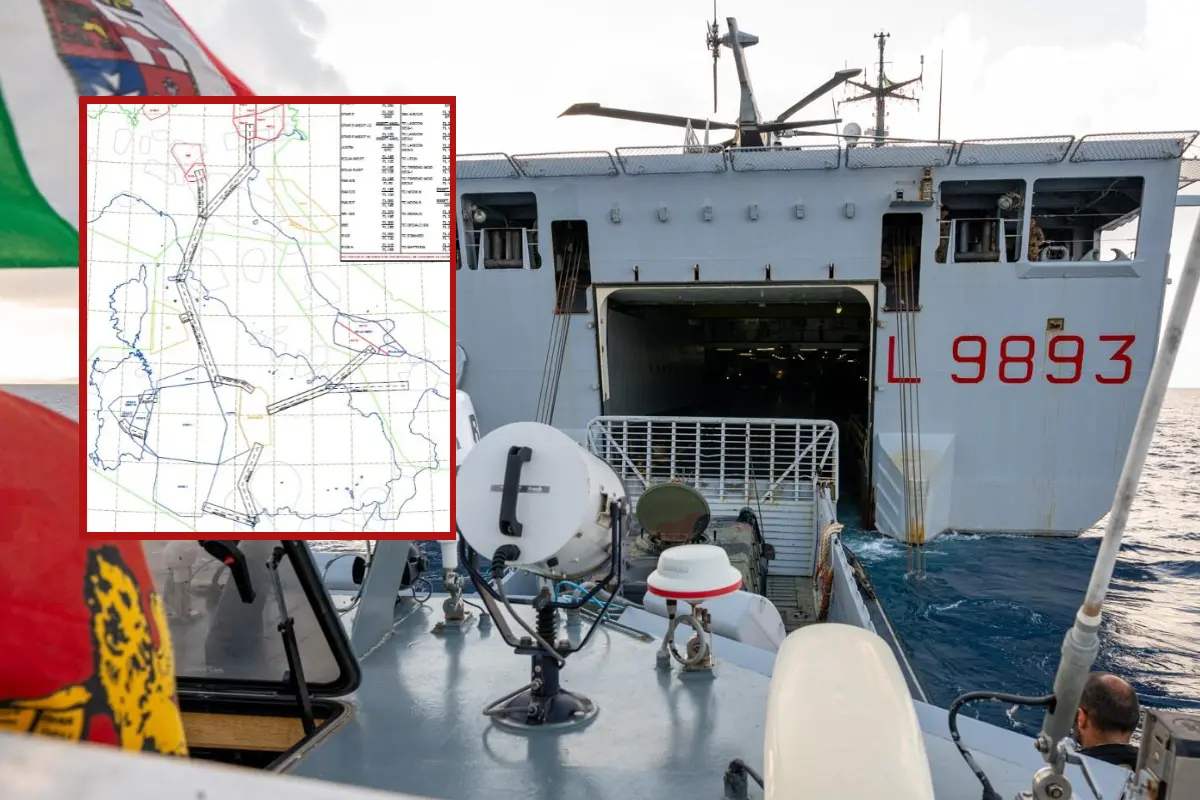
Per restare aggiornato entra nel nostro canale Whatsapp
A NATO nuclear exercise: Steadfast Noon 2026. Sardinia will be involved, according to the maps published by ENAV (National Flight Assistance Agency), which indicate the vast swaths of sky affected from October 13th to 20th, connected to the island and the bases of Ghedi, Aviano, Amendola, Gioia del Colle, and Trapani. Fighter jets and drones will be deployed. But there's also a schedule of "war games" in Sardinia, first rejected and then approved by decree. The reasons sparked controversy and a harsh response from the Regional Council representatives in the committee that must decide on all matters relating to the military presence.
The conflict has reignited over the war maneuvers, currently simulated, which will be activated in the coming days and will see the Sardinian firing ranges among the protagonists.

The question on NATO
AVS MP Angelo Bonelli has announced a question to Defense Minister Guido Crosetto regarding the operations scheduled for October 13-20, as described in a technical publication from the company that manages civil air traffic control in Italian airspace. Bonelli asks "why Parliament was not informed of an exercise of this magnitude on national territory, what role will drones have and what systems will be used, what shooting activities are planned, where they will take place, and with what ammunition, particularly at Salto di Quirra; whether the Sardinia Region, the other regions, and the municipalities overflown were informed and involved."

And he wants to know "what measures ensure the safety of civilian traffic and what environmental and noise impact assessments have been carried out, including on the Tyrrhenian marine ecosystem."
Asking for clarification on Steadfast Noon, the AVS representative emphasizes "how particularly serious the involvement of Sardinia is, once again treated as a military servitude." Bonelli clarifies: "The Star 5 area starts from the ground and covers part of the interior and the eastern coast, including the Salto di Quirra firing range, where demands for truth and cleanup have been made for years. The Noon N, Noon S, and Star 5 West corridors will cross central Sardinia at low altitude, up to about 1,800 meters."

Confirmation: nuclear exercise
"The Steadfast Noon exercise to be held in Italy (which will also involve Sardinia, ed.) will be nuclear," NATO's nuclear policy chief, Nassima Barrows, explained in a meeting with a group of media outlets, including ANSA. While no real nuclear weapons will be used in the exercise, it remains "essential to train to the high standards" required for such a mission.
"It is therefore essential to ensure both discipline and the ability to work together for collective defense, of which the nuclear mission is a critical component," said Colonel David Bull, Chief of Nuclear Operations for the Alliance.
Comipa against Crosetto
It seems like a coincidence, but at the same time, the civilian members of COMIPA (Joint Joint Committee on Military Easements) were drafting a response to the decree with which Crosetto—at the end of August—authorized the schedule of exercises on the island for the second half of this year. They had rejected it at the June 30 meeting. However, the minister emphasized, in summary: the training activities of the Armed Forces are necessary, and Sardinia has been granted significant concessions in terms of its military presence. Therefore, there is no reason to complain.
"We do not dispute the need for training, nor the constitutional role of the Armed Forces," responded Gianni Aramu, Alessandra Berry, Antonio Canu, Egidio Didu, Paolo Erasmo, and Domenico Cabula. "However, we believe that the vote against should be represented for what it was: a reasoned decision, taken in the exercise of the Committee's functions, and not an attitude of indifference, misinformation, or prejudice toward the Ministry of Defense."

The vote against was based primarily on "still insufficient information on relevant aspects of the programs. During the meeting, the possibility was raised that the Salto di Quirra Joint Range program could be affected by future activities by foreign armed forces, which have not yet been confirmed and are therefore not included in the calendar submitted to the Committee." The regional component requested information and emphasized the need for any changes to be reconsidered by the Committee. "It was assured that, in the event of changes, the Committee will be reconvened; however, at the date of the meeting, requests for information from previous occasions remained, including those regarding the companies using the ranges and the nature of the activities carried out."

Furthermore, "critical environmental issues and characterizations yet to be completed or clarified" were highlighted. For Capo Teulada, the need to prioritize marine area characterization activities and to provide timelines, methods, and concrete updates on planned interventions was emphasized. The regional component expressed concerns that complex and lengthy procedures will continue to be postponed, while training activities continue." Regarding Capo Frasca, the remaining issues were also highlighted, including seabed monitoring and cleanup, and the need to provide the committee with adequate information on cleanup activities and environmental monitoring.
During the June 30th meeting, it was also noted that "some requests from the territories and regional representatives have been the subject of discussion for years, without the affected communities feeling they have received sufficiently concrete and timely responses. The opposing opinion was intended to draw attention to this persistent gap between the requests formulated and the outcomes perceived in the territories."
Furthermore , "the regional component highlighted the need for a more timely and comprehensive discussion, including on planned or possible changes and the implications for the local areas. The fact that a particular activity was not yet confirmed did not, in our opinion, eliminate the need to clarify in advance which steps would be activated and what information would be made available before any subsequent decisions."
For these reasons, "the vote against was not a prejudicial rejection of training, nor a challenge to the role of the Armed Forces. It was a vote of dissent and an institutional reminder, aimed at encouraging more effective discussion and verifiable results on environmental issues, transparency, and information sharing."
Comipa's civilians are calling for "the dialogue between the Ministry of Defense and the Region to be strengthened with concrete commitments, defined deadlines, and documented updates, particularly regarding characterizations and remediation, environmental monitoring, information on the activities and users of the ranges, and the procedures to be followed for any program changes."