







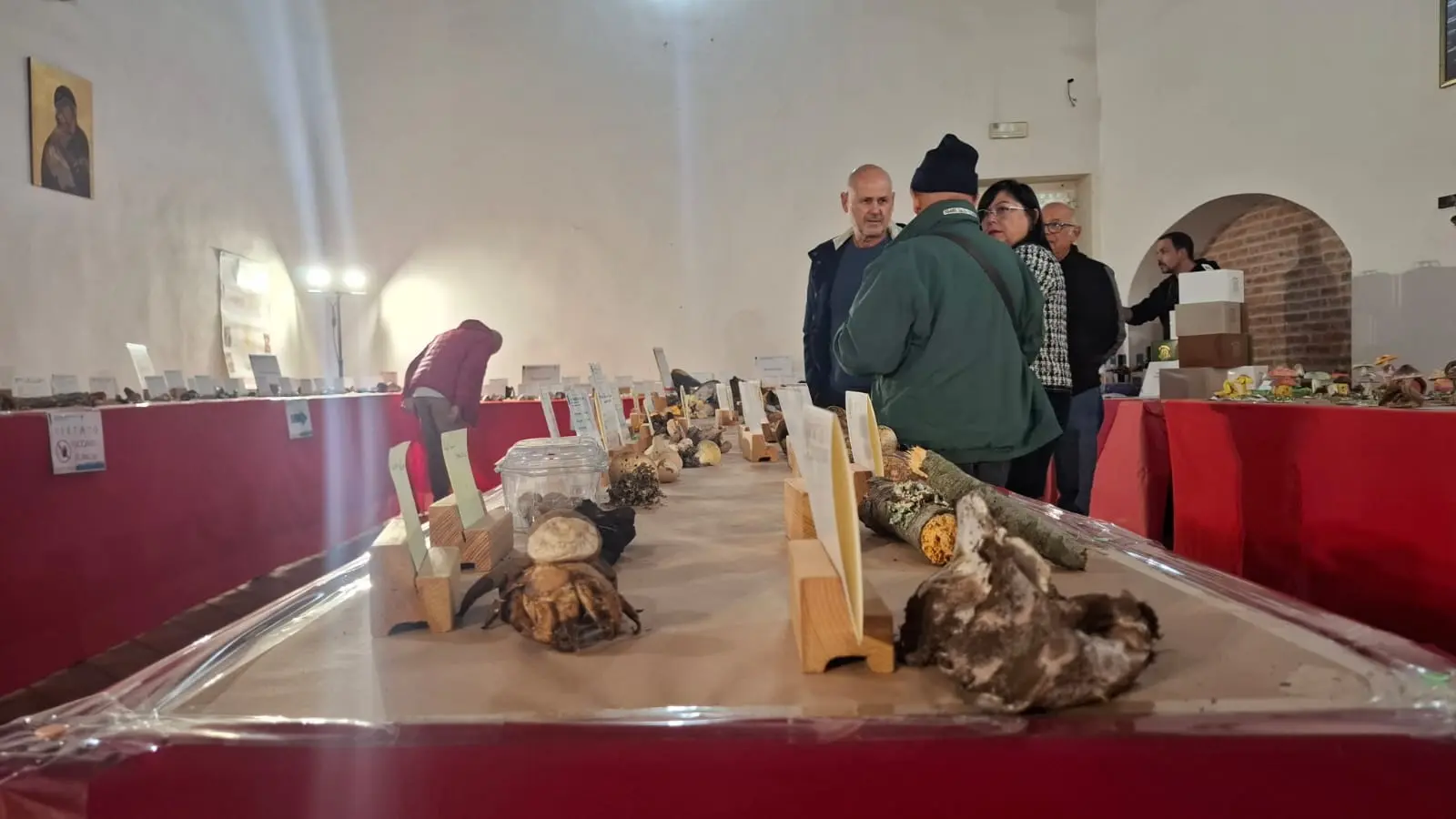


Two hundred and fifty types of mushrooms on display, along with information sheets and tastings of local wines and products. The 29th Mycological Exhibition, organized by the Pro Loco and hosted at the former Convent of San Francesco on Via Crispi, opened in Iglesias, where it will be open until November 30, 2026. This event is dedicated to understanding the mushroom heritage, but also to raising awareness of responsible mushroom picking.
Times have changed, and the mushroom season is also affected: increasingly late rainfall, extreme weather events, and progressive climate change are altering the conditions favorable to the growth of fungal species. Antonello Usai, president of the San Gavino Aps Regional Mycological Group, who was present at the exhibition's inauguration, drew attention to these phenomena.
President Usai, what kind of mushroom season was this year?
"It's not a great year right now. The mushroom season is getting shorter and shorter. Mushrooms grow mostly in the shoulder seasons, in autumn and spring, but autumn has almost disappeared. The rains are arriving later and later, and when they finally arrive, the cold sets in, compromising the season."
How much does climate change affect us?
"The fundamental cause of the shortened fungal season is meteorological, and climate change is beyond doubt. Furthermore, this fall's heavy rainfall doesn't help: the rain has to be just right. When floodwaters arrive, they cause more destruction than they promote fungal growth."
Despite the difficulties, you managed to bring 250 typologies to the exhibition.
«Yes, we managed to display 250 different types, even if some species are almost completely missing because the weather conditions necessary for their growth and harvesting were not present».
How many of these 250 types are edible?
"About 30-35 percent. Most are inedible: among the specimens on display there are also poisonous mushrooms, many of which are toxic."