

Aerospace Festival: "Sardinia, too, must prepare for the challenges of the lunar economy."
The theme at the centre of the first day of debate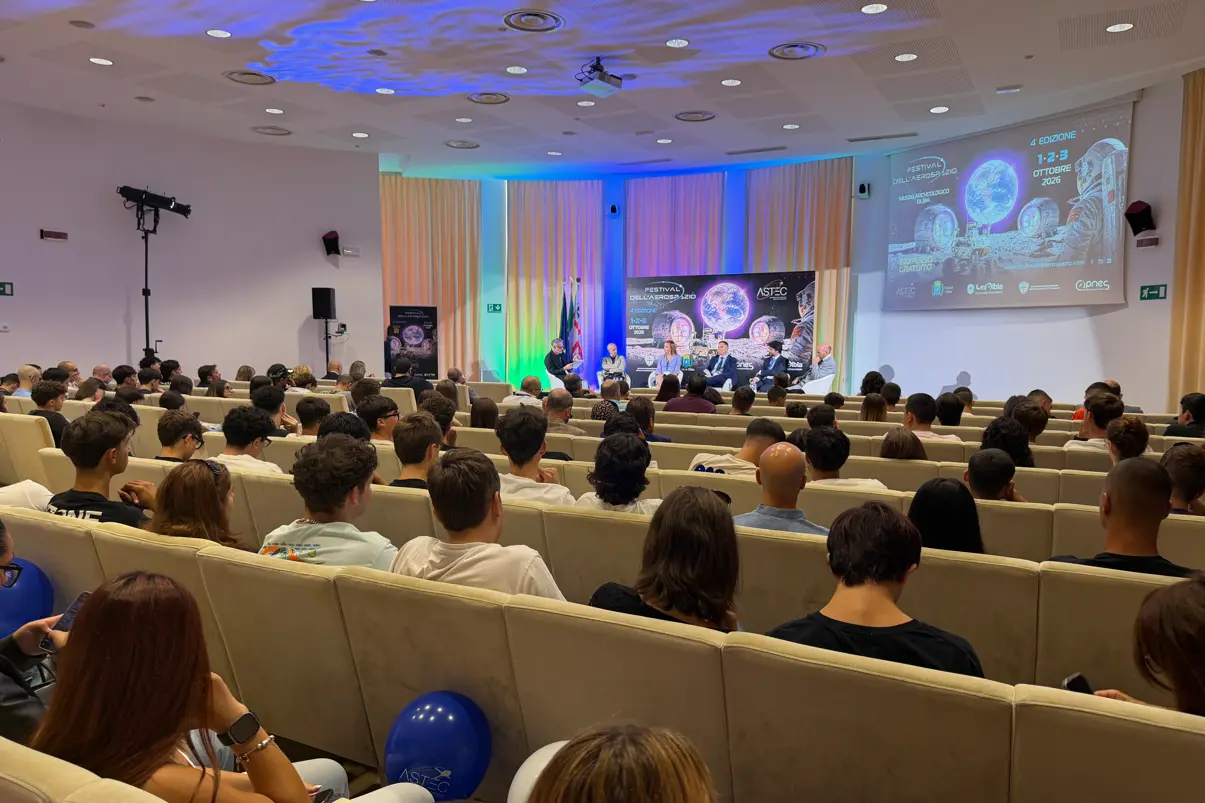
Per restare aggiornato entra nel nostro canale Whatsapp
Italy will be at the forefront of the next lunar adventure. The country will participate in the new season of lunar exploration with technologies and infrastructure destined to become crucial: from Italian habitation modules to the future Moonlight communications and navigation network, a sort of lunar "internet" or GPS. And Luca Parmitano won't be the only one there: two other Italian astronauts are set to participate in upcoming missions.
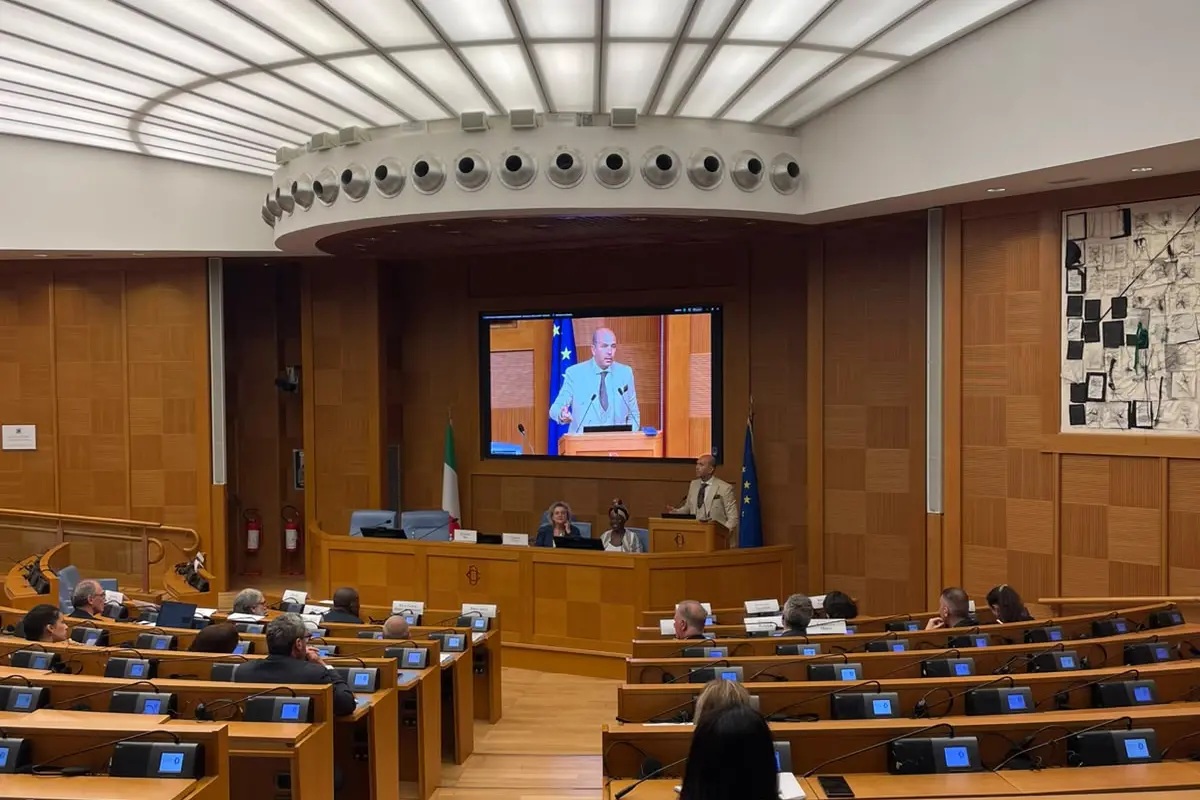
This topic was the focus of the first day of the Aerospace Festival, currently underway at the Archaeological Museum of Olbia, on the lunar space economy. Journalist Emilio Cozzi moderated and interviewed speakers Marcello Spagnulo, aeronautical engineer, writer, and scientific advisor; Mario Cosmo, director of research programs at the Italian Space Agency (ASI); Annamaria Piras, Director of the LEO and Artemis Programs Directorate in the Thales Alenia Space Domain of Exploration and Science; Vincenzo Giorgio, Vice President of Thales Alenia Space and CEO of ALTEC; and Ugo De Ceglie, CTO of Leonardo's Space Division.
The starting point was the profoundly changed nature of space cooperation. NASA has modified its strategic approach, and the return to the Moon is now part of an international competition in which the United States is the main driver. In this new scenario, Spagnulo explained, the weight of different countries will also depend on the technological and industrial contributions they are able to deploy. One consequence of this change concerns the Lunar Gateway, the international space station planned to orbit the Moon. America's priority is shifting toward a more permanent presence directly on the lunar surface. But, Annamaria Piras emphasized, the work developed for the Gateway has not been lost. The challenge, however, is not solely about technology. The real question is how to build a future lunar economy. "Today it's still a hypothesis," she explained, "but we cannot avoid starting to imagine it."
For this reason, it is essential to develop skills and infrastructure today that can be transformed into services tomorrow. This is the rationale behind the new Lunar Robotic Mission Simulation and Control Center, which aims to guide and control from Earth the robots that will explore the lunar surface, testing technologies, systems, and experiments for the lunar surface. The center will serve to simulate the operating conditions of the Moon and transfer the skills acquired over twenty years of activity in low orbit to the lunar environment. One of the greatest challenges will be guaranteeing services and operations even during the long periods when astronauts are away. For Ugo de Ceglie, the strategic point is clear: whoever owns or manages an infrastructure also becomes a qualified entity to provide services . This is where a significant part of future competition will be played out. "Investing today in technology and innovation means capturing tomorrow's economic volumes," he explained, noting that programs like Moonlight will gradually open up space for commercial operators.
Estimates for the lunar economy are still highly variable, but some large international consulting firms estimate a market value of between $245 and $566 billion. According to Spagnulo, approximately 60% could be tied to the construction of infrastructure: rockets, vehicles, logistics systems, and facilities needed to operate on the surface and in orbit. This is a game in which the private sector will play an increasingly important role.
The real economic leap will come when the infrastructure is operational and can generate continuous services. Argonaut, the European lander destined to deliver cargo to the lunar surface , fits into this scenario. Its value, according to experts, also lies in the possibility for Europe to acquire greater autonomy compared to American launches. Not just a mission, therefore, but the beginning of an operational capability that could ultimately allow regular missions, once or twice a year, to transport scientific instruments and commercial infrastructure. The real challenge, however, will be what happens after landing.
"Once we arrive on the Moon, we'll need to continue with our activities," is the concept that emerged from the discussion. Operations centers, data management, vehicle control, and services for both the scientific community and commercial operators will be needed.
For Mario Cosmo, the game also concerns Sardinia and especially the new generations . "You are the most precious resources," he emphasized, addressing the many young students present at the conference. From the extraction of lunar resources to the technologies developed for exploration, many space innovations could also have repercussions on Earth, helping to better utilize resources and reduce environmental impact. "If it's true that space has its roots in Sardinia," said Cosmo, "the job prospects in the sector are countless." Hence the call to complete the range of opportunities with the activation of an Aerospace Engineering faculty on the island . The Moon, therefore, is not just a new destination but a laboratory where the technologies, skills, and services of an economy yet to be defined are already being built. Leonardo is looking at this transformation with the aim of anticipating new needs.
"When will we make money from the Moon? When we can offer attractive services," is the reasoning that emerged from the discussion. Not necessarily in the short term, but in the medium term. The example of Earth observation demonstrates how space investments can take decades to become a mature market . Technologies born for research can become commercial tools, generate services, build skills, and fund scholarships and doctorates.
For Spagnulo, this is precisely the phase the new generations are experiencing: "Young people need to know that they are living in a time of change that is leading to new frontiers ." The new race to the Moon is not just a scientific and technological challenge, but also an industrial, economic, and employment one, and Italy, with its expertise, aims to play its part.