Rossella Fava: "Does a child belong to the person who gives birth to it or to the person who wants it and raises it?"
The actress from Ragusa brought M(Other) to the Festival dei Tacchi in Ulassai, the monologue born from a survey among Italian parents who resort to surrogacy.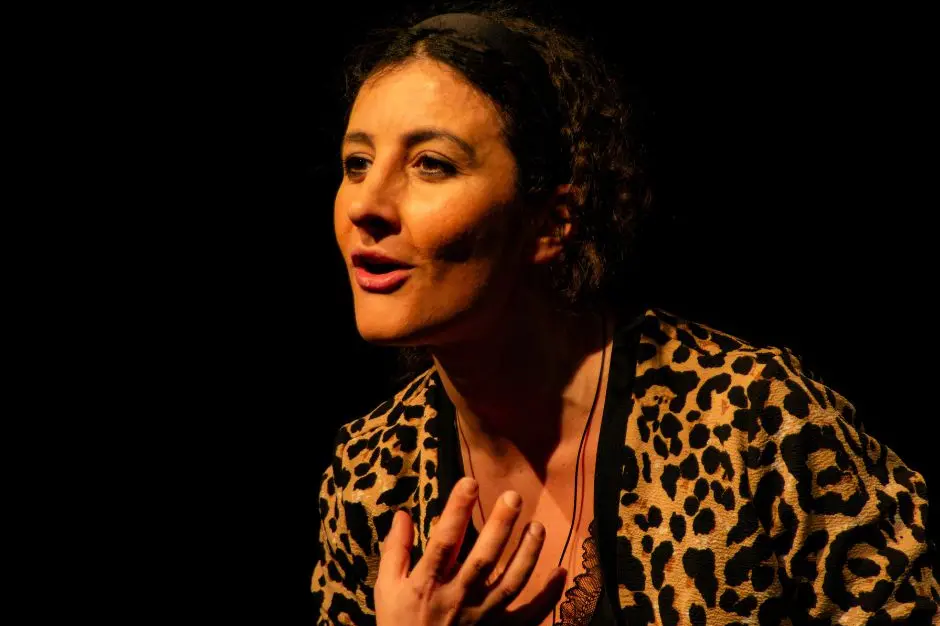
Per restare aggiornato entra nel nostro canale Whatsapp
Born in Ragusa in 1988, Rossella Fava, after graduating in Performing Arts in Rome and gaining initial experience in experimental theater with Carlo Quartucci and Carla Tatò, arrived in Milan, graduating from the Paolo Grassi School of Dramatic Arts. On Sunday, August 9th, she brought M(Other), the show she wrote and stars in, directed by Renato Sarti, to Ulassai, Sardinia, for the first time at the 27th edition of the Festival dei Tacchi.
Rosella Fava, how did M(Other) come about?
I came across an article titled "The New Face of Female Prostitution: Surrogacy." It seemed like a very harsh title. So I started studying, and the more I studied, the more I realized that the reality is much more complicated; at the very least, we need to distinguish between countries where women are forced to bear children for others and those where this practice is legal.
And then?
And then it happened that I knew a lot but didn't know how to approach it in the theater. At that point, I went to ask the people who engage in this practice: I joined a Facebook group. In particular, I delved into interviews with Italian parents, and a whole new world opened up to me: the real world of these people. Having been gifted with all these stories, I wanted to channel them into the story I tell in M(Other).
The story moves on two time planes, 2050 and approximately 2020.
"The future I imagined is a gimmick; the story deals primarily with events that took place between 2001 and 2019, and therefore with Italy almost as it is today."
And what kind of Italy emerges on stage?
"A bigoted Italy, which fails to recognize the needs of some of its citizens, is unaware of their processes, and ignores their pain."
The title works on a language game in English between “mother” and “other.”
Because I asked myself: what is motherhood? Almost fifty years ago, the first case of medically assisted procreation occurred, and the idea of biological motherhood was challenged. And with surrogacy, there can be up to three mothers, so to speak: the woman who desires the child, the woman who gives birth to it, but there can also be the woman who provides the gametes. This is the real question of the show: does a child belong to the one who gives birth to it, or to the one who desires it and raises it?
How has the show been so far?
"So far, it's been very good, perhaps because it interrogates, constantly questions the audience, and doesn't provide certainties, given that I myself changed my mind a billion times before figuring out what story I wanted to tell. In the end, I built it without providing certainties; I trusted the story, capturing humanity in its different perspectives. That's exactly what I think we're missing: listening. We have a lot of prejudices about something we don't know and that scares us."
Maybe because it doesn't concern us directly.
"None of the people I interviewed thought it would ever affect them. Women in particular."
Did anyone tell you after the show that they had changed their mind?
"Everyone! That was the incredible thing: that the entire audience admitted they knew nothing about this issue. And a good portion of the audience said to me, 'But this show isn't about surrogacy.'"
Is that so?
"It's about birth, it's about what it really means to be a child. It's about humanity."
Well, not even a single criticism...
Well, Verità wrote, "Public funds for the show about surrogate mothers, the theater that's staging M(Other): the story of a surrogacy experience has received funding from the Ministry of Culture, the Lombardy Region, and the City of Milan." But then, in the rest of the article, the author admitted she hadn't seen the show. If only she knew how long it sat on the shelf, and how many rejections it received before Renato Sarti of the Teatro della Cooperativa said, "Let's do it"... only a madman like him could say yes."