










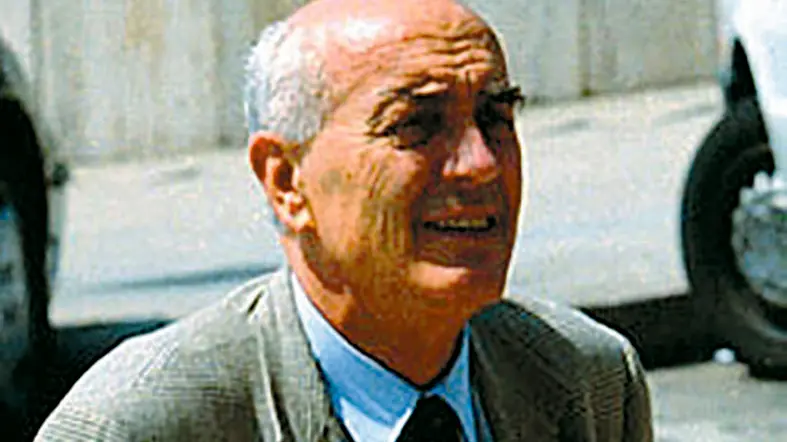








A year after the first volume, Giovanni Seu returns to Luigi Lombardini with "Il giudice spiegamo e la malagiustizia" (Edes editions, 153 pages, €15), a second edition that is essentially a new book. After forty presentations held over ten months and the discovery of additional material, the author retraces the kidnapping of Silvia Melis and the magistrate's suicide, which occurred on August 11, 1998, in the Cagliari Courthouse, relying on witnesses who are speaking for the first time. This work reopens one of the most controversial chapters in Sardinian judicial history, depicting the political, social, and cultural climate of the years of the Anonima Sequestri.
The Network
The heart of the book is an interview with Antonio Ingroia, then deputy prosecutor in Palermo in Giancarlo Caselli's team. After six months of investigation, the magistrate's questioning was scheduled simultaneously with those of Tito Melis and lawyer Garau. Lombardini appeared to him "withdrawn, a man of few words, annoyed." He adds: "With hindsight, I have come to the conclusion that he was contemplating suicide." Ingroia reports the judge's last words, as he stood before his office, which was about to be searched: "We've arrived." He rules out the possibility of arrest, but admits that a committal for trial would have been requested. For him, the "Lombardini method" was part of a "completely illegal" system, and in the so-called Rete, he perceived the characteristics of a proto-mafia bourgeoisie, a hypothesis that had not found adequate evidence. Yet he acknowledges that the magistrate "wasn't pocketing money for himself" and was acting in good faith: the mistake was making a deal. A case, according to Ingroia, far removed from that of Bruno Contrada, closer to that of General Mario Mori. The former prosecutor still considers abandoning the Internet investigation a mistake.
Equally vivid is the account given by lawyer Angelo Merlini, who met Lombardini in 1974, a very young defense attorney, on the case of a girl held for days in a convent as a witness. A clash ensued that led him to throw away his robe in the Assize Court and be told he had an "implacable enemy." The portrait is that of an "astute and intelligent" man, gifted with great investigative skills, but capable, according to the lawyer, of acting "in absolute illegality": he arrested the relatives of fugitives as "bargaining chips" and behaved "as if he had received a mandate from God." Merlini denies him credit for ending the kidnapping season and considers the anti-kidnapping superprosecutor's office an excellent idea, but one built around him.
The constellations
Of a completely different nature are the memories of Katia Deon, the magistrate's adopted daughter, who recounts five years spent in his home, conversations about constellations and the Gospel, and the private side of a man nearly everyone had come to know through his court reporting. Former magistrate Ettore Angioni, on the other hand, remembers him as a distrustful, honest, idealistic man, rich in investigative insights. Salvatore Murgia, an emissary in the kidnapping of Daphne Schild, recounts the world of dealings with bandits.
In their updated prefaces, journalist Romano Cannas and lawyer Mauro Trogu explore the relationship between effective investigations and compliance with the rules. Cannas also explores the judge's relationships with Cossiga, the secret services, and the media. Trogu questions the very idea of the magistrate being tasked with defeating a criminal phenomenon, rather than determining individual crimes and responsibilities. This distinction also helps us understand the popular consensus Lombardini enjoyed for many years. Patrizio Rovelli's afterword broadens the scope of judicial errors, from Via D'Amelio to Enzo Tortora, and the Sardinian cases of Manuella, Scardella, and Zuncheddu. For the lawyer, in those years, Article 27 of the Constitution came to be interpreted according to a sort of presumption of guilt, while the principle that the end justifies the means conflicted with the principle of legality. Rovelli also contests the plan for a single anti-seizure judge, deeming it incompatible with the principle of the natural judge enshrined in Article 25 of the Constitution.
The value of Seu's book, written with the pace of a reporter and the rigor of documentary research, lies above all in bringing together often irreconcilable testimonies. The re-presentation of the transcript of the last interrogation allows the reader to compare the investigation documents with the memories and interpretations developed almost thirty years later. The book neither absolves nor condemns Lombardini, it does not indulge in the celebration of the man who for years embodied the state's response to the fear of kidnappings, but neither does it erase his investigative skills. Gray areas remain, questions about the Internet, the funding, and the protections the magistrate allegedly enjoyed. And above all, a question that runs throughout the 153 pages: how far can a lawyer go, even when he believes he's acting for the good of the community?