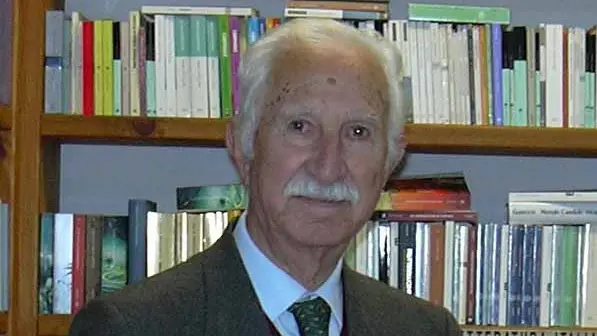


Antonio Conti , known to all as Tonino, died today, Sunday, November 22, at the hospital in Olbia. He was 101 years old. A poet and scholar of the Maddalena dialect, a variant of Gallura, Isulanu, he was a founding member of the University of the Third Age of La Maddalena, which last year dedicated the opening evening of the academic year to him to celebrate his 100th birthday. On that occasion, his last public appearance, he read some of his verses and recounted how the island's language had entered his life.
" My father wanted only Isulanu to be spoken at home ," he recalled. "For Italian, there was school..." In that family of Corsican origins, dialect was the everyday language. Conti made it a subject of study and poetry. Out of privacy, he kept his verses in a drawer for a long time. The first collections were published under a pseudonym, in small, artisanal editions. Since 1989, his work has been published by Paolo Sorba .
At the centenary evening, UTE president Marina Spinetti recalled Conti's profound knowledge of both the languages he wrote in, Italian and Isulanu. Melancholy often recurred in his poems. " Because I was born sad ," he confided. That evening, however, he also chose to read some of his liveliest poems, leaving room for irony. He also introduced younger readers to dialect. "He taught me to love dialect and understand its beauty," Gianluca Moro said during the meeting.
Alongside his poetry, he researched the history of La Maddalena. Conti reconstructed the island's events and traditions through studies and the stories of those who had experienced them, as well as through documents he consulted. Another important chapter in his life took place at the military arsenal, where for over a quarter of a century he directed the School of Apprentice Workers , training hundreds of young people. For many of them, the name Tonino Conti is linked to the years when, as teenagers or just beyond, they learned a trade but also life lessons. For those who today study and write in La Maddalena, Antonio Conti's work remains a fundamental reference for understanding the language he learned at home and with which he expressed his unique poetic world.