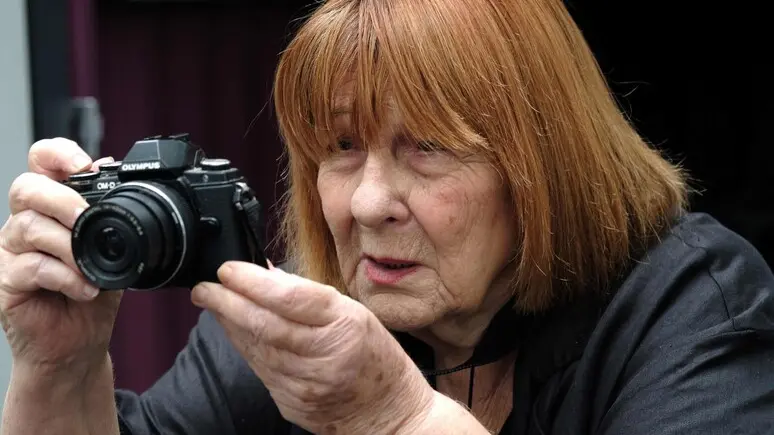


"I've worked all over the world, but outside of Palermo , my photos come out differently. Here, there's something that belongs to me, or perhaps I belong to it." Letizia Battaglia (1935-2022), the photojournalist who needs no further introduction , never tired of repeating it. And those shots that she saw differently are on display, along with many others, until February 7, 2027, at the Camera di Torino , the Italian Center for Photography, at Via delle Rosine 18. The exhibition—open from 11 am to 7 pm, including holidays, and extended on Thursdays until 9 pm—is curated by Walter Guadagnini . Co-production by Jeu de Paume of Paris, in collaboration with the Letizia Battaglia Archive.
Turin's journey is a journey into the harshness of life . Over two hundred photographs encompass " fifty years of career and visual research ," as the exhibition presentation states. No disappointments. On the contrary. With meticulous thematic and spiritual alignment, here are everyday life, the solitude of psychiatric hospitals , religious holidays , children 's dreams, the harshness of prostitution , the blood of the Mafia . Also on display are "period magazines, archive material, and the biographical documentary film," in which Letizia Battaglia hides nothing of herself: her strength, her boldness, her courage, her fears, her fragility.
Encountering Battaglia's legacy usually happens several times in life. And if you've been fortunate enough to have met the photojournalist, it's addictive to return to her shots . To her passion. To make it your own, every time.
Letizia Battaglia was born in Palermo on March 5, 1935. Photography was a late discovery for her. First she became a wife (married very young at sixteen), then the mother of three daughters. In 1964 she was already separated and began working as a journalist for “L'Ora” , the famous newspaper that was the first to challenge the Mafia by reporting on its horrors. There she demonstrated her talent. So much so that in the early 1970s she moved to Milan to pursue her dream, always with that different perspective: no glossy contexts, but rather a lens fixed on humanity. On the changes in customs, on the taboo of sexuality undermined by the rebellion of 1968. A socio-cultural revolution that Battaglia documented for national and international magazines. Important horizons. And yet she said: “ My whole life refers to an episode lasting a few seconds ”. What happened was that “a man appeared before me , exhibited himself and masturbated. I lost my freedom, the idea of freedom forever. Because they locked me in the house."
Letizia Battaglia was ten years old when she met "the ogre," she called him. And it was precisely to escape the isolation imposed by her family that she married at sixteen. Thinking: "I'm finding freedom, I'm becoming an adult, a grown-up. But it wasn't like that." With the camera alone, " I've built a different life, a life of my own, happy, free, independent . I express myself, I can express myself, I can tell the world, not just myself. I can weave things together. It was a stroke of luck. I could only have met the ogre. Instead, I also found this little thing ."
It was 1974 when L'Ora proposed that Battaglia return to Palermo as Director of Photography . For a decade, she was on the front lines. She reached places where the Mafia killed: politicians, police officers, journalists, inconvenient Sicilians. But she didn't want her city to be just the brutality of crime. So she wandered, looked, observed. She looked for girls and boys. Children. She went where healthcare tied up the "mad." Where the Holy Roman Church was a popular celebration. In 1985, she was the first European woman to receive the Eugene Smith Award , the highest recognition for humanistic photojournalism. That year, it was also awarded jointly to American Donna Ferrato. In 1999, the tribute to her greatness was the Mother Johnson Achievement for Life, also received for her courageous civic commitment in documenting Mafia events.
Letizia Battaglia "also entered the world," as she liked to repeat. The Soviet Union (when it was still called that), Latin America and Iceland. Turkey and the United States. Faces, views, experiences. " I recommend photographing everything from very close, at the distance of a punch or a caress ."
Thank you, Letizia.