







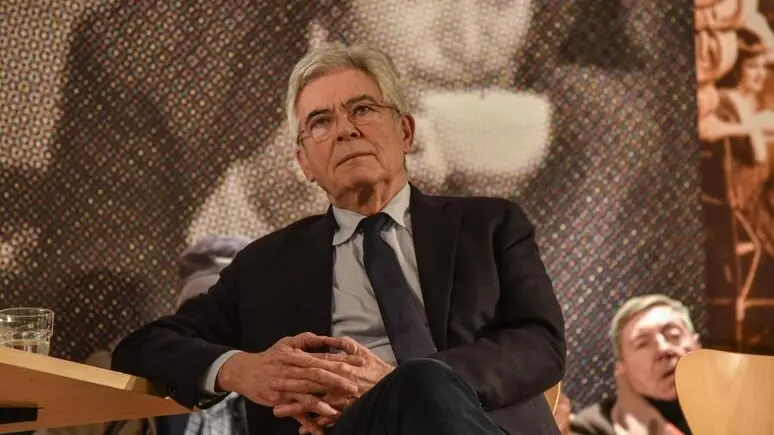


Gianni De Gennaro's suicide was news from a week ago. It will remain in the newspapers and on the news for the next few days, and presumably, in the years to come, it will be a story to be fully understood in its full scope and significance. Monday will be the day of the funeral; yesterday was still the day of commentary, of the first attempts at analysis. One current of opinion casts a harsh light on the investigation into De Gennaro opened and being pursued in Caltanissetta by prosecutors investigating the cover-ups surrounding the Via D'Amelio massacre. Another current, not necessarily in opposition, focuses on the inconsistency between the former police chief and the possibility of his involvement in obstruction of justice and aiding the Mafia. Among the former yesterday was Edmondo Bruti Liberati, former chief prosecutor in Milan and long a symbol of the Democratic Magistracy movement, who, in an interview with Corriere della Sera, spoke of an unacceptable investigative activity. Among the latter was Claudio Martelli, who in La Stampa called the accusations leveled against De Gennaro "without head or tail," saying he was "exhausted by judicial archaeology" and a past that cannot be overcome.
During a significant period of that past, specifically from February 2, 1991, to February 10, 1993, Martelli served as Minister of Justice, while first Giulio Andreotti and then Giuliano Amato were in power at Palazzo Chigi. The most notable achievement of his time as Minister of Justice was his appointment to the ministry as Director General of Criminal Affairs, Giovanni Falcone. Falcone's esteem and friendship, as we have read many times in recent days, were a 24-carat honor for De Gennaro.
Today at 6:00 PM, Claudio Martelli will be at the Morgongiori Sports Hall for the third edition of the Monte Arci Prize—"Sounds, Knowledge, and Flavors of the Park and Obsidian"—in a panel of "Knowledge" figures that includes Antonello Angioni, Andrea Delogu, Gianfranco Matteoli, Paolo Mieli, Franco Siddi, Beniamino Zuncheddu, and Mauro Trogu. Different people and backgrounds. Some have never had anything to do with the administration of justice, others are direct witnesses, actors, or observers, like Zuncheddu, Trogu, and Mieli. Or, like Martelli, have been ministers of it.