

The first craft beer made with Sardinian raw materials was presented at Vinitaly . It is called “Bionda Sarda” and is the perfect synthesis of the synergic work carried out by the Sardinian cereal and brewing sector . The new product tells the story of each step of production, from the cultivation of barley and hops to the transformation in the breweries of the Island, a story that speaks of a new and ambitious agricultural supply chain that unites agriculture and identity.
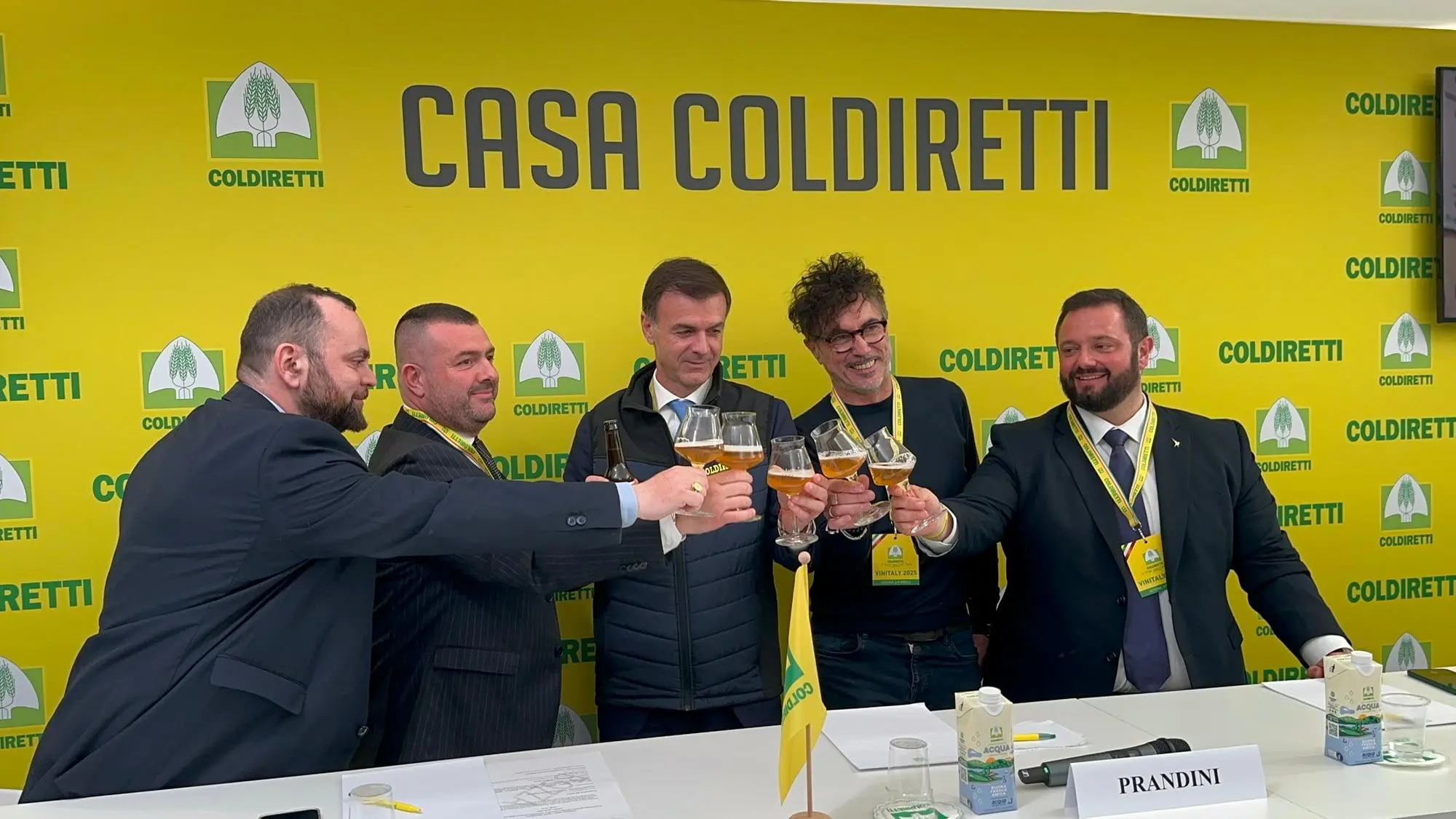
The project was born from the collaboration between Coldiretti Sardegna, Consorzio Birra Italiana, cereal producers and Sardinian craft breweries , and was officially presented at Vinitaly in the Casa Coldiretti space, in the presence of the national president, Ettore Prandini, the general secretary, Vincenzo Gesmundo, the director of Coldiretti Sardegna Luca Saba, the president and director of the Consorzio Birra Italiana, Teo Musso and Carlo Schizzerotto, also in the presence of the president of the Agriculture Commission of the Chamber, Mirco Carloni.
With this project, Sardinia confirms itself as a laboratory of innovation in the agri-food sector, laying the foundations for a 100% Italian beer, a symbol of quality, sustainability and an ethical supply chain. A virtuous example – underlines Coldiretti – of how agriculture and processing can work together to strengthen the economy of the territories and respond to the growing demand of consumers for authentic and traceable products. A central role is that of the cereal growers of Sardinia who have created the almost 100 hectares of two-row barley and the breweries that have believed in the project such as the leader Birrificio 4 Mori of Guspini. The island's cereal growers have provided uniform seeds and continuous agronomic assistance, guaranteeing a controlled and quality production cycle. The harvested barley is transformed into ready-to-use malt and entirely destined for local breweries, reducing transport costs and enhancing the local raw material. On the bottle there is a Qr code that allows you to see where the agricultural products used were grown and processed.