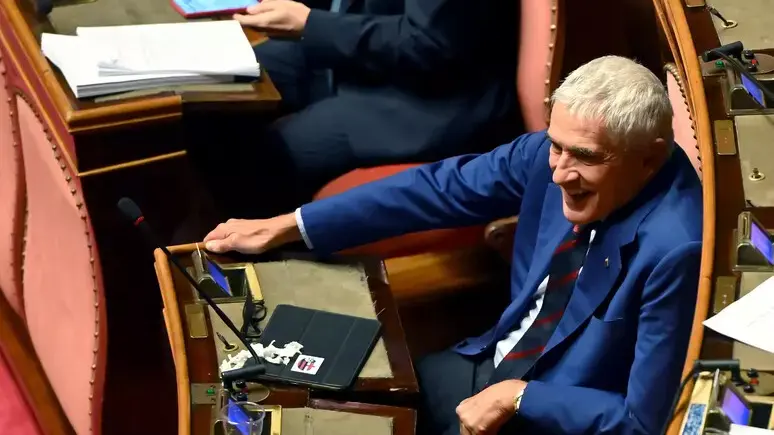


Pierferdinando Casini will not run in the next general election, after 44 years in Parliament. "I believe the time has come to give way to figures more in tune with the parties and coalitions that will present themselves to voters. I thank everyone for the trust they have placed in me thus far. I'll stop here," he said in an interview with Corriere della Sera after sending a letter to the Quotidiano Nazionale announcing his decision but also emphasizing that politics remains his "passion." Casini, now 70, has been in Parliament since 1983, founding and changing parties, both center-right and center-left, but always remaining "stubbornly" a Christian Democrat. In 1994, he was among the founders of the Christian Democratic Center, the minority group that aligned itself with the center-right coalition led by Silvio Berlusconi.
Appointed Speaker of the Chamber of Deputies in the 14th Legislature (2001-2006), during his term he joined the Union of the Centre along with other members of his party. He definitively broke his alliance with Berlusconi before the 2008 general election, returning at various times to promote the aggregation of various centrist formations and later moving closer to the center-left; in 2017, he founded the Centrists for Europe movement. His decision not to run again in the next general election is still being deciphered in the political world, although no one seems to doubt his reputation as a recognized man of institutions. This quality was acquired, on the one hand, through decades of frequenting Parliament (he is now a senator elected for the Democratic Party). It was also strengthened by his political development after a long "apprenticeship" in close contact with prestigious members of the Christian Democrats such as Antonio Bisaglia and Flaminio Piccoli, a leading figure in the Dorothean faction to which he belonged in his youth. But also with the so-called "thoroughbreds" of the "White Whale" such as Arnaldo Forlani, for whom he always had great respect, or Ciriaco De Mita (with whom he had a very dialectical relationship) and Giulio Andreotti, whose tactical skills and knowledge of the state machine he always recognized.