











Is it possible to keep the war in the background when you are sixteen and the desire to live, despite everything, is immense? That is what Falco and Rivo manage to do for a long time: they leave the war to the "grown-ups". Falco is more sensitive and introverted, Rivo is blunt and practical, affectionate in a rough way, they go mushroom hunting in the woods of the Apennines, they ride along the paths by bicycle, they attend the dances where Falco plays the accordion with his father. But it is difficult to remain on the fringes of the war and it takes little to catapult the two boys into reality: when a seriously wounded English paratrooper gives them a message for a certain Livio Boschi, the two young men are also captured by the conflict. Because that Livio Boschi, known by the battle name of Gordon, is an important partisan leader. So they must reach the partisan base, escape the Nazis, become couriers. Because there is a mission to accomplish, a Headquarters to conquer, and there is even a bagpipe, which Falco wants to learn to play. And then there is her, Stella. Brown eyes and long hair, small, drop-shaped earrings. Stella, like the flower in the song that is the soundtrack to their meeting. And whatever the cost, Falco must save her, from the bombings and from the war.
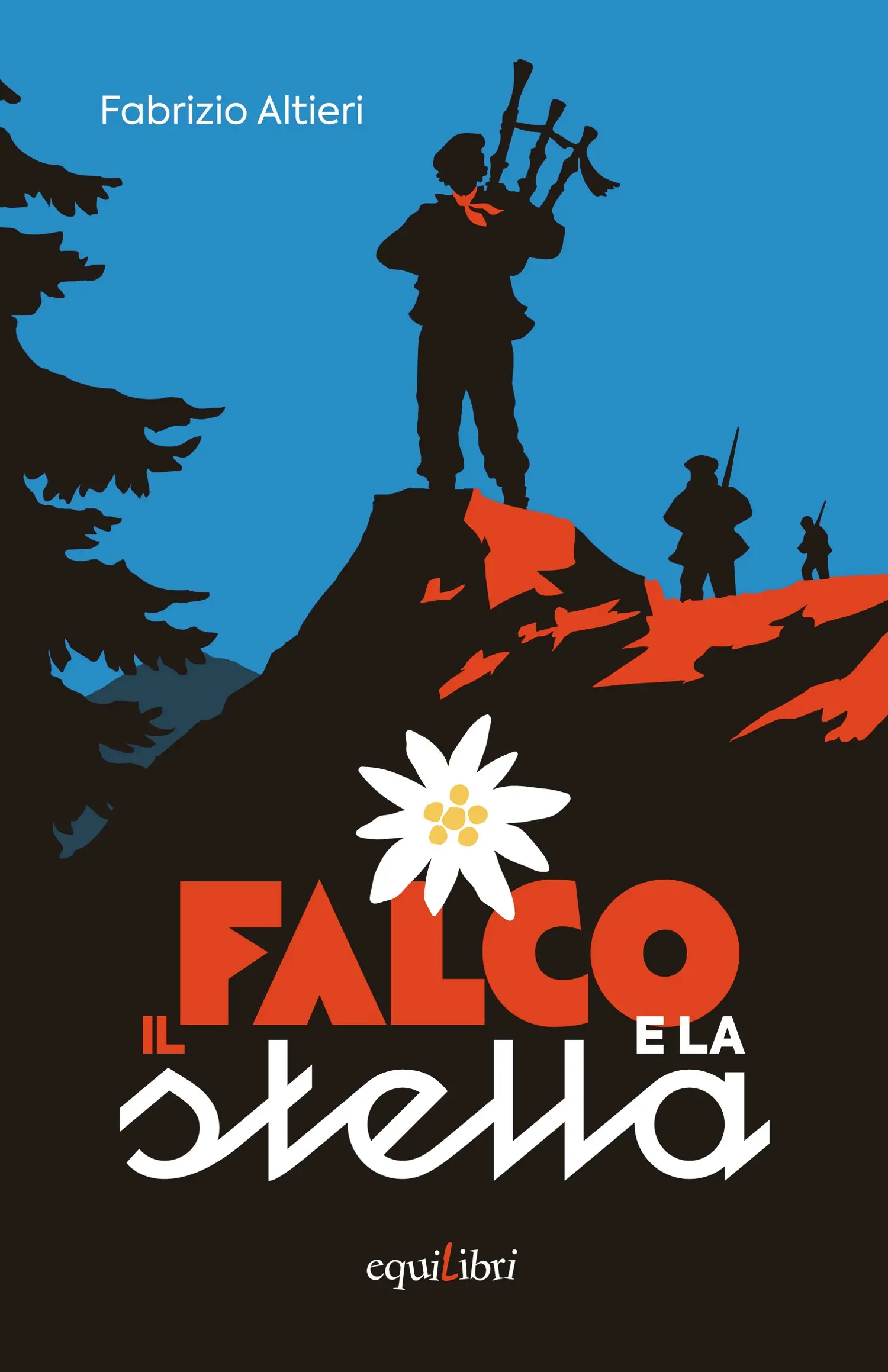
Between literary fiction and accurate historical reconstructions, Fabrizio Altieri with Il Falco e la Stella (equiLibri, 2025, pp. 224) tells us a story of Resistance, told with delicacy, exploring the complex dynamics of the struggle for Liberation, the nuances of friendship and courage, between dances, songs, music, ambushes, betrayals and gunshots.
We asked Fabrizio Altieri how the idea for this book was born: