

The energy calendar has rewound the tape. When green Europe was already aiming for the epic of the new deal made of sun and wind, the war between Russia and Ukraine, on the eastern border of Europe, blew up plans and strategies. All backs to the wall, with a headlong chase to grab barrels of oil, cubic meters of gas and new energy dependencies. For decades the pendulum has bounced between the Arab countries and Russia, stopping for a long time on the Moscow side, thanks to Russian-German infrastructures capable of subjecting Europe to the diktats of the Kremlin tsar. Until the war show-down. In the blink of an eye, overnight, the hands of the clock have turned back twenty years, with the West without fuel and without renewables. Plans overturned, strategies to be rewritten, knowing full well that dependence on Russian gas and oil cannot be canceled with press releases or price caps.
Change the scenery
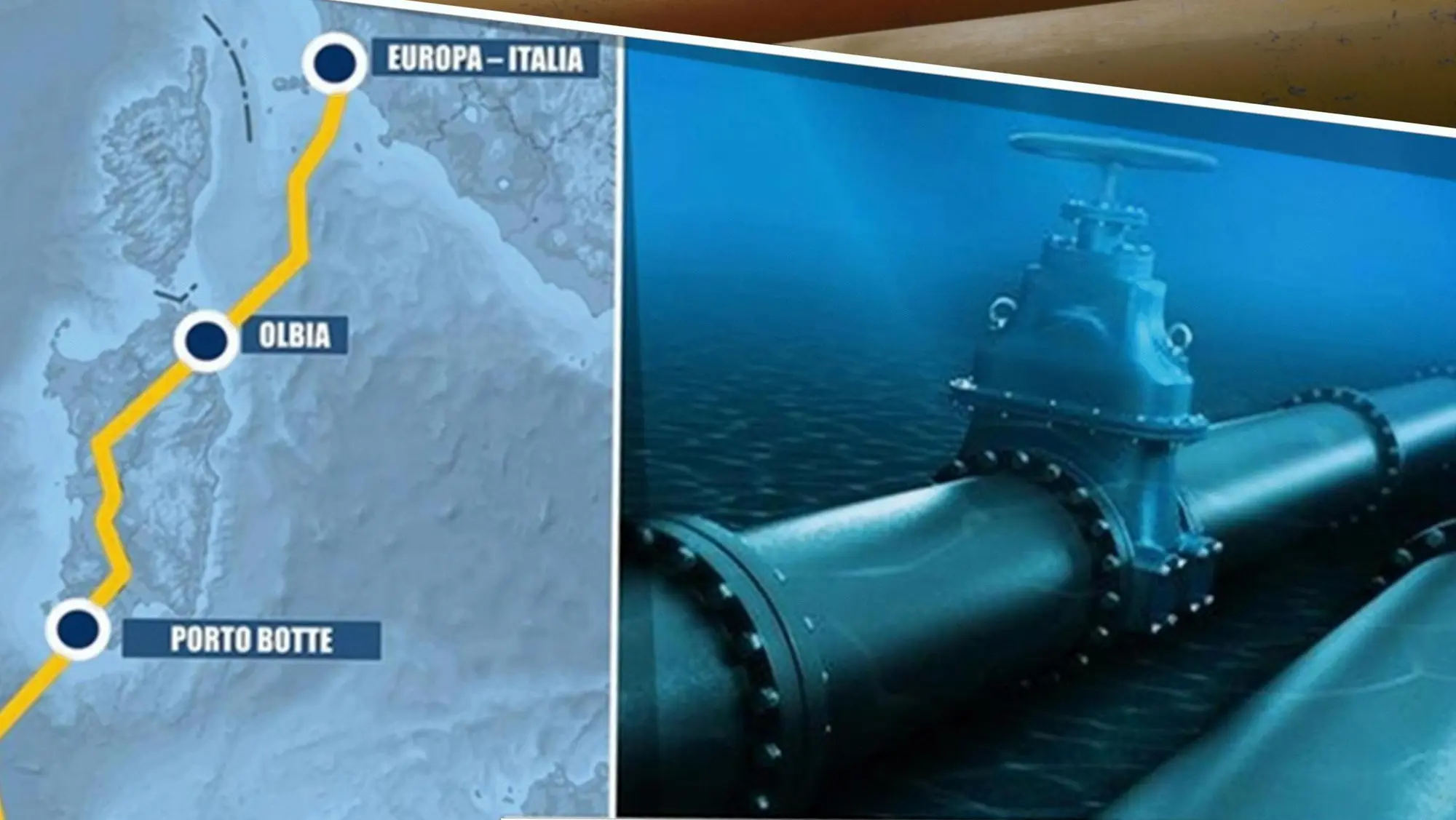
For this reason, the official decision of the government of Algiers, through the Minister of Energy Mohamed Abkar, reported yesterday by the Sardinian Union, to relaunch the construction of the Galsi pipeline, linking Algeria with Sardinia and Europe, is something more than a change of scenery. In Algeria's proposal there are elements that go well beyond the construction of a methane pipeline, but which constitute fundamental prerequisites for rewriting the relations between the Maghreb, Sardinia, Italy and Europe. There is a first element that cannot be overlooked: it is the first time that a producer-extractor of methane and oil of Algeria's importance is a candidate to concretely govern the ecological transition. It does so not with chatter but with an approach to the future capable of combining the emergencies-urges of the present with the now imminent environmental challenge of the future.
Hydrogen-ready
Algeria, instead of siding in the tout court defense of fossil fuels, puts forward the proposal to build, without wasting any more time, a latest generation methane pipeline, technically defined as hydrogen ready, i.e. already ready to transport the fuel of the future, the hydrogen, the one produced by water, the sun and the wind. An epochal transition because for the first time in the world arena we set a goal capable of giving immediate answers for the present, targeting the energy future in a strategic and innovative way. When all seemed lost, an unexpected window reopened for Sardinia with the future and energy innovation. Absurdly, the world energy crisis has put a scenario capable of putting the island back in the role of a forerunner, rather than a mere pursuer. The Algerian proposal for the construction of a would put Sardinia back in that advantageous position conquered twenty years ago when the company agreement was planned, designed and signed for the construction of the Galsi, the pipeline linking the Algerian side, Sardinia, Piombino and the rest of Europe.