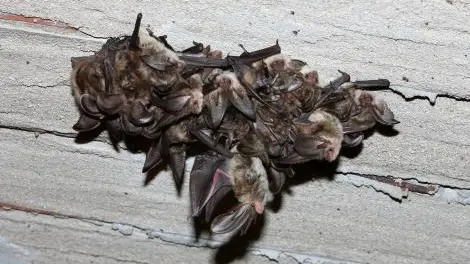


Weighing just a few grams, it hides among caves and buildings, and lives exclusively in Sardinia. It's the Sardinian long-eared bat ( Plecotus sardus ), a small bat at risk of extinction forever. The regional agency Forestas has drawn attention to its plight, raising the alarm about the progressive decline of one of the most threatened species in Italy's wildlife heritage. Its eventual extinction would not only represent a loss for the island's biodiversity. As an endemic species, found exclusively in Sardinia, it would mean permanently erasing a mammal from the world's fauna.
Scientifically identified in 2002 thanks to the research of Mauro Mucedda, Ermanno Pidinchedda, Andreas Kiefer, and Michael Veith , the Sardinian long-eared whale has experienced a worrying decline. From an estimated 1,000 individuals at the time of its discovery, the number has dropped to around 300 in 2020 and an estimated 150 adults in 2023, according to a study published in 2025 in the scientific journal Oryx. The situation could be even more serious. A scientific paper presented at the 9th European Mammalogy Congress, held in Greece in 2025, reports a further decline in the population, which has fallen to below 50 adults. The data, contained in the conference proceedings, represents a subsequent assessment compared to that published in Oryx, but does not yet constitute a definitive census verified through a comprehensive scientific publication. The species survives in an extremely limited area of central Sardinia, divided into two geographically distinct populations. The first occupies the eastern sector of the island, between the coast and the inland areas, while the second extends towards Lake Omodeo. These two groups are separated by a strip of land apparently unsuitable for the species, a condition that makes the conservation of the few remaining specimens even more delicate.
Of particular concern to researchers is the progressive disappearance of breeding shelters. A study published in 2025 identified a total of twenty sites used by the Sardinian long-eared bat, but only five breeding colonies: three housed in attics and two inside natural caves. The loss of even one of these sites could further compromise the survival of the species. The breeding season is a particularly delicate phase. Females begin to congregate at the end of March and generally give birth to a single young around mid-May. Adults and juveniles can remain in the same shelters until September. Any disturbance during these months, from building work to frequenting caves, can put the colonies at risk. In addition to direct threats, there are forest fires, heat waves linked to climate change, and the progressive alteration of natural habitats. Protecting the Sardinian long-eared bat, in fact, cannot be limited to protecting the places where it spends its daytime hours. It is also essential to safeguard the environments where it forages at night.