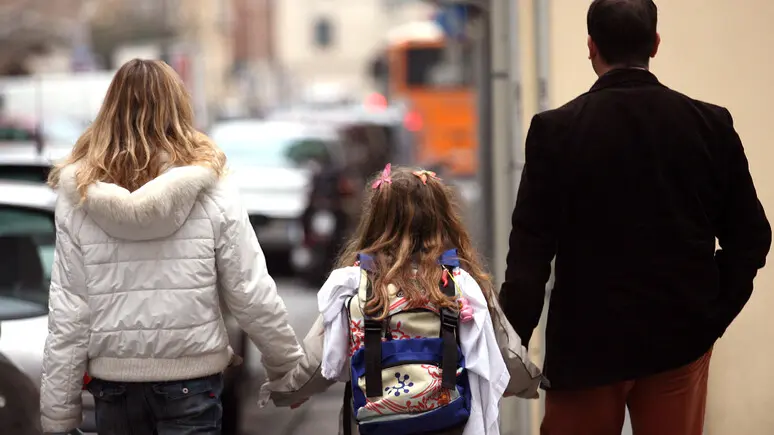


Shown at bath time, diaper changing, bedtime, involved in trends or challenges, but also caught in critical moments such as tantrums, even forced to unwrap and present products and launch promotions.
Terre des Hommes launches an appeal to protect the children of "family influencers," who are often unwitting participants in their parents' social media marketing efforts.
This is a topic to which Terre des Hommes Italia, together with the Institute of Advertising Self-Discipline (IAP) and ALMED (High School in Media, Communication and Entertainment) of the Catholic University of the Sacred Heart, dedicated the study "Aware Protagonists? The Protection of Minors in the Era of Family Influencers." The research, which analyzed 20 family influencer profiles and 1,334 social media posts, found that minors appear in one in two organic posts and one in four sponsored posts. In approximately a third of advertising posts, they are active participants in the ad: they unveil the product, present it, and launch the promotion.
Furthermore, most content does not adopt any privacy protection measures, such as shots from behind, pixelated images, or the addition of emoticons on faces . In organic content, protection measures appear in 7% of content; the percentage drops to 2% if advertising content is considered. Potentially problematic situations regarding privacy are found in 29% of content : 21% show intimate moments such as bath time; in 6%, the child is involved in trends or challenges; in 1%, the child is caught in a critical moment (anger, sadness, difficulty). In only 0.65% of cases, children explicitly object to the filming, but in 63%, they are seen in the background, likely without being aware of being filmed. The issue of consent also arises in the remaining 36% of content, given that 80% of the children exposed are between 0 and 5 years old.
In line with the Bill for the Protection of Minors in the Digital Dimension, currently under consideration by the Senate, Terre des Hommes calls for the involvement of minors in parents' advertising and social media marketing activities to be treated as equivalent to other forms of child labor permitted under Italian law. The NGO also calls for the establishment of a register in which each influencer lists the advertisements in which they have involved minors, and for the Provincial Labor Directorate to also be able to avail itself of the collaboration of the Advertising Self-Discipline Institute.