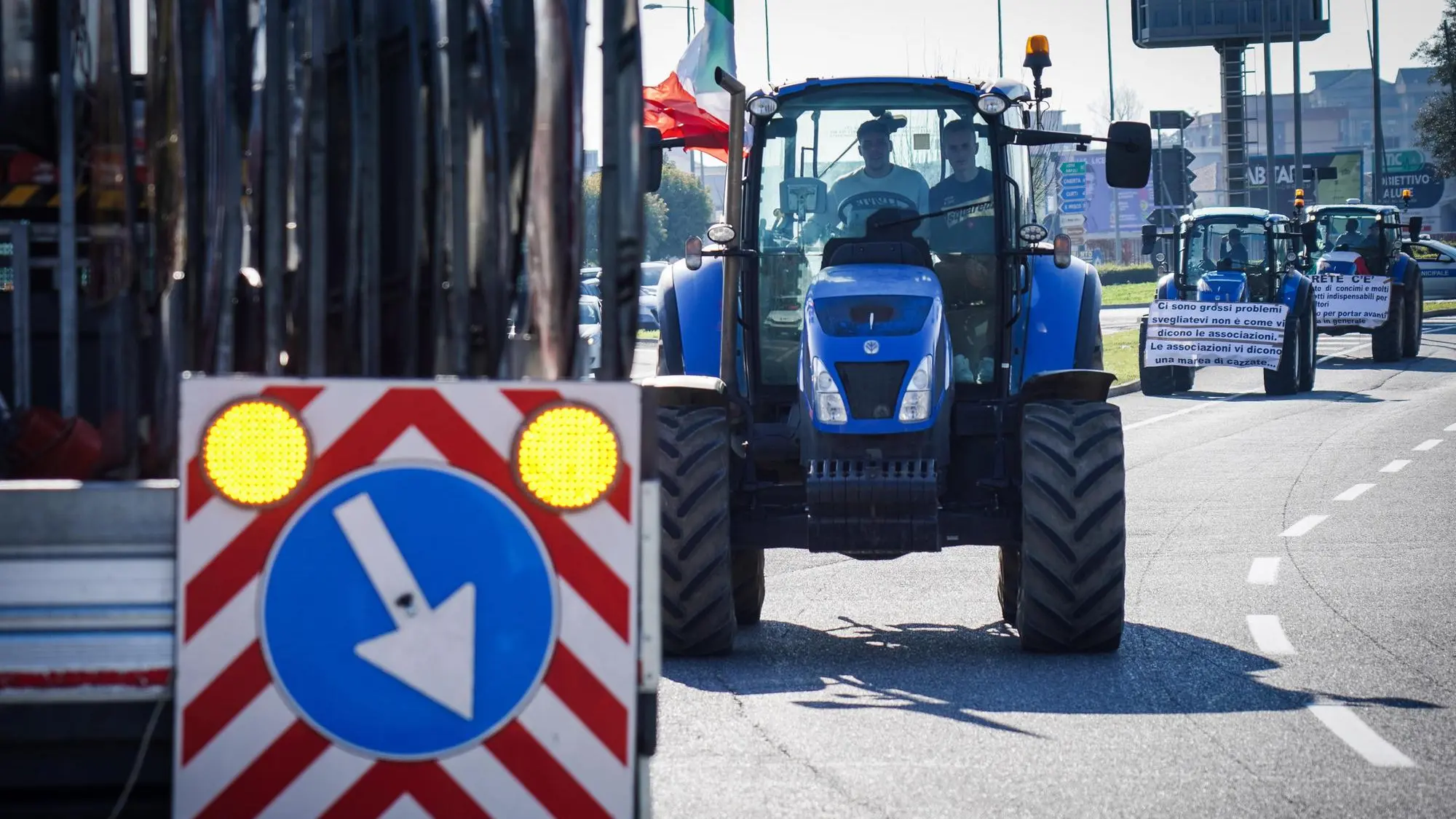


According to news reports from news agencies, Italian farmers would intend to continue their protests for another week against the constraints imposed by the Common Agricultural Policy which, upon closer inspection, at the time, to the European Parliament, would seem having been voted favorably by the exponents of those parties, the League and the Brothers of Italy, who today contest its assumptions and objectives.
Let's be clear in concrete terms, and beyond any ideological inspiration: the elections for the conquest of seats in Europe are upon us, we can say, and we perceive the need on the part of the Majority party compositions to maximize the non-partisan approval rating only towards their respective opposition opponents, but also towards their government allies in order, probably, to re-establish the necessary counterweight in their internal relations.
Yet, with the latest Budget Law, that same Government seems to have reintroduced the so-called Irpef taxation on agricultural income, thus somehow increasing the tax burden relating to the sector. But, then, does it make sense to place, so to speak, all responsibility for the current difficulties of the Italian agricultural sector on European policies aimed at achieving the ecological transition and implementing the so-called Green Deal? There is probably no univocal answer that can be said to be satisfactory, and with good likelihood, and, conversely, useful solutions could be found to regulate, rebalancing it, the contingent situation that has arisen also with the causal contribution of other factors, such as probably armed conflicts existing, which appear to have contributed to the rise in prices and the shortage of raw materials.
Undoubtedly, the farmers must be supported and helped, and the reasons for the ongoing protest seem to be shared since, even if everything is considered and conceded, it would be appropriate to restore necessary counterbalances between the reasons of large-scale industrial distribution and the reasons of small producers, favoring a subsidy plan in their favor. A discussion table would perhaps be the solution to establish common fixed points to be subjected to the evaluation of the European Parliament for the revision of the recently voted and approved Common Agricultural Policy, since the implementation of the basic rules of democratic discussion has always placed dialogue at the basis of any agreed changes.