

It is one of the most popular carnivals in southern Sardinia. Su Cranovali Sinniesu is a mix of colours, sounds, scents and flavours.
The appointment is in Sinnai, on Saturday 25 and Sunday 26 for a rich programme.
SATURDAY 25
h. 15.30 THE PARADE: Departure and arrival from Piazza Sant'Isidoro. Parade of single masks, groups and allegorical floats through the streets of the town. Following the award ceremony, distribution of chats and drinks to the participants. Organized by Pro Loco Sinnai.
h. 19.00 CRANNOVALI MOTTU: Piazza Santa Barbara. Entertaining theatrical representation in Campidanese Sardinian of the characteristic Sinnaese Cranovali Mottu, freely inspired by the comedy by Don Giovanni Cadeddu. Organizes the Sinnai & Surroundings association.
SUNDAY 26
h. 10.00 THE PENTOLACCIA: Piazza Santa Vittoria. Cooking pot for adults and children, with lots of fun and distribution of chats and drinks to the participants. Organized by Pro Loco Sinnai.
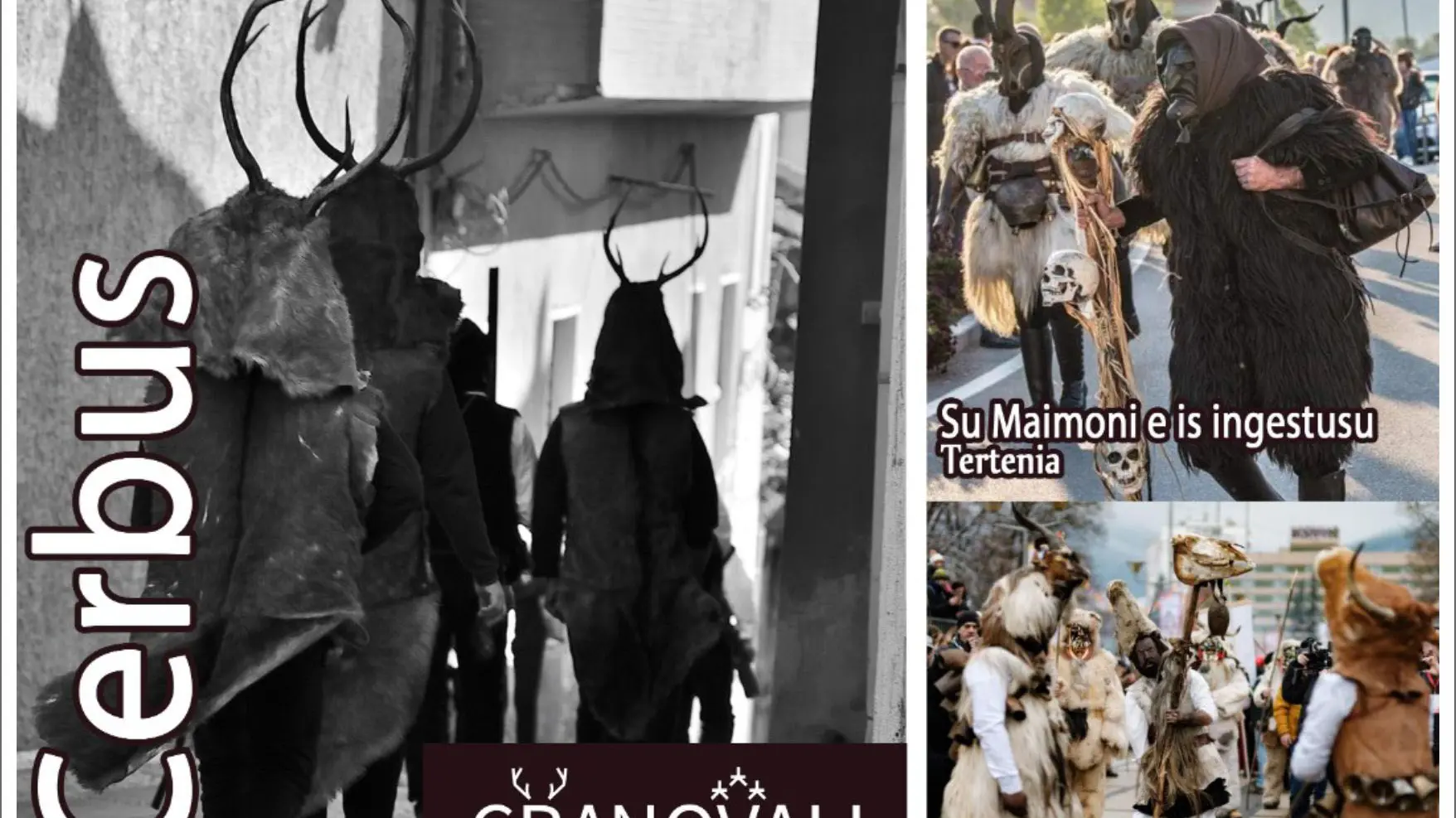
h. 15.00 IS CERBUS: dressing of the typical Sinnaese mask with the evocative rite of transformation, slow and almost magical, of men and children into deer, dogs, wild boars, beaters and hunters. Organizes the Is Cerbus association.
h. 16.00 IS CERBUS: Exhibition. Piazza Sant'Isidoro. After the noisy parade in the streets of the historic center, here comes the ancestral big game hunting, where men track down their prey and they make fun of them until the final slaughter, in which the hunters restore the order of things.
The IS CERBISCEDDUS parade will be attended by the guest masks: Bois – Fui Janna Morti from Esclaplano, Martis De Agoa from Maracalagonis, Su Maimoni and Is Ingestusu from Tertenia and Su Maimulu from Gairo.
CRANNOVALI MOTTU: Unpretentious comedy in Sardinian
By now it is not Cranovali Sinniesu without the Cranovali Mottu, the irreverent theatrical representation on the Carnival character. It is a comedy in Campidanese Sardinian in which, through the narration of Cranovali's illness and death, Sinnai and his well-known names, such as administrators, merchants and other faces of society are told in satirical tones. The story is freely inspired by the screenplay by Don Giovanni Cadeddu, a Sinnaese parish priest and writer who died a few years ago, of which, however, the indelible cultural, artistic and anthropological imprint remains for all Sinnaesi.