









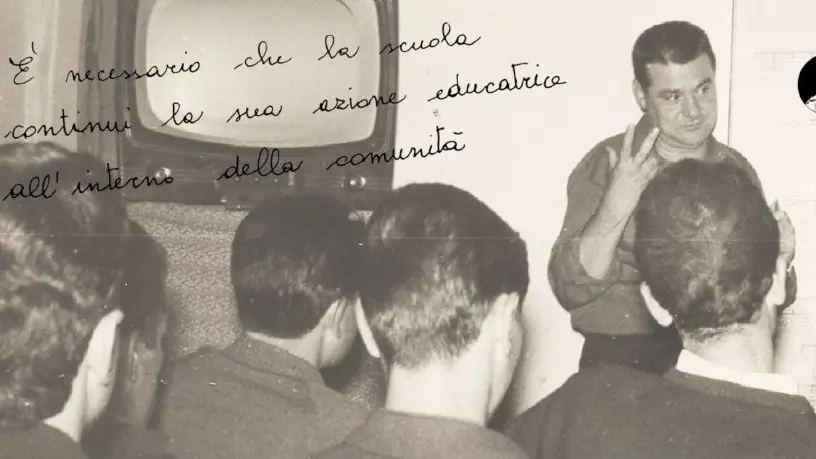


He always repeated like a mantra «be careful here, please, listen to this which is important» attracting the maximum concentration of visitors when he led a guided tour in the Ethnographic Museum of Lussurgese, which he had helped to create in 1976. The maestro Francesco Antonio Salis was passionate and involving with his museum stories, full of information and anecdotes on the Luxurious peasant epic, with his candor, his goodness and his rigorously sweaty forehead.
The people of Lussurge called it Su Mastru par excellence, educator of children and adults, a good person who managed to reach the hearts of his fellow citizens and gain their trust, thanks to his innate empathy.
He is celebrated one hundred years after his birth by the people of Lussurge who keep a jealously guarded personal memory of him: due to his good nature, friendliness, liveliness and attention to the lower classes he was "a master of life".

«Salis saw his students as active subjects in whom he could stimulate observations, questions, curiosities and interests through concrete experiences. He used his trait of spontaneous irony, "he did imitations", and his creativity, through drawings, sketches, small portraits, to get in touch and spontaneously capture the sympathy of children", recalls Francesco Porcu, retired teacher, and one of the first collaborators of the UNLA Center for Popular Culture, where Salis taught thousands of people to become literate from the 1950s onwards, training them in life.
Precisely for this passionate experience of lifelong education he won the UNESCO Reza Pahlavi prize in 1967. The writer, of Ghilarzo origins, Antonio Pinna dedicated his latest literary effort “Francesco Salis” to su Mastru. A teacher for the community", a journey into his fascinating life, starting from the difficult post-war years where he fought illiteracy by educating shepherds, farmers, artisans, housewives, borrowing his education model from the pedagogist Anna Lorenzetto. «The book highlights his charismatic and innovative figure as a cultural and social animator who took care of cohesion and solidarity in his country and, in close connection with the UNLA, guided its civic promotion. With the OECE-Sardinia project (1958-62), however, it stimulated the development of the community, participating in the creation of the first cooperative society of weavers in Sardinia and other cooperatives", underlines Pinna.








