

On the "migrant" issue, the Government led by Giorgia Meloni seems to be playing its most important game, given and considered, in particular, and on the one hand, the political and ideological "battles" supported by the party to which it belongs, Fratelli d' Italy, and supported by him during the very long years spent among the parliamentary opposition benches and, having seen and considered, on the other hand, the trust that the people of reference voters had placed on those ideological premises in cast your vote on September 25, 2022.
It is not a question of offering, or at least attempting to do so, an assessment of this first year of government. Rather, and with good likelihood, we would like to try to understand whether that vaunted agreement signed last October 4 in Brussels by the ambassadors of the various European countries in relation to the most discussed and controversial contents of the broader "European Migration Pact" to deal with potential inflows masses of people can be considered truly and definitively decisive. Even more so when, with respect to that agreement, there was firm opposition from Poland and Hungary and, at the same time, there was also abstention from Austria, Slovakia and the Czech Republic. Beyond, and even beyond, any question regarding the role of the so-called "NGOs" and the position taken by Germany on the point, the questions on the effectively decisive nature of that agreement would still seem to exist today especially due to the persistent validity of the Dublin Treaty and, consequently, the its controversial "first landing" rule which, in truth, up to now, has declined the responsibility of providing for any and all obligations to examine the different applications on the country of very first entry.
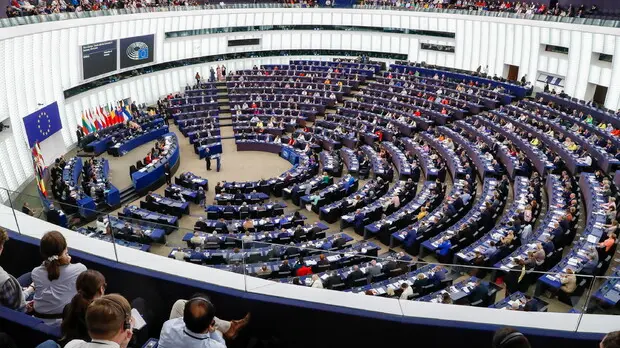
In essence, does the new agreement replace, in relation to the "first landing", the relevant provision of the Dublin Treaty, or does it simply, and in the meantime, only suspend its effects? Even considering and granting everything, such an agreement would seem to arise only in terms of its temporary application. But the question would in any case not seem to be of little practical importance since its confirmation, in one sense or another, would seem to lend itself to offering further answers on circumstances connected to the same. Saying it differently: 1) if we consider that there are seven political groups in the European Parliament, namely the European People's Party, the Progressive Alliance of Socialists and Democrats, the Renew Europe Group, the Group of the Greens/European Free Alliance, the Group of European Conservatives and Reformists, Identity and Democracy Group, Left in the European Parliament – GUE/NGL; 2) if we consider, with reference to the majority Government coalition, that Giorgia Meloni herself chaired the Group of Conservatives and Reformists, whereas Forza Italia joined the European People's Party in the past and will probably continue to insist on this choice, while the League sits in Europe together with the Identity and Democracy Group; 3) if we also consider that the three different European membership groups of the Government coalition, for different reasons, seem called to express different sensitivities and needs with respect to the most pressing issues of community policies, immigration and the Russian-Ukrainian conflict first and foremost; 4) then, if we consider all the nuances represented, in what way, such different sensitivities, expressing clear and in many cases opposing positions on the issues of current interest, will be able to continue to share common policies also in view of the now very close electoral competitions European? The question could also lend itself to multiple interpretations, albeit far from a simple solution and, therefore, it will be important to observe the political attitude of the individual coalition parties regarding the different issues under discussion even just in order to be able to appreciate or less coherence on the ideological and instrumental level of concrete intervention.