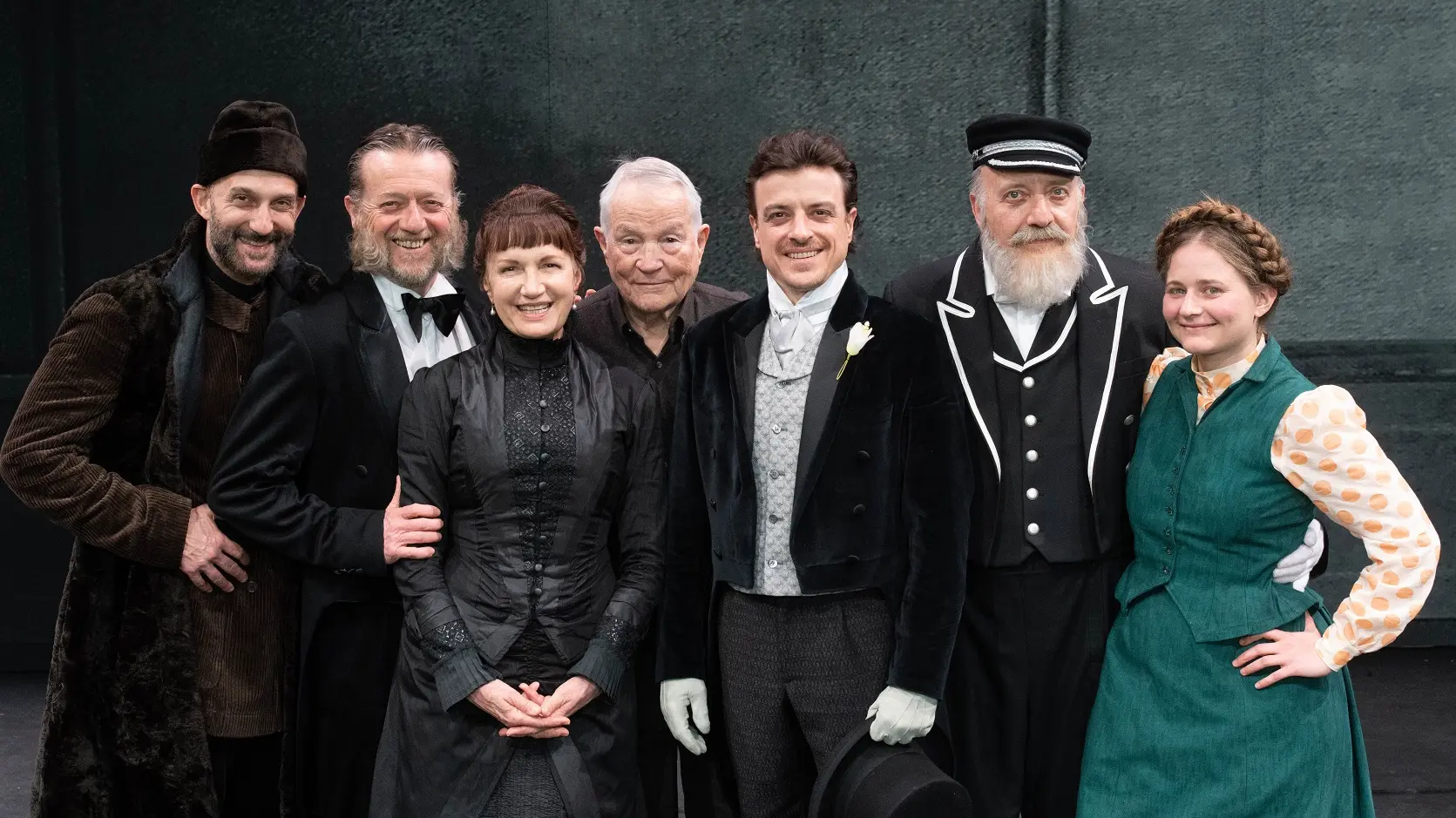


“Crisi di Nervi” is coming to Cagliari, a tasty and unmissable triptych of one-act plays by Anton Chekhov produced by Tieffe Teatro di Milano and Teatro Quirino: an ironic and engaging show that brings together two brilliant comedies, such as “The Bear” and “The Question of Marriage” in the mocking and light tones of vaudeville, and the satirical monologue “I Danni del Tabacco” directed by one of the masters of European theatre between the twentieth century and the third millennium, Peter Stein, assisted by assistant director Carlo Bellamio.
After the success at the Teatro Comunale in Sassari and the debut in Cagliari, the play, one of the most anticipated events of the season of the Great Prose organized by CeDAC / Circuito Multidisciplinare dello Spettacolo dal Vivo chaired by Antonio Cabiddu and directed by Valeria Ciabattoni, will be on stage at the Teatro Massimo, in a regional premiere, from tonight, Thursday 6, until Sunday 9 February starting at 8.30 pm on weekdays, while on Saturday and Sunday the curtain will rise at 7.30 pm and 7 pm respectively.
In the spotlight is a close-knit cast in which the name of Maddalena Crippa stands out, one of the queens of Italian theatre, trained at the Piccolo Teatro School and directed by artists such as Giorgio Strehler and Luca Ronconi, Antonio Calenda, Antoine Vitez, Beppe Navello, Luigi Squarzina, Robert Carsen and Peter Stein, an eclectic artist capable of ranging from classical and contemporary texts, from Carlo Goldoni and Pierre de Marivaux to Heinrich von Kleist, Arthur Schnitzler, Henrik Ibsen and Bertolt Brecht, from William Shakespeare to Harold Pinter.
Alongside the celebrated and beloved actress from Brianza, winner of the Flaiano Award for Best Performance in the theatre section for “Dialoghi platonici” by Gigi Proietti, a quintet of excellent artists such as Alessandro Averone, Sergio Basile, Gianluigi Fogacci, Alessandro Sampaoli and Emilia Scatigno, with sets by Ferdinand Woegerbauer, costumes by Anna Maria Heinreich and lighting design by Andrea Violato, for a fun and surprising work that offers a powerful and humorous fresco of varied humanity.