

Musicological research is an integral part of the performance, and the Australian pianist, one of the greatest scholars of Franz Liszt, recounts a lifelong work, halfway between scientific rigor and investigative inquiry.
Before a score becomes music, a process unseen by the public takes place, exploring manuscripts, editions, and the traces left by the composer. This research requires time, knowledge, and the ability to distinguish the authentic from what has been modified or rewritten over the years. For those who interpret music, this story brings us closer not only to the notes but also to the thought process that led to their creation.
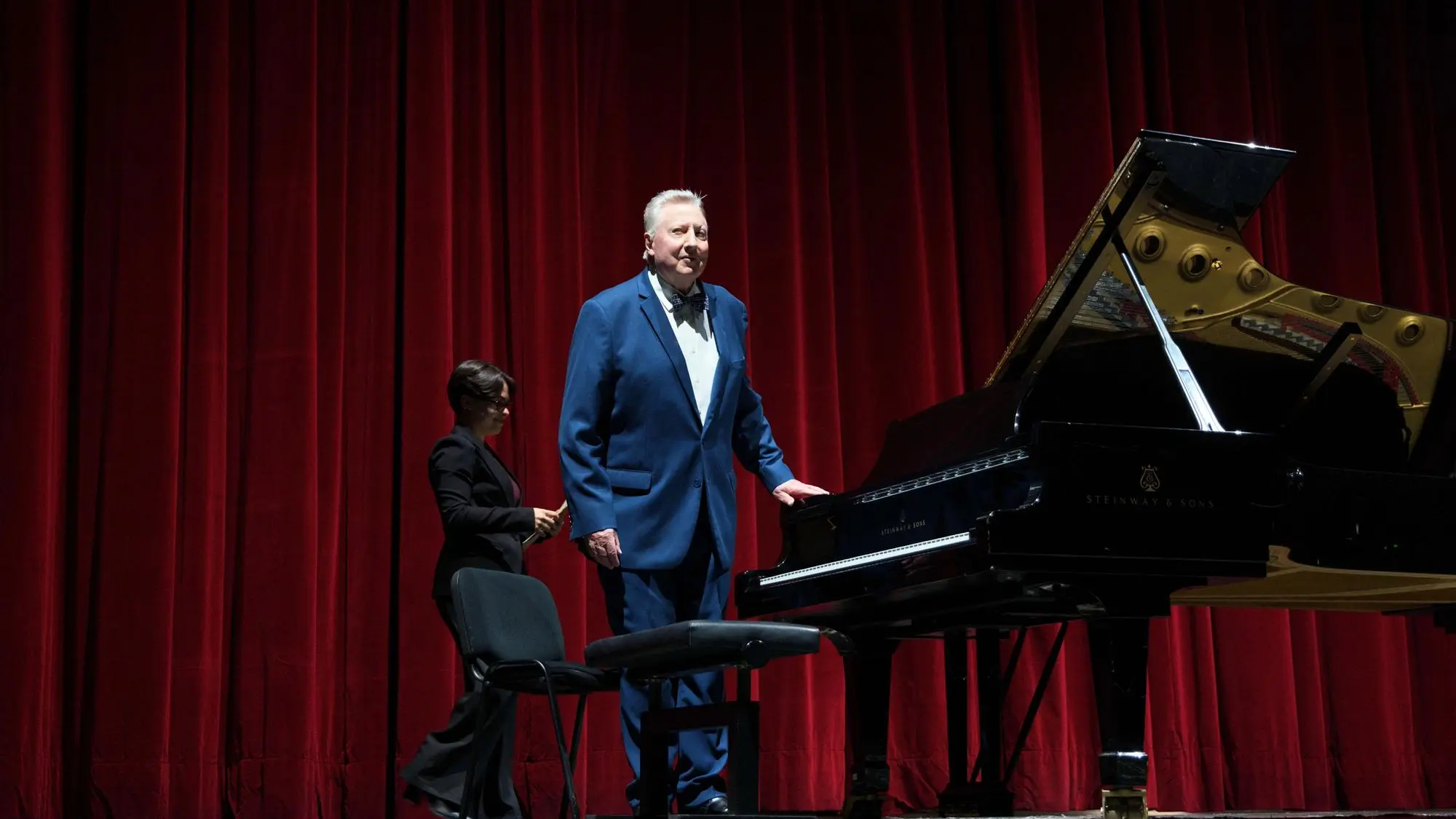
Pianist Leslie Howard's career follows this path; he was the star of the November 8th concert at the Auditorium of the Giovanni Pierluigi da Palestrina Conservatory in Cagliari. A composer and musicologist born in Melbourne and living in London since 1972, the artist has dedicated much of his career to Franz Liszt, culminating in the recording of his complete piano music for the Hyperion label. This monumental project, spanning one hundred CDs, earned him a place in the Guinness Book of Records and six Grand Prix du Disque awards.
Behind this impressive undertaking lies the desire to record a vast repertoire and, at the same time, the desire to encompass it in its entirety. Liszt's fame has long been linked to the figure of a virtuoso, capable of transforming the piano into an instrument of unprecedented abilities. His output extends beyond the most well-known piano repertoire, encompassing music for orchestra, organ, chamber ensembles, and choir.
For Howard, the investigation began with discovering what he didn't yet know. " When I first saw a Liszt catalog and discovered all those pieces I hadn't heard, I started researching ," the Australian pianist says. " I was so interested that I felt the need to know everything he had composed, to get a proper idea of the man and his work ."
Thus, initial curiosity transformed into systematic work on the original sources, through the study of manuscripts and the comparison of different versions of the works. This was a patient task, because not everything attributed to a composer can be considered authentic without proper verification.