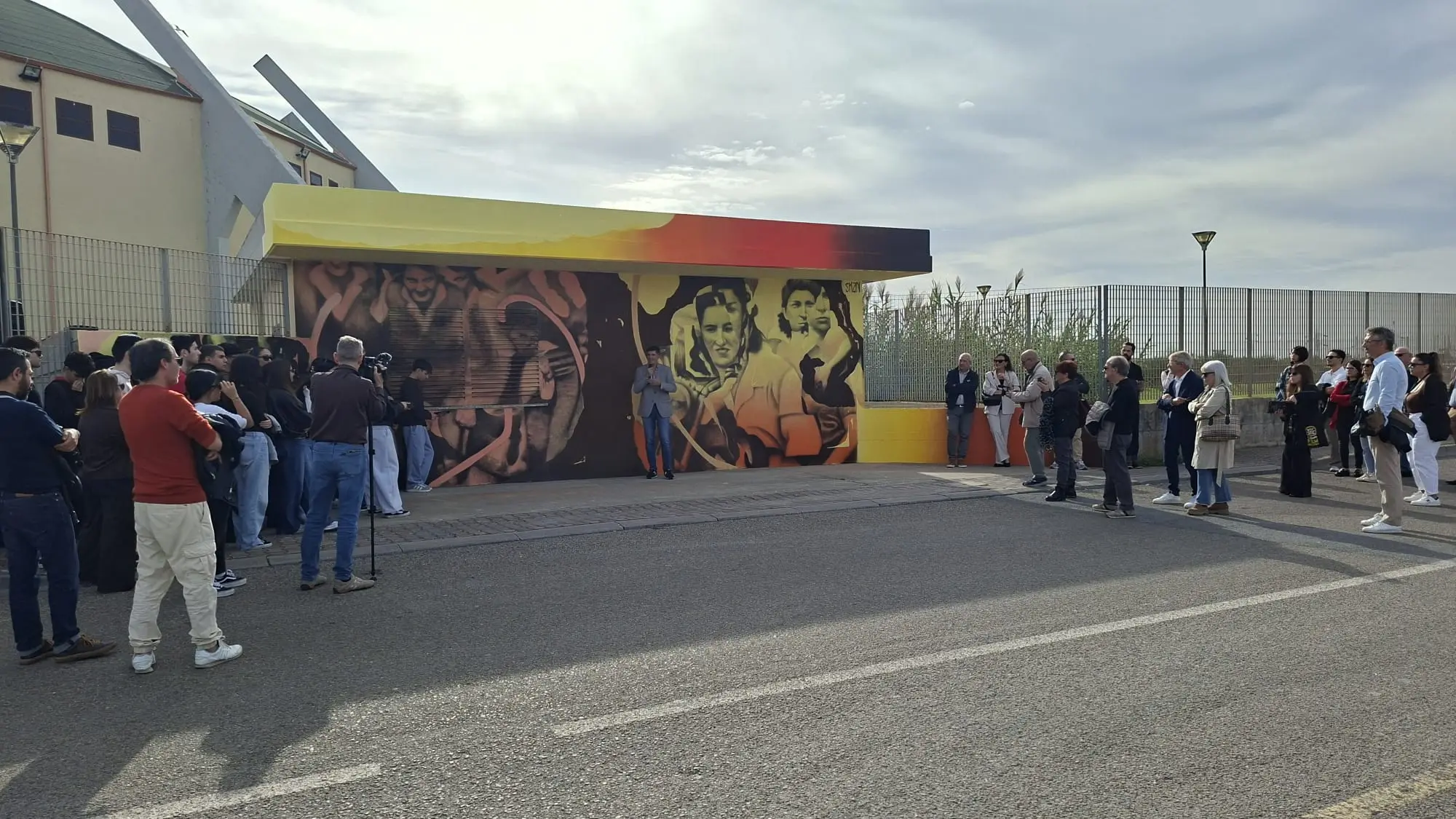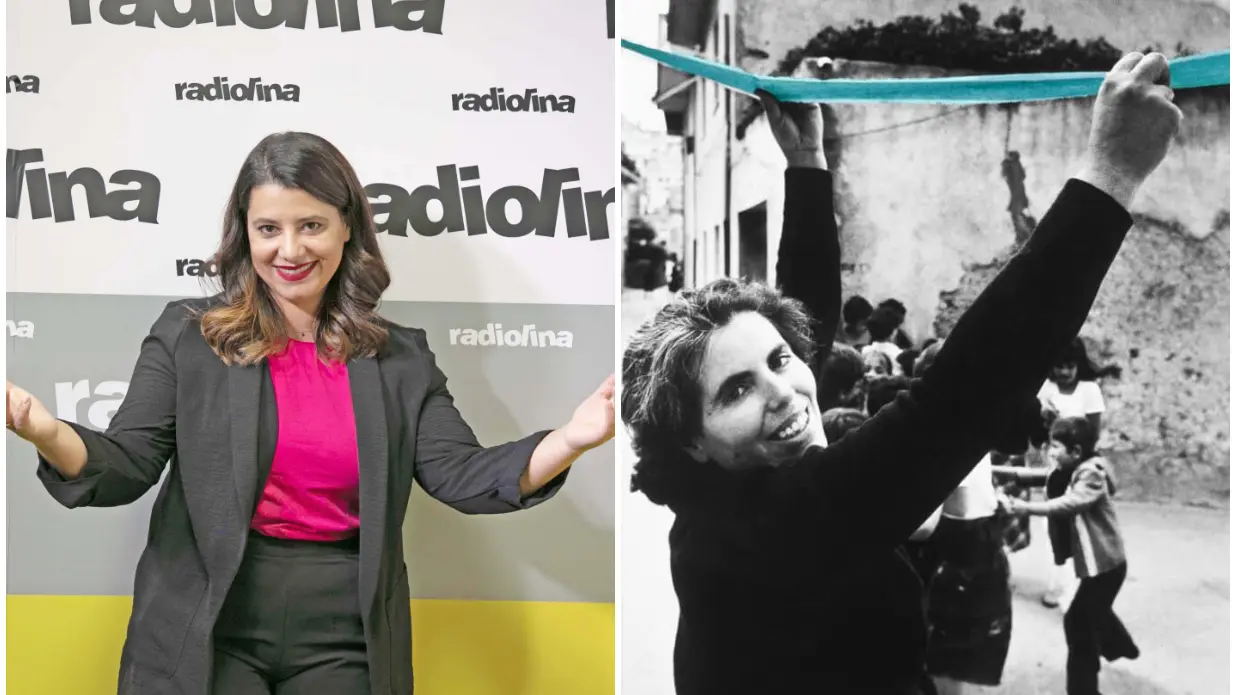


It was September 8, 1981, when Maria Lai tied Ulassai to the mountain with a long blue ribbon that went from house to house, transcending borders and ancient resentments. Forty-five years later, Paola Pilia, 46, journalist, director of the TCS television station, and a popular voice on Radiolina, retraces that historic event in a podcast, "Il Nastro Celeste," coming tomorrow to Spotify and Unionesarda.it, which produced it. The original soundtrack is by Matteo Gallus and Andrea Lai, with video editing and post-production by Massimo Sulis.
The podcast is funded by the European Union under the NextGenerationEU program and by the Municipality of Ulassai, the Fondazione Stazione dell'Arte Camuc, the Sardinia Region, and the Ministry of Culture.
"It's the quintessential work of journalism," explains Lorenzo Paolini, co-editor of L'Unione Sarda and its editorial director, "and I'm very happy that our newspaper has contributed, because we're talking about the first social art project that comes to mind, which, beyond its artistic implications, offers some anthropological implications that are still moving today. But Maria Lai was absolutely brilliant; I once saw her at Antonio Marras's house staring at a wall for hours. When I asked her why, she replied, 'I'm waiting for you to talk to me.'"
Paola Pilia, five episodes to tell the story of an event that helped change a town, Ulassai. Her town.
It's a story that's part of my memory, also because I've always heard it told. They didn't call it "tying the mountain" but "the day of the ribbons," and I discovered there's a video of me taking this blue ribbon too. Over the years, bits and pieces of this story have been added to the tale, which I finally decided to tell.
It all started with the request to create a war memorial.
"Exactly. But she refused, but she convinced the mayor to build this work, which wasn't intended to be a monument, but to build human relationships; something already cutting-edge now, let alone back then. At first, no one recognized it as a work of art because it didn't produce objects, and this fueled controversy. All of this occurred within a monstrous political conflict, because we're at the end of the 1970s, a few years earlier Moro had been kidnapped, the historic compromise had waned, and the DC and PCI were arguing furiously even in Ulassai."