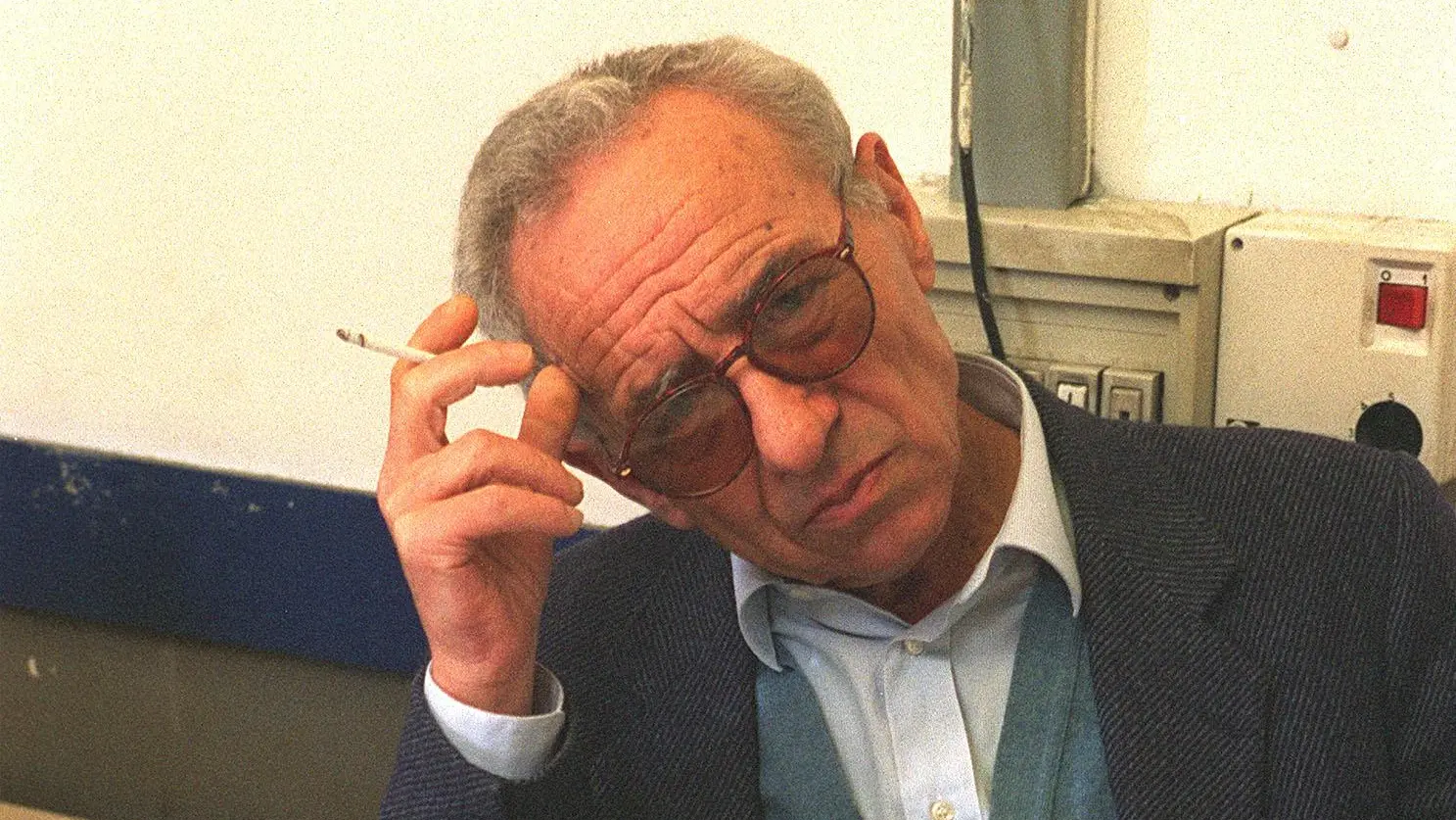


We should remember him first by quoting his words. Luigi Pintor wrote them a few months before his death, in 2003: it was his last editorial, published in Il Manifesto, the newspaper he helped found 56 years ago.
"Peace and civil coexistence," wrote the man whom Enrico Berlinguer called Italy's finest journalist, "cannot be one option among others, but an absolute principle, not a flag or an ideal, but a way of life." The intellectual and politician, born in Cagliari on September 18, 1925, and Roman by adoption (he moved to the capital at around age 10), knew how to "interpret the present to imagine the future," as Anna Pizzo put it. Among the editors of Il Manifesto, along with former directors and editors of the newspaper and his supporters—Pierluigi Sullo, Loris Campetti, Gianni Usai, Anna Pizzo, Susanna Campisi—Pizzo founded the Collettivo Pintor, committed to celebrating, on the centenary of the birth of one of the protagonists of twentieth-century Italian political and cultural history. On Saturday, in Cagliari, at the Fondazione Sardegna hall, from 9:30 a.m. to 2 p.m., the first meeting dedicated to Pintor will take place, organized by the Collettivo with the support of the Fondazione Sardegna and the Agorà Legacoop cooperative. Another meeting, at the end of October, will be held in Rome.
Titled "Piazza Pintor," the conference will feature readings, music, and performances by the Sardinian intellectual, his work as a journalist and writer, and his role as a politician. Pintor was a leader of the Italian Communist Party, elected to the Chamber of Deputies in 1968, and was later expelled in 1971. He published several books, including "Il nespolo, " “Servabo“, “Mrs. Kirchgessner“, where personal memory, political reflection and ethics come together.
Commemorating his dedication and work will be Luciana Castellina, the newspaper's co-founder, and Isabella Pintor, Luigi's wife, along with a large group of former editors and the Il Manifesto management team, starting with editor Andrea Fabozzi, who, together with Francesca Borrelli, edited the special centenary edition, "Essenzialmente Pintor," and finally Tommaso Di Francesco, former deputy editor of Norma Rangeri. The supplement will be illustrated and distributed during the proceedings.